A Doggy Daycare Owner's Guide to Dog Exercise Requirements by Breed
- ericavdippold
- Oct 20
- 7 min read

Hello there, fellow dog lover! After years of running a busy doggy daycare and seeing every kind of pup you can imagine, I can tell you the one question I get asked more than any other is, "How much exercise does my dog really need?" It's such a great question, because the answer is never one-size-fits-all.
The perfect day for a high-octane Border Collie looks wildly different from a Basset Hound's ideal afternoon nap schedule. That's why I've put together this guide, breaking down dog exercise requirements by breed from my hands-on experience.
Matching Your Dog's Energy to Their Daily Exercise
We're going to dive deep into why your dog's breed history is the biggest hint to their energy levels and what that means for their daily activity needs. You've heard the saying "a tired dog is a happy dog," but what "tired" looks like can vary dramatically from one furry friend to the next.
It's about more than just a long run; mental stimulation is a huge piece of the puzzle. In fact, a few minutes of focused training or a puzzle toy can be just as tiring as a walk around the block. Truly understanding how to engage your dog is a game-changer, which is why we have a whole article on how to play with your dog to strengthen your bond.
My goal here is simple: to give you the confidence and the know-how to build the perfect routine for your best friend. Let's get them happy, healthy, and tired in all the right ways.
Why Breed History Dictates Exercise Needs
Ever wondered why your Labrador seems to have been born to swim, or why your Beagle's nose is constantly glued to the ground? The answer is hiding in plain sight: it's all in their history. For centuries, dogs were selectively bred for specific jobs, from herding sheep across vast fields to guarding property or hunting game.
Those deep-seated instincts didn't just disappear when they became family pets. They're very much a part of who your dog is today, and they're the single biggest clue to understanding their energy levels and exercise needs. It's really no surprise when you think about it.
In fact, research backs this up, showing that dogs from gundog and herding groups are walked much more frequently than other types of dogs. If you're a data nerd like me, you can dive into the full study on dog walking habits right here.
This infographic breaks it down visually, showing just how much a dog's ancestral job influences their modern-day energy.
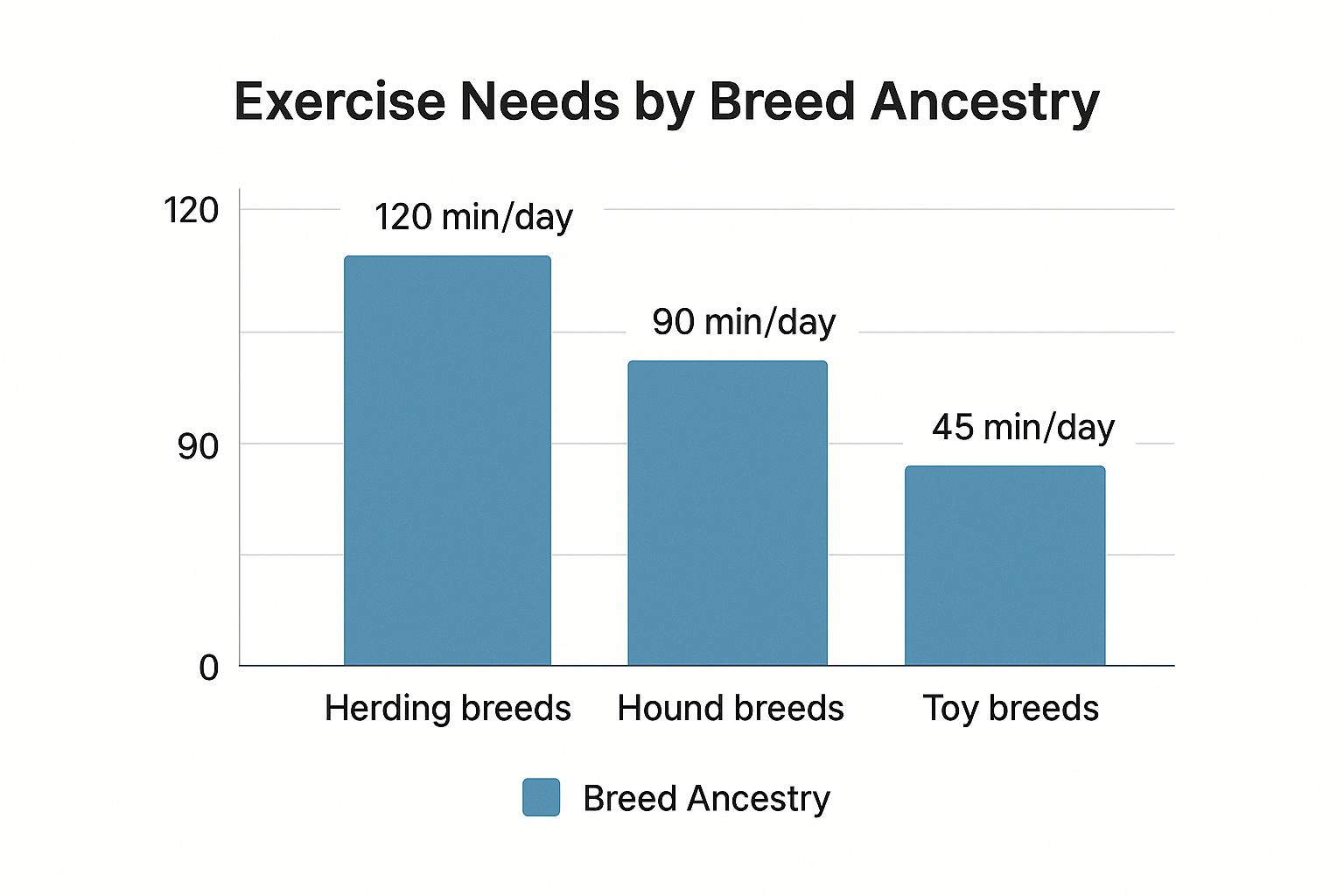
As you can see, the difference is huge. A Herding breed needs nearly triple the amount of exercise as a dog from the Toy group. That's a lot of extra fetch!
A Quick Guide to Breed-Specific Exercise Needs
Sometimes you just need the bottom line. What does this specific breed actually need every day? I put this section together to give you exactly that—a quick, scannable reference for some of the most popular dog breeds we see at the daycare.
Think of it as your starting point. You'll get a solid idea of the baseline exercise requirements, from the minimum daily walk time to the kind of mental workouts that will keep them sharp. It’s perfect for checking if your current routine is hitting the mark or for getting a feel for a breed you’re thinking about bringing home. We'll get into the nitty-gritty of each breed group later, but this gives you the core facts right up front.
High-Energy Breeds: The Herding and Sporting Groups
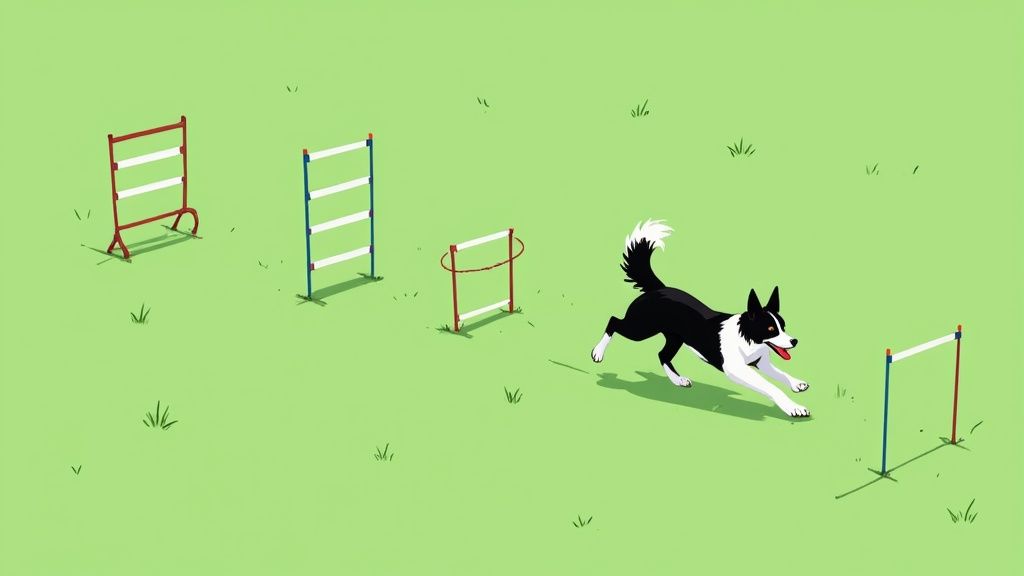
If you've got a Border Collie, Labrador Retriever, or Australian Shepherd at home, you already know what boundless energy looks like. We see these canine athletes all the time—they're the marathon runners of the dog world, always ready for the next adventure.
These dogs were originally bred for demanding, sun-up-to-sun-down jobs, giving them incredible stamina. Because of that heritage, a quick stroll around the block simply isn't going to cut it. They need a purpose.
For breeds in these groups, you're looking at a daily commitment of two hours or more of genuinely vigorous activity. It’s not just about physical exertion, though. Engaging their sharp minds is just as critical. Think about activities like agility training, advanced obedience classes, or even scent work to keep them happy and balanced.
On those days when your own schedule is packed, exploring the benefits of doggy day care can be a fantastic way to ensure they get the stimulation they crave.
Spirited Breeds: The Terrier and Hound Groups
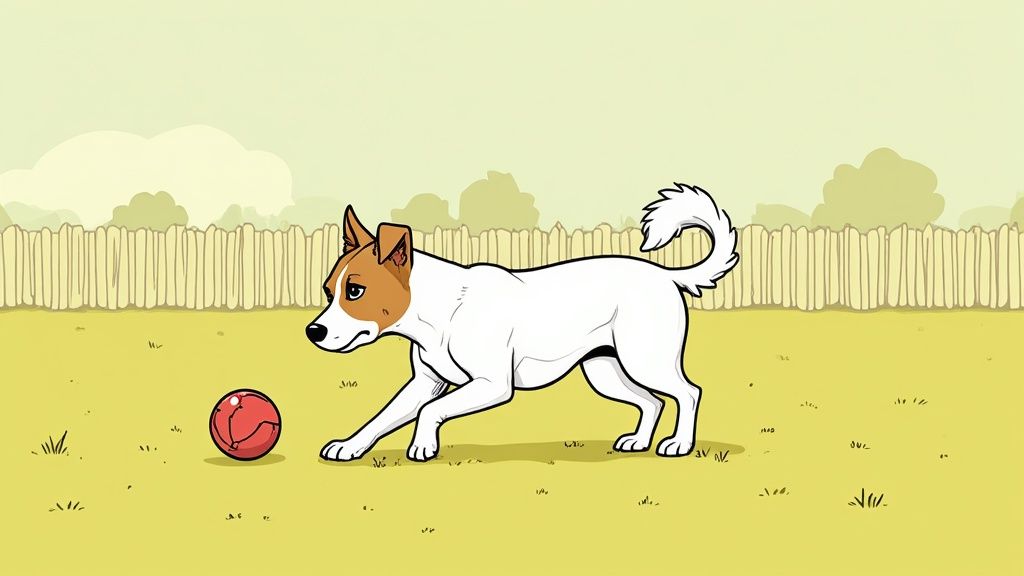
Don't ever let their smaller size fool you; Terriers and Hounds are absolute powerhouses of spirit and energy. Think about breeds like the Jack Russell Terrier or the Beagle—these dogs were developed over centuries to hunt, dig, and chase. That history gives them a tenacity and cleverness you won't find in many other groups.
When it comes to exercise, their needs are a bit different. It’s not just about getting them moving, but about satisfying those deeply ingrained instincts. While a good baseline is 60-90 minutes of daily activity, it’s the kind of exercise that truly matters for these guys.
Given their powerful prey drive, a secure, fenced-in area for any off-leash fun isn't just a suggestion—it's an absolute must for their safety. To really tire them out, you need to engage their brains. Games like scent work ("find it" puzzles) or sports like lure coursing are fantastic outlets for channeling their natural talents, burning off both mental and physical energy. This is how you keep these spirited dogs happy, healthy, and out of mischief.
Steady Breeds: The Working and Non-Sporting Groups
From the powerful Rottweiler to the elegant Poodle, you're looking at a wonderfully diverse collection of dogs with a wide range of needs. Understanding the specific dog exercise requirements by breed here is absolutely critical. After all, a Siberian Husky, originally bred to pull sleds for miles, needs something completely different from a French Bulldog, who was bred simply to be a companion.
As a general rule, you should plan for 45 to 90 minutes of daily activity for these breeds. But remember, it's always about the quality of the exercise, not just the sheer quantity.
A great example is finding a low-impact activity like swimming for a gentle giant like a Bernese Mountain Dog to protect their joints. On the other hand, a long, steady jog is perfect for a Dalmatian, tapping into their famous endurance. The best clue for creating a happy, fulfilling routine is always hidden in their original job description.
Low-Energy Breeds: The Toy and Companion Groups
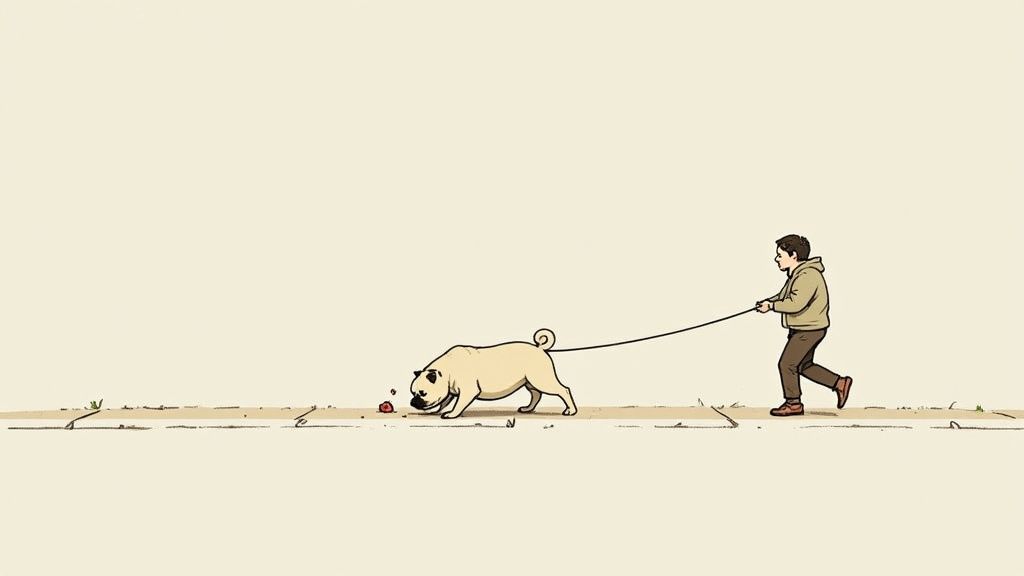
When we see a Pug, Cavalier King Charles Spaniel, or Shih Tzu trot into the daycare, we know we're in for a day of big personality in a small package. These dogs were bred for one main job: companionship. Their world revolves more around being with their people than chasing a ball for hours on end.
But don't mistake "lap dog" for "no activity needed." These little companions still need 30-45 minutes of gentle activity each day to stay healthy and happy. Think a leisurely stroll around the block where they can sniff everything, a soft game of fetch down the hallway, or even some mentally stimulating puzzle toys. It's all about consistent, low-impact movement.
Safety Tip for Flat-Faced Breeds It's especially important for brachycephalic (flat-faced) breeds like Pugs and Shih Tzus to stay safe. Always avoid exercising them in the heat and keep a close eye out for any signs of labored breathing.
Fine-Tuning Exercise for Age, Health, and Personality
While breed standards give you a great starting point, they're just that—a starting point. The absolute best exercise plan is one you fine-tune specifically for your individual dog.
Think about it: a spunky senior Golden Retriever might still have the get-up-and-go to outlast a young, couch-loving Bulldog. It all comes down to watching your own dog and tweaking their routine to fit their unique energy, current age, and overall health.
This is especially critical for puppies and senior dogs. Pushing either too hard can lead to serious joint and muscle strain, so a custom-fit approach isn't just nice—it's necessary. As any reputable kennel club will tell you, a huge part of responsible ownership is matching the activity to the life stage. You can get more specifics on this from these tailored exercise insights on wisdompanel.com.
For puppies, in particular, understanding their physical limits is a core part of their upbringing. This goes hand-in-hand with everything else you're teaching them, which is why we cover it in your guide to puppy training and socialization.
A Few More Questions I Hear at the Daycare
To finish up, let's go over a few questions that pop up all the time when I'm chatting with owners. These quick insights should help you get your dog's routine just right.
How can I tell if my dog is getting enough exercise?
Oh, your dog will definitely show you! If they're restless, chewing on the furniture, or getting a little pudgy, it's often a sign they need to burn more energy. On the flip side, a happy, well-exercised dog is usually pretty chill and content to relax around the house.
What do we do on rainy days?
Don't let bad weather stop you! Indoor days are perfect for flexing their mental muscles. Pull out some puzzle toys, a snuffle mat, or even just play a simple game of hide-and-seek with their favorite treats. You'd be surprised how a few minutes of focused brain work can tire a dog out just as much as a long walk.
Is my dog really getting enough activity?
Honestly, a lot of dogs aren't. While most dogs need at least 20-30 minutes of solid, heart-pumping exercise every day, the numbers tell a different story. Some surveys show that around 40% of owners don't walk their dogs regularly, which can lead to serious health problems down the road. You can see more on this in these eye-opening dog walking statistics on Dogster.com.
If you ever find yourself short on time or just want to give your pup a day of fun and friendship, we're always here to help at Pawcation. Let them have a blast with us—you can check out everything we do over at https://pawcation.co.
Comments