How to Mentally Stimulate Your Dog: A Guide From a Doggy Day Care Owner
- ericavdippold
- Nov 22
- 16 min read

Hi there! As someone who runs a doggy daycare, I get to see firsthand what makes dogs truly happy. And let me tell you, figuring out how to mentally stimulate your dog goes way beyond just tiring them out with a game of fetch. It's about engaging their brilliant minds with puzzles, training, and fun sensory games. It’s the kind of stuff that truly builds their confidence and, honestly, makes your bond with them even stronger. You’d be amazed what just a few minutes of brain work can do.
Why a Tired Brain Is a Happy Brain
I see this all the time at my daycare. A dog goes home after a full day of running and playing, totally wiped out physically, but their owner tells me they're still pacing, whining, or chewing on the furniture. That’s the classic sign of a bored brain.
We often get so focused on physical exercise that we forget our dogs were originally bred for specific jobs that required intense mental effort—herding, tracking, retrieving. Today, most of our companions don't have a flock to manage or a trail to follow. This lack of mental engagement can easily lead to boredom and anxiety, which almost always bubbles up as unwanted behaviors. Think of mental stimulation as giving your dog a fulfilling and fun job to do.
The Real Impact of Mental Workouts
A solid mental workout does so much more than just keep boredom at bay. It's an incredible tool for building a well-rounded, happy dog. When dogs solve problems, whether it's figuring out a puzzle toy or learning a new trick, they build so much confidence. I’ve personally seen incredibly shy dogs blossom when they start succeeding at small mental challenges.
This kind of engagement also strengthens your connection. Training and playing together build a special kind of communication and trust. And guess what? It's good for our brains, too. Recent findings show that activities like playing with and grooming a dog can trigger stronger relaxation and emotional stability in humans. The study noted a measurable increase in brain activity tied to concentration and creativity for both the dog and the person. You can read more about these fascinating findings.
There’s a common myth that a tired dog is always a well-behaved dog. The truth is, a mentally fulfilled dog is a well-behaved dog. I always tell my clients that just 15 minutes of focused brain work can be more exhausting and satisfying for a dog than a 30-minute run.
Recognizing the Signs of a Bored Dog
It’s easy to misinterpret the signs of boredom as just plain "bad dog" behavior. In reality, an under-stimulated dog is often just trying to find their own, less-than-ideal ways to stay busy.
Here’s a quick comparison to help you spot the difference between a dog who’s bored out of their mind and one who’s getting the enrichment they need.
Signs of a Bored Dog vs. a Stimulated Dog
Behavior | Sign of a Bored Dog (Under-stimulated) | Sign of a Happy Dog (Well-stimulated) |
|---|---|---|
Chewing | Destructive chewing on furniture, shoes, or walls. | Chews appropriately on designated toys and chews. |
Vocalization | Excessive, aimless barking, whining, or howling. | Barks for clear reasons (e.g., alert) and is quiet otherwise. |
Energy Levels | Restless pacing, hyperactivity, can't seem to settle down. | Enjoys active time but can also relax and settle calmly. |
Interaction | Nipping, pawing, or jumping for attention. | Seeks interaction politely and engages happily in play. |
Engagement | Seems disinterested in play or training. | Eager to learn, play, and interact with you. |
Escape Attempts | Digging under fences or trying to bolt out the door. | Content to stay within their familiar environment. |
Seeing the signs of a bored dog isn't a sign that you're a bad owner—it's just a cue that your dog is craving more engagement! The goal isn't just to stop the "bad" behaviors; it's to provide a positive outlet for their natural intelligence and energy. When you do that, you get a calmer, happier companion and a more peaceful home for everyone.
Weaving Enrichment into Your Daily Routine
Thinking about how to mentally stimulate your dog shouldn't feel like another chore on your to-do list. The best, most sustainable kind of enrichment is the stuff you can easily weave into the things you're already doing every single day.
You don't need a truckload of expensive gear or hours of free time. You just need to look at your existing routine—mealtime, potty breaks, and playtime—and ask, "How can I make this just a little more interesting for my dog's brain?"
Transform Mealtime into a Mind Game
One of the easiest changes you can make with the biggest impact is to ditch the standard food bowl. A dog's natural instinct is to forage, sniff, and work for their food. Just dumping kibble into a bowl takes all of 30 seconds to finish and offers exactly zero mental engagement.
Instead, you can instantly turn breakfast and dinner into a fun puzzle. This simple switch taps into their problem-solving skills and satisfies that deep-seated drive to scavenge.
A few of my go-to bowl alternatives include:
Snuffle Mats: These are fabric mats with tons of fleece strips and pockets where you can hide kibble. Your dog has to use their powerful nose to sniff out every last piece, which is incredibly satisfying for them.
Slow Feeder Bowls: These bowls have built-in mazes and ridges that force your dog to slow down and really think about how to get to their food. This is not only great for their brain but also helps prevent dangerous digestive issues like bloat.
Puzzle Toys: Toys like a KONG or a Toppl can be stuffed with your dog's meal—you can mix kibble with a little wet food or plain yogurt to make it stick. This turns a five-minute meal into a 20-minute project.
By making them work for their food, you're providing a perfect dose of mental stimulation right at the start and end of their day.
The Power of the "Sniffari" Walk
Your daily walks are another golden opportunity for enrichment. Most of the time, we're focused on getting from point A to point B, keeping a brisk pace for exercise. But dogs experience the world primarily through their sense of smell, which is estimated to be between 10,000 to 100,000 times more powerful than ours. It's truly amazing!
Try turning your regular potty break into a "sniffari" or a scent walk. On these walks, the goal isn't distance; it's exploration. You have to let your dog's nose be the guide.
When you let your dog lead the way and sniff to their heart's content, you're allowing them to process information, map their environment, and engage their brain in a profound way. For a dog, sniffing a fire hydrant is like reading the local newspaper—it tells them who's been there, what they've been up to, and so much more.
This doesn't mean every single walk has to be a slow meander. But dedicating even one of your daily walks to this sensory adventure provides incredible mental stimulation with basically zero extra effort on your part.
Quick Brain Boosts Throughout the Day
You can also sprinkle short, simple training and play sessions all through your day. These don't need to be long, structured events. Just a few minutes here and there can keep your dog's mind sharp and engaged.
Obedience Refreshers: While you're waiting for your coffee to brew, ask your dog for a quick "sit," "stay," or "down." Practicing known cues reinforces good manners and makes them use their brain to focus on you.
Simple Hide-and-Seek: Have your dog stay in one room while you hide a high-value treat (or even yourself!) in another. Then, release them with an excited cue like "Find it!" This game is a fantastic nose work exercise that taps directly into their natural talents.
Toy Rotation: Do you ever notice how your dog gets bored with the same old toys? I suggest keeping a stash of toys hidden away and rotating a few out every week. The novelty of a "new" toy keeps them far more engaged and interested.
These tiny moments really add up. They break up the monotony of the day and remind your dog that engaging with you is fun and rewarding. For even more ideas on how to make playtime a brain game, check out our guide with tips from a pro on how to play with your dog and strengthen your bond.
Remember, the key is consistency, not intensity.
Creative Brain Games to Challenge Your Pup
Okay, now for the fun stuff! We've talked about weaving enrichment into your daily schedule, but let's dive into some specific games that really get those canine gears turning. These are some of my go-to activities we use at the daycare and that I always suggest to clients. They do require you to be a bit more hands-on, but the focused mental workout they provide is absolutely worth it.
The point of these games isn't just to keep your dog occupied. It's about teaching them how to problem-solve, think critically, and flex their amazing natural instincts. Honestly, playing these games together is one of the best ways to deepen that bond you share.
Fun With Muffin Tins and Tennis Balls
You don't need fancy, expensive toys to challenge your dog's brain. One of the best DIY puzzles is the Muffin Tin Game—a classic for a reason! All you need is a regular muffin tin, some smelly treats your dog loves, and a handful of tennis balls.
Here's how we introduce it:
First, just place a single treat in one of the muffin cups while your dog is watching. Let them get the treat. Easy peasy. This builds their confidence right away.
Next, put treats in a few different cups and let them sniff them out. They're starting to get the hang of the game.
Once they've got that down, place treats in a few cups and then cover all the cups with tennis balls or other small toys. Now the real challenge begins! Your dog has to use their nose and memory to figure out which cups hide the reward.
This simple setup forces them to use their problem-solving skills to move the balls and their incredible sense of smell to pinpoint the goodies. It's a huge hit every time.
Mastering the Classics: Which Hand & Find It
Sometimes, the simplest games pack the biggest punch. The "Which Hand?" game is a perfect example. It requires zero equipment and you can play it anywhere, from the living room to the vet's waiting room.
Just pop a small, high-value treat into one of your hands and close both into fists. Hold them out to your dog and ask, "Which hand?" The moment they sniff, nudge, or paw at the correct hand, open it up and reward them with lots of praise. It's a fantastic little exercise for teaching focus and honing their scenting skills.
Ready to level up? Try a game of "Find the Treat." Start with three plastic cups turned upside down on the floor. With your dog watching, place a treat under one of the cups and encourage them to find it. Once they nudge or knock over the right cup, they get the reward. As they get better, you can start shuffling the cups around to make it a real "shell game" challenge.
Tapping Into Their Superpower: Nose Work
A dog's sense of smell is nothing short of a superpower. Putting that incredible nose to work is one of the most fulfilling ways to provide mental stimulation. You can set up a simple "scent work" game at home that will be incredibly rewarding for them.
Try making a "busy box." Just grab a cardboard box and fill it with dog-safe items they can rummage through—think packing paper (no bubble wrap!), old t-shirts, or empty paper towel rolls. Sprinkle some of their kibble or a few treats inside, and let them have at it. They get to shred, dig, and hunt, which are all completely natural (and fun!) behaviors for a dog.
For a more advanced challenge, you can teach a scent discrimination game. Get a few identical containers (like small Tupperware) and put a unique scent—like a cotton ball with a tiny drop of vanilla extract—in just one of them. Reward your dog only when they correctly identify the scented container. The level of focus this requires is a serious brain workout, in the best possible way.
A Quick Tip: Your energy is everything when you're playing these games! Stay positive and encouraging. The goal is for your dog to have fun and feel successful, not to pass some kind of test. Celebrating the small wins keeps them engaged and excited to play more.
This chart shows just how easily these kinds of activities can be mixed into your dog's day to keep their mind sharp.
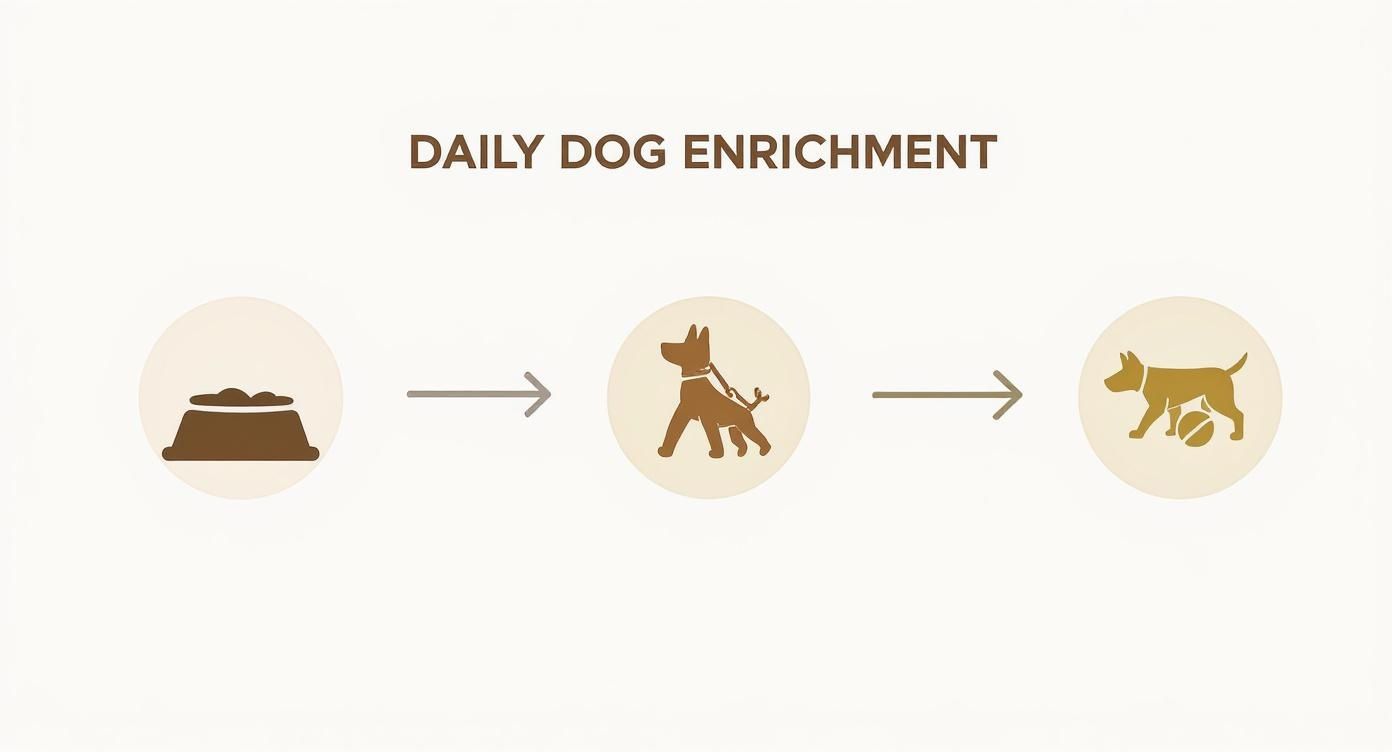
As you can see, turning everyday events like mealtimes and walks into brain games provides a steady stream of valuable mental exercise.
If you're looking for even more inspiration, the internet is full of great ideas. To add some new flavor to your playtime, check out a variety of dog mental stimulation games. The most important thing is to keep it fresh and fun for both of you.
Adapting Fun for Every Age and Energy Level
Here's something I see every day at the daycare: a bouncing-off-the-walls Border Collie puppy needs a completely different kind of mental challenge than a wise old Pug enjoying his golden years. Knowing how to mentally stimulate your dog isn't a one-size-fits-all game. It’s all about meeting them exactly where they are in life.
Tailoring enrichment to your dog's specific age, breed, and energy level is the secret to making it truly effective—and fun for them. You wouldn't hand a toddler a calculus textbook, and you wouldn't ask a senior citizen to run a marathon. The same logic applies to our four-legged friends.
For the Energetic Puppies
With puppies, everything is a learning experience! Their brains are like little sponges, soaking up information about the world. For these youngsters, mental stimulation is less about complex puzzles and more about building confidence and teaching them how to learn.
The goal is to introduce safe, positive experiences that set them up for a lifetime of happy learning. Focus on activities that build body awareness and problem-solving skills in a low-pressure way.
Confidence-Building Obstacles: Create a simple "obstacle course" with pillows to climb over, a cardboard box tunnel to crawl through, or different textures like a fluffy blanket or a smooth mat to walk across.
Simple Puzzles: Start with the easiest puzzle toys out there. A basic KONG toy stuffed with some of their kibble is perfect. The idea is to make sure they can "win" the game easily at first to build their enthusiasm.
Name Recognition Games: Toss a toy a short distance and say its name. When they pick it up, praise them like they just won an Olympic gold medal! This builds a foundation for more complex commands later on.
For High-Energy Adult Dogs
This is the group that often gets into the most trouble when they're bored. Adult dogs, especially high-drive breeds, are in their physical and mental prime. They need a real challenge to channel all that intelligence and stamina productively. This is where you can really ramp up the difficulty.
These dogs thrive on complexity and having a "job" to do. Their mental workouts should be just as vigorous as their physical ones. For a deep dive into how breed influences physical needs, check out our guide on dog exercise requirements by breed, which perfectly complements their mental exercise needs.
Advanced Training Cues: Move way beyond "sit" and "stay." Teach them complex, multi-step tricks like putting their toys away in a basket or learning the names of different family members.
Challenging Puzzle Toys: Introduce level 2 or 3 puzzle toys that require sliding, lifting, and spinning multiple compartments to get to the treats.
Intense Nose Work: Hide treats in more difficult locations—under a rug, on a low shelf, or in a different room—and really make them use that incredible nose to hunt them down.
For Our Beloved Senior Dogs
As our dogs age, their bodies may slow down, but their minds still crave engagement. For our senior companions, the focus shifts to gentle, low-impact brain games that keep their minds sharp without putting any stress on aging joints.
Keeping a senior dog’s mind active is one of the kindest things we can do for them. It helps ward off cognitive decline and keeps them feeling engaged and purposeful in their daily lives, strengthening their bond with us.
Low-impact activities are key here. We want to stimulate their senses and cognitive function in a calm, comfortable way.
Gentle Scent Games: A snuffle mat is a fantastic tool for seniors. They can enjoy the thrill of the hunt for their meal without having to move around much at all.
Slow-Moving Puzzles: Look for puzzle toys that don't require a lot of physical force. A simple lick mat with some peanut butter or yogurt spread on it can provide long-lasting, calming enrichment.
New Sensory Experiences: Simply introducing new sounds at a low volume or new, interesting textures for their bed can be a gentle form of stimulation. Even technology is stepping up; some amazing touchscreen-based cognitive games have been developed for dogs, proving especially beneficial for seniors. Research shows that dogs can easily interact with on-screen targets that are about 2 inches in size, helping to monitor and support their cognitive health. You can find out more about this fascinating dog-friendly tech.
Finding the Right Professional Support
Let's be real—even with the best intentions, life gets busy. Juggling work, family, and everything in between can make it tough to carve out time for dedicated enrichment every single day. That's completely normal, and it's exactly where a good support system can be a lifesaver for both you and your dog.
As someone who runs a daycare, I want to pull back the curtain on what quality professional care really means. It's so much more than just a field for dogs to run wild in. A great facility is a thoughtfully structured environment designed from the ground up for mental enrichment. It’s a place where your dog can learn, solve problems, and sharpen their social skills under the supervision of trained professionals.
What to Look for in a Doggy Daycare
Not all daycares are created equal, not by a long shot. When you're looking for a place that will genuinely challenge your dog's mind, you have to look past the fancy turf and a big open room. The best facilities have a sort of daily curriculum, a schedule designed to engage a dog's brain, not just their legs.
This means you need to be asking some specific questions when you tour a potential spot. For instance:
Structured Playgroups? Do they separate dogs by size, temperament, and play style? This is critical. It ensures your dog can practice healthy social skills in a safe group instead of just being thrown into chaos.
Puzzle Toy Sessions? Ask if they set aside dedicated time for brain games. At our facility, for example, we have "puzzle breaks" where we bring out snuffle mats and food-dispensing toys to give the dogs a calming, focused task.
Basic Training Reinforcement? Does the staff use simple commands like "sit" or "wait" at thresholds like gates and doors? Little things like this reinforce good manners and keep their minds engaged.
A top-tier daycare understands that enrichment isn't about nonstop, high-octane play. It's about striking a healthy balance between physical exercise, mental challenges, and essential rest. That’s the combination that sends your dog home happy and tired in both body and mind.
The right facility can teach your dog invaluable lessons in canine communication and help build their confidence. To see just how much your pup can get out of this kind of environment, check out our guide on the benefits your pup will love from doggy day care.
Beyond Daycare: Other Professional Options
Daycare is a fantastic resource, but it’s not the only game in town. Other professionals can step in to provide that crucial mental stimulation when your schedule is maxed out.
A great dog walker, for instance, does more than just a quick potty break. They can turn a boring walk into a "sniffari," practice loose-leash walking skills, and even work on basic commands along the way.
If you’re facing specific challenges or just want a plan tailored perfectly to your dog, a certified dog trainer is an incredible asset. They can come to your home, assess your dog's unique personality and needs, and build a custom enrichment plan for you. This is especially helpful for dogs with specific behavioral quirks or anxieties that need a more targeted approach.
While enrichment is a powerful tool, persistent anxiety might need a more layered strategy. You can find some excellent complementary ideas in a practical guide to calming dog anxiety.
Ultimately, finding the right professional help isn't about outsourcing your job as a pet parent. It’s about building a team of experts dedicated to giving your dog the happiest, most fulfilling life possible.
Answering Your Top Dog Enrichment Questions
As we wrap things up, let's talk about some of the real-world questions that pop up once you start this journey. These are the kinds of things fellow dog owners ask me all the time, and getting them sorted out can make all the difference.
How Much Mental Stimulation Does My Dog Actually Need?
This is probably the number one question I get, and the honest-to-goodness answer is: it really, truly depends on your dog. There's no magic number.
A young, zippy Border Collie might thrive on 30-45 minutes of dedicated brain work sprinkled throughout the day. On the other hand, a mellow senior Pug might be perfectly happy with one 15-minute session with a food puzzle.
The trick is to watch your dog, not the clock. A good brain game session should leave your pup looking tired in a good way—calm, satisfied, and ready for a quality nap. If they seem more frantic, start chewing on the furniture, or just can't settle down, you might be overdoing it.
The point of enrichment isn't to amp your dog up; it's to calmly engage their mind. Think quality over quantity. I always recommend starting with short, 10-15 minute bursts and seeing how your dog feels afterward. You'll find the sweet spot.
What If My Dog Just Stares at the Puzzle Toy?
Don't worry, this is totally normal! I’ve seen plenty of dogs give a brand-new puzzle a confused sniff and then walk away. It almost never means they aren't "smart enough"—it usually just means the puzzle is a bit too challenging for a beginner, or the reward inside isn't quite worth the effort.
If your dog is giving a new toy the cold shoulder, try a few things:
Make it ridiculously easy. The goal for the first few tries is to build confidence. You want them to win! For a food puzzle, that might mean just sprinkling treats on it instead of in it, or leaving all the little doors and sliders wide open.
Up the ante with better treats. Sometimes their everyday kibble just doesn't cut it. Break out the good stuff! Tiny pieces of cheese, freeze-dried chicken, or whatever makes your dog's eyes go wide will provide a lot more motivation.
Show them how it’s done. Get down on the floor with them! Nudge the toy with your finger, show them how a piece moves, and get excited when a treat falls out. Your energy is contagious and can show them that this new object is fun, not intimidating.
Learning to solve puzzles is a skill. You have to start with the basics and build from there. Keep it fun, celebrate the small wins, and you'll be amazed at how quickly their confidence grows.
I hope this guide has given you a ton of ideas and the confidence to dive into the world of canine enrichment. Honestly, there’s nothing quite like watching your dog's mind light up as they figure something out. It's one of the best parts of having them in our lives.
If you’re in the King of Prussia, PA, area and are looking for a place that prioritizes this kind of stimulating and safe fun, we'd love to meet your pup. At Pawcation, enrichment is built into everything we do, from playtime to naptime. You can learn more about our doggy day care and boarding services on our website.
Comments