A Guide to Understanding Dog Body Language
- ericavdippold
- Sep 10
- 16 min read

Your dog is talking to you all the time, even when they’re not making a sound. Their language is a rich tapestry of postures, tail wags, and ear twitches, each telling a detailed story about what they’re feeling. Learning to read this silent language is probably the most important thing you can do to build a deep, trusting bond with your best friend.
Why Understanding Your Dog Is a Game Changer
Hi there! As the owner of a bustling doggy daycare, I've had a front-row seat to thousands of canine conversations. I've spent countless hours watching dogs "talk" to each other, and I can tell you this with certainty: learning their non-verbal cues is a total game-changer. This goes way beyond teaching commands like "sit" or "stay." We're talking about genuine connection—a real, two-way street of communication.
Think of it like getting to know a friend from another country. You could probably get by with pointing and gestures, but the moment you start to understand their native language, everything changes. Your relationship deepens. You can share inside jokes, understand their worries, and truly connect on a whole new level. That's exactly what happens when you learn your dog's language.
Building Trust and Preventing Problems
When you can accurately read what your dog is trying to tell you, you become their greatest ally. You’ll know the exact moment they’re feeling overwhelmed at the dog park, anxious about a new visitor, or just a little under the weather. This insight allows you to step in and support them before a small worry balloons into a major behavioral issue.
It’s incredibly common for these signals to be misinterpreted, and that’s often where stress starts for both dogs and their owners. Behavioral issues are far more common than most people realize, and they frequently sprout from these simple communication breakdowns. In fact, one major study found that over 99% of dogs showed at least one behavior that owners might consider problematic. The most common issues were separation anxiety (85.9%) and aggression (55.6%). So many of these start with subtle, easily missed cues like a stiff body or a quick lip lick. You can learn more about these important findings on U.S. dog behaviors to see just how vital clear communication really is.
A dog that feels understood is a dog that feels safe. This sense of security is the bedrock for a confident, well-adjusted companion and a much more peaceful home.
Moving Beyond Commands to Companionship
At the end of the day, understanding dog body language is about shifting your relationship from one-sided commands to a true partnership. When you can anticipate your dog’s needs and respond with genuine empathy, you build a bond that’s practically unbreakable. You’ll notice your dog looking to you for guidance, because they know you’re actually listening.
This journey is one of the most rewarding parts of having a dog, and it's something we prioritize every single day with the pups in our care. If you're looking for a place where your dog will be truly heard and understood, you might be interested in our doggy daycare and boarding services.
By the time you finish this guide, you'll have the tools to start decoding these signals on your own, paving the way for a happier, healthier life with your four-legged friend.
Learning to Read the Whole Dog, Not Just the Tail
One of the biggest myths I hear from new clients is that a wagging tail always means a happy dog. If only it were that simple! In reality, focusing only on the tail is like trying to understand a full conversation by listening to just one word. To truly get what your dog is saying, you have to look at the entire picture—from the tip of their nose to the end of their tail.
Think of yourself as a "dog detective." Your job is to gather all the clues before jumping to a conclusion. A dog’s body is a complete communication system, where posture, eyes, ears, and mouth tension all work together to paint the full story. Just last week, I saw a perfect example of this in the play yard.
A young Golden Retriever named Buster was wagging his tail furiously. To an untrained eye, he looked ecstatic. But his body was stiff as a board, his ears were pinned back, and he was showing the whites of his eyes. That fast wag wasn't joy; it was high-arousal anxiety. His "whole body" story was a clear warning that he was uncomfortable, not playful.
Beyond the Wag: The Bigger Picture
This is where a deeper understanding of dog body language becomes so important. A high, stiff wag can signal confidence or a potential challenge, while a low, slow wag might show insecurity. When you pair that with other signals, the message becomes crystal clear.
This holistic approach isn't just a hunch; it's backed by science. Unlike humans who rely heavily on facial expressions, dogs use their entire bodies to communicate. In fact, research comparing dogs and wolves highlighted that our canine companions depend far more on body movements and posture to send messages, especially to us. This means we have to train ourselves to look beyond the obvious to really understand their intent. To dive deeper into the science, you can explore the full research on canine body signals.
This simple graphic helps visualize how a tail's position can indicate wildly different emotions.

As you can see, a high, fast-wagging tail can signal excitement, but a tail tucked between the legs is a clear sign of fear, really driving home the importance of context.
Putting All the Clues Together
Let's break down the clues you should be gathering. When I'm observing a dog, I always run through a quick mental checklist. It’s a habit that helps me accurately assess a dog's mood in seconds.
Here are the key areas to watch:
Overall Posture: Is the dog's body loose and wiggly, or is it stiff and rigid? A relaxed, fluid posture is a great sign, while tension is a major red flag.
Weight Distribution: Are they leaning forward confidently, or are they cowering with their weight shifted back? A forward lean can mean interest or assertion, whereas a backward shift signals fear or submission.
Head and Ears: Are the ears relaxed and in a neutral position, or are they pinned back flat against the head? Pinned ears are a classic signal of fear or anxiety.
Eyes and Mouth: Are their eyes soft and relaxed, or are they wide with a hard stare? Is the mouth loosely open and panting softly, or is it closed tight with the corners pulled back in a "stress smile"?
By combining these observations, you move from guessing to understanding. You’ll start to see the difference between a happy, aroused dog and an anxious, overstimulated one—even if both are wagging their tails.
This skill is the foundation of becoming fluent in dog body language. It allows you to advocate for your dog, pulling them out of situations before they become overwhelmed. In the sections ahead, we’ll dive deeper into each of these individual body parts to make you an even more skilled canine detective.
Decoding Your Dog's Facial Expressions
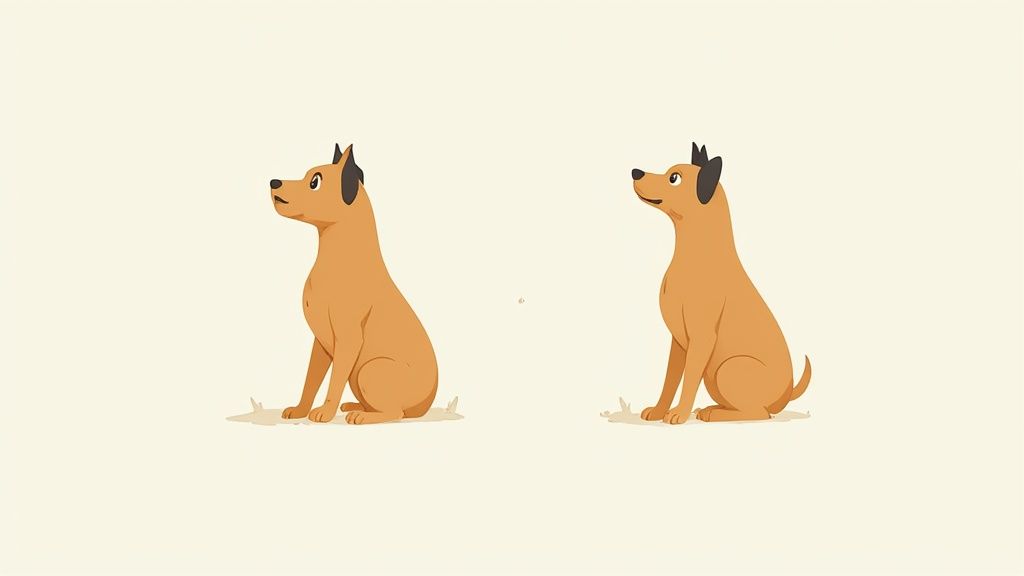
Now that we’re thinking like detectives and looking at the whole dog, let's zoom in on one of the most expressive areas: the face. A dog's face is a canvas of subtle, lightning-fast signals that tell an incredibly detailed story. I always tell my daycare clients that if you want to know a dog's true intentions, look at their face first. It’s where the quiet whispers of discomfort often appear long before you ever hear a growl.
Just like a tail wag, no single expression exists in a vacuum. A relaxed mouth means one thing with soft eyes, but something entirely different with a hard, tense brow. By learning to piece together the clues from the eyes, ears, and mouth, you can move from just seeing your dog to truly understanding them.
What the Eyes Are Telling You
They say the eyes are the window to the soul, and that’s especially true for dogs. The shape and intensity of their gaze speak volumes. When a dog is feeling content and relaxed, they’ll have soft eyes. This just means their eyelids are a little droopy, maybe even squinty, and their gaze is gentle. It’s that sleepy, happy look your dog gives you when they’re curled up on the couch.
On the flip side, a hard stare is a signal to take very seriously. The eyes will look wide and round, locked in with an intense, unblinking focus. This often means a dog is feeling threatened, is guarding a resource, or is sizing up a challenge. It's a clear sign of tension.
One of the most important—and often missed—signals is whale eye. This is when a dog turns their head away but keeps their eyes locked on something, showing the whites of their eyes in a crescent moon shape. This is a classic sign of anxiety and a direct plea for more space.
The Story of the Ears
A dog’s ears are like satellite dishes, constantly swiveling to capture information while also broadcasting their feelings. The exact look will vary by breed, of course—a German Shepherd’s ears are far more obvious than a Basset Hound’s—but the underlying muscle movements tell the same story.
Forward and Alert: When a dog’s ears are up and pointed forward, they are interested and focused on something. Think of it as their neutral, "listening" mode.
Relaxed and Neutral: For most dogs, this means their ears are held slightly out to the sides, loose and without any tension. This is the baseline for a comfortable, happy-go-lucky dog.
Pinned Back and Flat: When a dog flattens their ears tight against their head, it's a huge red flag for fear, anxiety, or submission. They're trying to make themselves appear smaller and less threatening.
Reading the Mouth and Muzzle
The mouth gives us some of the most subtle cues, and they can be easy to misinterpret without looking at the bigger picture. A happy, relaxed dog often has a slightly open mouth with loose, soft lips. You might see a gentle pant, but the overall facial expression is calm.
A tightly closed mouth with tense lips, however, is a sign of stress or high alert. You might also see what looks like a grin, but is actually a stress smile. This is where the corners of the lips (the commissure) are pulled way back, creating a tight C-shape. It’s not a smile; it's a grimace of fear or anxiety.
Here are a few other critical mouth signals to watch for:
Stress Yawn: Sure, a yawn after a nap is just a yawn. But a big, exaggerated yawn during a stressful event—like a vet visit or a tense interaction with another dog—is a calming signal. The dog is trying to release their own tension and signal to others that they aren't a threat.
Lip Licking: A quick flick of the tongue over the nose or lips when there's no food around is another common calming signal. It's a dog's way of saying, "I'm feeling a little uncomfortable with this situation."
Panting When Not Hot: If your dog is panting heavily but hasn't been exercising and isn't warm, it’s almost always a sign of stress. This kind of panting is usually faster and shallower than a normal, happy pant.
When you put all these facial clues together, you get a much richer story. A dog with pinned-back ears, whale eye, and rapid lip licking is shouting, "I'm scared!" even if they haven't made a sound. Learning to hear these silent messages is one of the most important things you can do to be their best advocate.
What Your Dog's Posture and Tail Are Saying
We've zoomed in on the face, but now it's time to pull the camera back and look at the whole picture—your dog’s posture and, of course, that ever-expressive tail. Working at the daycare, I see firsthand how a dog’s entire body tells a story. Think of their stance as the cover of a book; it gives you the main idea of what's going on inside before you even turn the first page.
From a joyful, full-body wiggle to a stiff, frozen posture, the way a dog carries itself is one of the most honest forms of communication they have. It’s a completely unfiltered look into how they’re feeling in that exact moment. Once you start paying attention to this full-body narrative, understanding dog body language truly starts to click.
The Body Tells the Truth
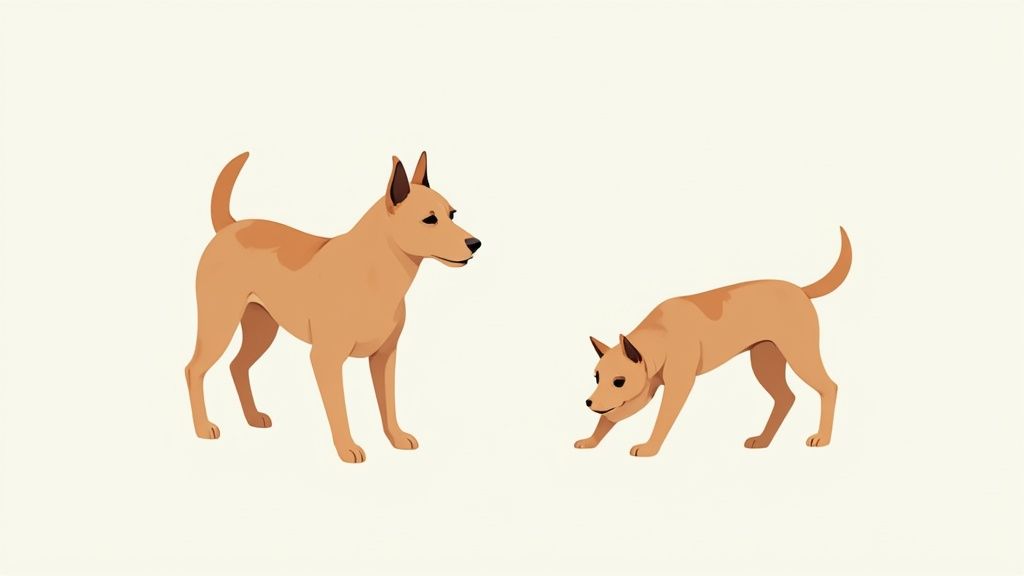
Pay close attention to where your dog is putting their weight, because it speaks volumes. When a dog feels confident, curious, or even a little assertive, you’ll see their weight shift forward. They are literally leaning into the situation, ready to engage. This could be the wind-up to a playful pounce or, in a different context, a more serious signal about their intentions.
On the flip side, a dog shifting their weight backward is trying to put space between themselves and whatever is concerning them. A fearful or anxious dog will often crouch low to the ground, trying to make themselves look smaller. It's their way of saying, "I'm not a threat, please just leave me alone."
The most extreme version of this is the belly-up roll. While it can absolutely be a relaxed pup asking for a belly rub, in a tense encounter, it’s a sign of total appeasement. The dog is communicating extreme stress and is surrendering completely to avoid conflict.
Here are a few other key postures to keep an eye out for:
The Play Bow: This is the universal "let's play!" signal. When a dog drops their chest to the ground but keeps their butt in the air, they’re basically saying, “Anything I do after this is all in good fun!”
Raised Hackles (Piloerection): This is when the fur along a dog's spine stands on end. It's an involuntary reaction, kind of like goosebumps on a person, and it just means the dog is highly aroused. That arousal could be excitement, fear, or aggression, so you have to look at the rest of their body language for clues.
The Paw Lift: A single raised paw often signals uncertainty. The dog might be feeling a bit insecure or is just trying to figure out their next move. It’s a subtle but very telling glimpse into their thought process.
More Than Just a Wag
Now for the tail—easily the most famous and most misunderstood part of a dog's communication toolkit. A wagging tail doesn't automatically mean a happy dog; it simply means the dog is emotionally aroused. The kind of wag is what tells you whether that arousal is happy, anxious, or even aggressive. The secret is in the tail's height, its speed, and even the direction of the wag.
Believe it or not, a study on tail-wagging found that the direction of the wag is a big clue. Dogs tend to wag more to the right when they see something positive (like you!). They wag more to the left for negative or scary things.
Let’s break down the mechanics of the wag:
Tail Signal | What It Likely Means |
|---|---|
Broad, Loose Wag | This is the classic "happy wag." The tail moves in wide, sweeping motions, often making the dog's whole body wiggle along with it. This dog is relaxed and friendly. |
High, Stiff, Fast Wag | A tail held high, wagging in short, rapid bursts signals high arousal and confidence. This can quickly tip into aggression, so watch for other stiff body language. |
Low, Slow Wag | A tail held below the spine and wagging slowly often indicates insecurity, worry, or appeasement. The dog is feeling unsure about what's happening. |
Tucked Tail | When a tail is clamped tightly between the legs, it's a clear sign of fear. The dog is trying to make themselves as small as possible and protect their vulnerable areas. |
Helicopter Wag | When a dog’s tail spins in a full circle, it’s a sign of pure joy. You’ll usually see this when they greet their favorite person after being apart! |
By putting together your observations of a dog's overall posture with the nuanced story the tail is telling, you get a much clearer read on their mood. You'll be able to spot the difference between a genuinely happy dog and one that’s just anxiously aroused, making you a much better friend and advocate for your pup.
Applying Your Skills in Real-World Scenarios
Alright, you've learned to read the individual clues—the ears, the eyes, the posture, and the tail. Now, let's put it all together. This is where the magic happens, moving from theory to real-world practice where you can become your dog's best advocate.
At my daycare, I don't just see individual signals; I see full-blown conversations happening in real-time. Let's walk through a couple of common scenarios together. We'll break down the subtle interactions, just like I do every day in the play yard.
At the Dog Park: A Tale of Two Greetings
Picture this: you're at the park. Your dog, a happy-go-lucky Lab named Max, spots another dog, a shy Shepherd mix named Luna. This is a critical moment. Let's analyze two ways this could go down.
Scenario 1: The Polite Greeting
Max approaches Luna with a loose, wiggly body. Notice he takes a slightly curved path, not a direct, head-on one, which is much less confrontational. His tail is in a neutral position, giving a slow, sweeping wag. He even offers a little "play bow" before getting closer—a classic, clear signal that he just wants to be friends.
Luna, being a bit shy, tucks her tail slightly and gives a quick lip lick. She averts her gaze, showing she's not a threat. Max reads this perfectly. He respects her space, gives her a brief sniff, and then sniffs the ground—a wonderful calming signal that lowers the social pressure. After a moment, you see Luna’s body soften, her tail comes up to neutral, and they begin to play. It's a beautiful example of a successful, respectful canine conversation.
Scenario 2: The Tense Encounter
Now, let's rewind. This time, Max barrels toward Luna head-on with a stiff, forward posture. His tail is held high, and the wag is fast and tight, more like a vibration. He stares directly at her, which in the dog world, can be seen as a challenge.
Luna's reaction is completely different. She freezes, her body rigid. You see the whites of her eyes (the "whale eye"), her ears are pinned flat against her head, and her mouth is clamped shut. Max ignores these clear signs of fear. He gets too close, and Luna lets out a low growl. This isn't aggression; it's her shouting, "I'm scared, please back off!" Recognizing this allows you to step in, call your dog away, and prevent a conflict before it ever starts.
A Visit to the Vet: Spotting Silent Stress
The vet’s office is a classic stress-inducer for so many dogs. They might not be growling or barking, but their bodies are often screaming their discomfort. Let's say you're in the waiting room. Your dog might be sitting quietly, but a closer look reveals a different story.
You might notice these subtle cues:
Frequent Yawning: It’s almost never because they're tired; it's a classic stress yawn.
Constant Lip Licking: Their tongue flicks out repeatedly. This is a tell-tale sign of anxiety.
A Tightly Closed Mouth: A tense jaw is a world away from a relaxed, happy pant.
A Lifted Paw: They might be holding one paw just off the ground, a little signal of uncertainty.
Panting When It's Cool: The room is air-conditioned, but they're panting like they just ran a mile.
Recognizing these signs lets you help them. You can ask for a quieter corner to wait, use a calm, reassuring voice, or do some gentle, long strokes to help lower their heart rate. It transforms you from a simple bystander into their supportive advocate. These are the moments where your bond deepens, as your dog learns you truly understand and will keep them safe.
This is especially important for dogs who experience anxiety when you're away, which is a key reason many clients explore options like our professional in-home pet sitting services to keep their pups comfortable and secure in their own familiar environment.
Putting It All Together: Barks, Growls, and Body Language
So far, we've been decoding the silent language of dogs. But what happens when they add sound to the mix? Vocalizations like barks, growls, and whines are a massive part of the story, and learning to interpret them alongside body cues is where you truly start to understand your dog.
Think of it like this: a dog's body language sets the emotional stage, and their bark is the dialogue that follows. A happy, bouncy body with a high-pitched bark is shouting, "Let's play!" But a low, rumbling growl from a stiff, still dog is a clear and serious warning. It’s the combination of sight and sound that gives you the full picture.
Listening with Your Eyes
The exact same sound can mean wildly different things depending on the posture it’s paired with. A short, high-pitched bark from a dog in a play bow is an unmistakable invitation to have some fun. But that same bark from a dog standing stiffly, staring hard with their fur on end? That’s a completely different message—one that’s saying "back off."
Let's break down a few common pairings:
A low growl + a stiff body and hard stare: This is a clear, non-negotiable warning. The dog is deeply uncomfortable and is drawing a line in the sand. Give them space.
A soft whine + a lowered head and tucked tail: This combo often points to fear or anxiety. The dog feels vulnerable and is looking for comfort or a way out of the situation.
A series of sharp, high barks + a loose, wiggly body: This is pure excitement! Think of the full-body wags and happy yips when you grab the leash or come home from work.
Your Dog Is Listening, Too
This isn't just a one-way street. While we're busy trying to understand them, they’re paying incredibly close attention to us. For years, we assumed dogs were just masters at reading our body language, but we're now learning their grasp of our language is far more sophisticated.
In fact, their ability to connect our words to meaning is pretty stunning. A groundbreaking 2022 study revealed that dogs genuinely process spoken words. The research even showed they can use tools like soundboard buttons to communicate specific needs, confirming what so many of us have always believed: they aren't just guessing, they're truly listening. You can dive into the fascinating findings about how dogs process human language to see just how deep this connection really goes.
Common Questions About Dog Communication
After years of running the daycare, I’ve heard just about every question you can imagine when it comes to understanding dog body language. It's one of my favorite topics, because it's wonderful to see so many owners wanting to connect more deeply with their pups.
Here are a few of the most common questions that pop up, along with some quick, practical answers straight from the daycare floor.
Is My Dog Being Aggressive or Just Playing?
This is the big one. It's a completely valid concern for any owner who wants to keep their dog safe and happy. The easiest way to spot the difference is to look for reciprocity and loose, bouncy movements.
True play is a two-way street. It involves a lot of give-and-take, with dogs happily taking turns chasing or being on top during a wrestling match. And of course, look for the classic "play bow"—that's a dog's crystal-clear way of saying, "Anything I do after this is all in good fun!"
On the flip side, an interaction where one dog is relentlessly pursuing or pinning the other is a red flag. Notice the body language: are the dogs' bodies stiff and tense instead of loose and wiggly? If you're ever in doubt, it’s always safest to calmly interrupt and give them a short break.
The key difference often lies in the energy. Play feels light and bouncy, while a potential conflict feels tense and rigid. Trust your gut—if an interaction makes you feel uneasy, it's worth paying closer attention.
Why Does My Dog Yawn When They’re Not Tired?
Ever notice your dog let out a big yawn at the vet's office or during a chaotic dog park encounter? It's almost never about being sleepy. This is a classic calming signal, a subtle behavior dogs use to de-escalate what they perceive as a stressful situation.
It’s their way of saying, "I'm feeling a little uncomfortable here," while trying to calm themselves—and everyone around them—down. You’ll often see it paired with other calming signals, like lip licking or looking away.
This is such a powerful piece of understanding dog body language because it lets you know your pup needs your support. Sometimes, dogs experience this type of anxiety when their owners leave, even for a short trip. Learning more about our overnight dog boarding can show you how we work to create a safe, calm environment for them.
At Pawcation, our passion is creating a safe, fun, and stress-free environment where every dog is understood. If you’re looking for a place where your best friend will be treated like family, visit us at https://pawcation.co.
Comments