Working From Home With Pets: Tips for a Happy Routine
- ericavdippold
- Oct 12, 2025
- 17 min read

Working from home with your pets sure sounds like the dream, right? But making that dream a reality takes a little more than just setting up a laptop on the dining room table. The real secret is creating a structured environment where you can actually get your work done and your pet’s needs are met.
It all boils down to a predictable routine, a smartly designed workspace, and clever ways to keep them engaged. Get these pieces right, and you'll find that you can be incredibly productive while your furry coworker stays happy, calm, and (mostly) out of your video calls.
Your Guide to Working With Furry Coworkers
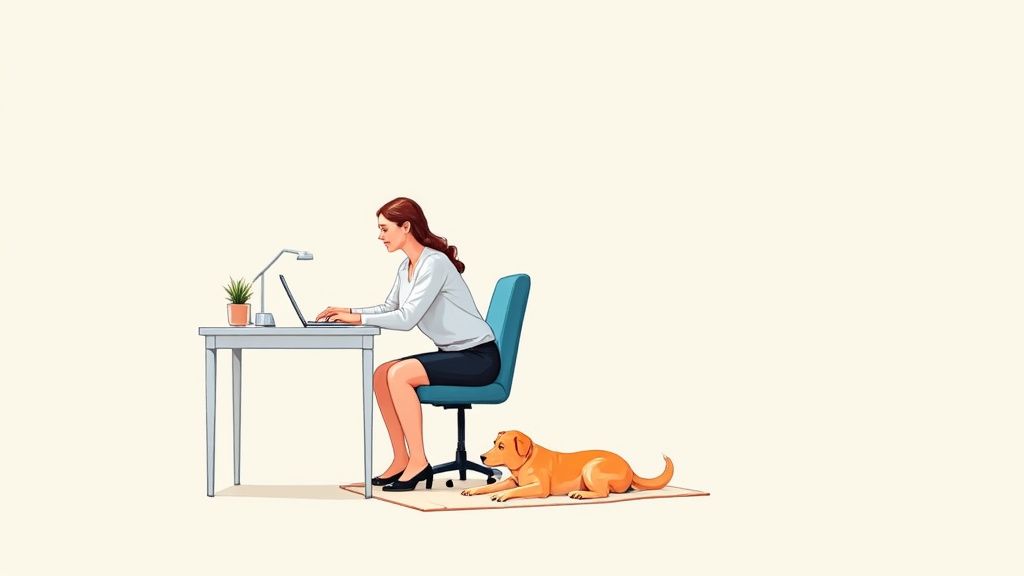
So, you’ve joined the club! As a doggy daycare owner, my days are filled with happy pets, but I also know what it's like to juggle deadlines with a dog who thinks my keyboard is a pillow. The big shift to remote work has been amazing for our pets, but let's be real—it’s not always the serene picture you see on Instagram.
This guide is packed with the same real-world advice I share with pet parents every single day at my daycare. We're skipping the fluffy, generic tips and getting straight into practical strategies that I've seen work time and time again. You’ll learn how to create a workspace and a daily rhythm that truly works for everyone in the house, both two-legged and four-legged.
The New Normal for Pet Parents
The rise of remote work has completely changed the game for us pet parents. As home offices became the norm during the pandemic, so did the pitter-patter of new paws. In fact, a whopping 70% of remote employees adopted a pet during that time, with dogs leading the charge. You can learn more about how our furry friends boost productivity from this insightful article. This boom means more of us than ever are figuring out the delicate dance of being a great employee and a great pet parent at the same time.
My goal is to help you build a sustainable and joyful work-from-home life where both you and your pet can thrive. It's not about perfection; it's about finding a rhythm that works for your unique situation.
We’ll cover everything from designing a pet-proof office to managing those inevitable barks during an important Zoom call. It's all about creating a new normal that keeps you on track with your job and keeps your best friend happy, healthy, and out of trouble.
Here’s a quick look at the core principles for a successful work-from-home setup with your pet.
Keys to a Peaceful Pet-Friendly Home Office
Principle | Why It Matters | Actionable Tip |
|---|---|---|
Clear Boundaries | Pets thrive on predictability. Separating "work time" from "play time" reduces their anxiety and your distractions. | Use a baby gate to create a visual barrier or simply close your office door during focus-heavy tasks. |
Structured Routine | A consistent schedule for walks, meals, and play helps your pet know what to expect, making them less likely to interrupt you. | Schedule 15-minute "pet breaks" in your calendar, just like you would for a coffee break. |
Mental Enrichment | A bored pet is a disruptive pet. Mental stimulation tires them out just as much as physical exercise. | Keep a puzzle toy or a snuffle mat near your desk for a quick and quiet distraction. |
Pet-Friendly Space | A comfortable, safe spot for your pet in your office makes them feel included and secure. | Place a cozy pet bed or crate in a corner of your office so they can relax near you. |
Getting these four pillars in place will make a world of difference in your day-to-day productivity and your pet's happiness.
What to Expect in This Guide
Think of this as your roadmap to a more peaceful and productive life with your animal companions by your side. We're going to tackle the real challenges head-on.
Here’s a glimpse of what we'll cover together:
Building a Daily Routine That Actually Works: Learn how to structure your day around your pet's natural rhythms to minimize anxiety and maximize focus for both of you.
Managing Distractions and Engaging Your Pet: Discover smart enrichment strategies and simple training tips to keep your pet happily occupied during your most important tasks.
Finding Balance as a Remote Working Pet Parent: We'll talk about the importance of setting boundaries to maintain a healthy work-life balance for the entire family.
Designing a Pet-Friendly Workspace
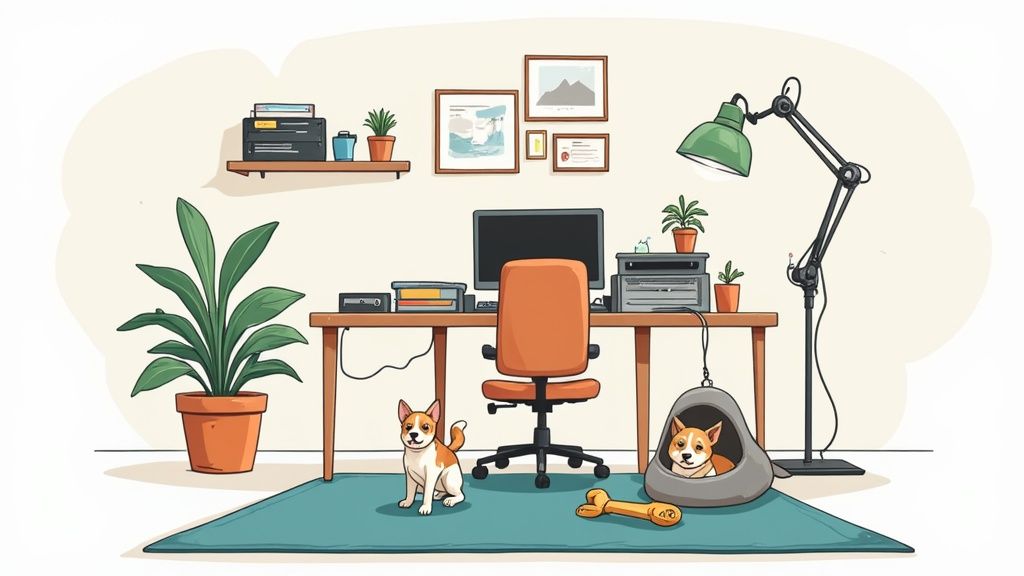
You don't need a huge, dedicated office to successfully work from home with your pet. The real secret is being smart with the space you already have. The goal is to carve out a spot where you can actually focus on your work while your pet can chill out safely and comfortably, without causing constant chaos.
At my daycare, I always talk to clients about the "zoning" method. It’s a simple but incredibly effective way to create clear boundaries in a shared space. This helps your pet understand the difference between work time and play time, which is the key to a peaceful day.
Create Your Work Zone and Their Comfort Zone
First thing’s first: designate a specific area for your work. This might be a desk tucked into a corner or a spare room you’ve claimed as your own. This is your zone. It sends a signal to your brain—and your pet—that this is where focus happens.
Right next to your space, set up a comfy "coworker" zone for your pet. It doesn't have to be fancy. A plush bed, a favorite old blanket, or a cozy crate can work wonders. The key is placing it near you so they feel included and secure without being directly underfoot while you're trying to type.
To make their spot extra inviting, create a positive association with it. Toss a high-value chew toy or a special stuffed animal onto their bed. This encourages them to settle down in their designated area, reinforcing that good things happen when they're calm while you're working.
My Pro Tip: I'm a huge fan of the "workspace-only" toy. Find a special puzzle or chew that your pet absolutely loves, and only give it to them when you sit down at your desk. This simple trick makes your work time feel like a treat for them, too!
Prioritize Pet-Proofing Your Office Space
Once your zones are established, it’s time to pet-proof. A home office can be a minefield of hidden dangers for a curious pet. Getting ahead of them prevents both accidents and interruptions. A happy tail can knock over a full cup of coffee in a split second, and a bored puppy might find a power cord looks like a fantastic chew toy.
Try to see the room from your pet's perspective. What’s at their eye level? What might they be tempted to nibble on or knock over? Taking care of these potential hazards is non-negotiable. For a more detailed walkthrough, our guide on how to dog-proof your home has a great room-by-room checklist.
Here are the most common hazards I see and how to handle them:
Loose Wires and Cables: These look like irresistible chew toys to a dog or cat. Use cable organizers, cord concealers, or even just some well-placed tape to secure them against walls or under your desk. This is one of the most important safety steps you can take.
Unstable Items: Make sure anything that could be easily knocked over—like lamps, plants, or mugs—is secure. A wagging tail is surprisingly strong and can send things flying, creating a mess or even an injury.
Office Supplies: Keep small items like paper clips, pens, and staples tucked away in drawers or containers. These can become serious choking hazards if your pet decides to investigate them.
Toxic Plants: Many common houseplants are toxic to dogs and cats. Check that any greenery in your workspace is pet-safe, or move it well out of reach.
Choose the Right Accessories for Harmony
The final piece of the puzzle is picking out a few key accessories that make the space work for everyone. The right gear can prevent messes, cut down on distractions, and generally make your shared office a much more pleasant place to spend the day.
For example, consider getting a durable, easy-to-clean rug for the area. Accidents happen, and having a rug you can just toss in the wash will save you a ton of stress. A spill-proof water bowl is another fantastic addition; it keeps your pet hydrated without creating a slipping hazard right next to all your electronics.
Ultimately, designing a pet-friendly workspace is all about finding a balance that supports your productivity and your pet's well-being. By setting up clear zones, taking pet-proofing seriously, and choosing a few smart accessories, you’re building a foundation for a successful and enjoyable workday, every day.
Building a Daily Routine That Actually Works

If I could give only one piece of advice to someone new to working from home with a pet, this would be it. A predictable routine is the absolute cornerstone of a peaceful and productive household. Our pets, especially dogs, are creatures of habit; they find a ton of comfort in knowing what to expect.
When your schedule is all over the place, their anxiety can spike. They just don't get why you’re ignoring their nudges one minute but are free to play the next. That confusion is exactly what leads to behaviors like barking, pawing at your arm, or dropping a soggy toy on your keyboard mid-Zoom call.
By creating a structured day, you're not just managing your pet—you’re giving them a sense of security that allows them to truly relax.
Kickstart the Day with Purpose
The way you start your morning really sets the tone for the entire workday. Before you even think about opening your laptop, your pet's needs have to be met. A groggy, two-minute trip to the backyard just isn't going to cut it.
I always tell my clients to treat their morning pet routine like a non-negotiable appointment. This could be a brisk 30-minute walk, a high-energy game of fetch, or even a quick training session to get their brain working. The goal is to burn off that initial burst of morning energy so they’re ready to settle down when you need to focus.
Think of it like this: you wouldn't just roll out of bed and run a marathon. You can't expect your dog to be a calm, quiet coworker for hours if they haven't had a proper outlet first.
For many, this is a huge reason working from home is so important. A 2024 survey found that 67% of remote dog owners would consider changing jobs if forced back into the office, showing just how crucial this time with their pets has become. You can read more about the strong link between pet care and employment decisions in the full report.
Schedule Dedicated Brain Breaks for Everyone
One of the biggest mistakes I see people make is thinking that working from home means being available to their pet 24/7. That's not sustainable for your focus, and honestly, it can create separation anxiety in your pet. The real magic lies in scheduling dedicated, high-quality breaks throughout the day.
These aren't just quick potty breaks. I'm talking about intentional 15-minute pauses that are all about your pet.
Mid-Morning Mind Games: Spend 15 minutes reinforcing commands like "settle" or "place." This kind of mental work is surprisingly tiring for a dog.
Lunchtime Puzzle: While you eat your lunch, give them a puzzle toy or a snuffle mat. It’s a quiet activity that taps into their natural foraging instincts.
Afternoon Reset: A short, spirited game of tug-of-war can be the perfect way to break up the afternoon slump for both of you.
Block these breaks out on your calendar just like you would a meeting. It’s the best way to ensure they actually happen. These planned interruptions will boost your own focus when you return to your desk and keep your pet from creating their own, less convenient interruptions.
Establish a Clear End to the Workday
When your office is also your living room, the lines between work and life get incredibly blurry. Your pet feels this, too. If they see you drifting back to your laptop all evening, they never get a clear signal that it's time to switch from "quiet coworker" mode to "family time."
Creating a distinct end-of-day ritual is just as important as your morning routine. It’s a clear boundary that helps everyone in the house unwind.
This signal can be simple, but it needs to be consistent. Maybe it’s closing your laptop with a definitive click and saying something like, "All done!" Then, immediately transition into an activity with them—grab their leash for an evening walk or start a game of chase.
This consistent ritual helps them understand when your attention is fully back on them. Over time, they'll learn to wait for that end-of-day signal, leading to a calmer pet during work hours and more quality time together when the day is done.
Managing Distractions and Engaging Your Pet
Let’s be honest, we’ve all been there. You're deep into a crucial video call, trying to sound like you have it all together, when your dog declares war on a squirrel outside your window. Or maybe your cat has decided your keyboard is the only acceptable place for an afternoon nap—right as you’re about to hit 'send' on a massive project. These aren’t just funny stories; they’re the daily reality of working from home with pets.
The secret isn't about stopping these moments entirely. It’s about getting ahead of them. Instead of constantly reacting to the chaos, you can proactively channel all that pet energy into something positive. By giving them healthy outlets for their minds and bodies, they won't feel the need to invent their own, far more disruptive, games.
This simple flow chart really nails the strategy: figure out the trigger, redirect their focus, and reward the calm.
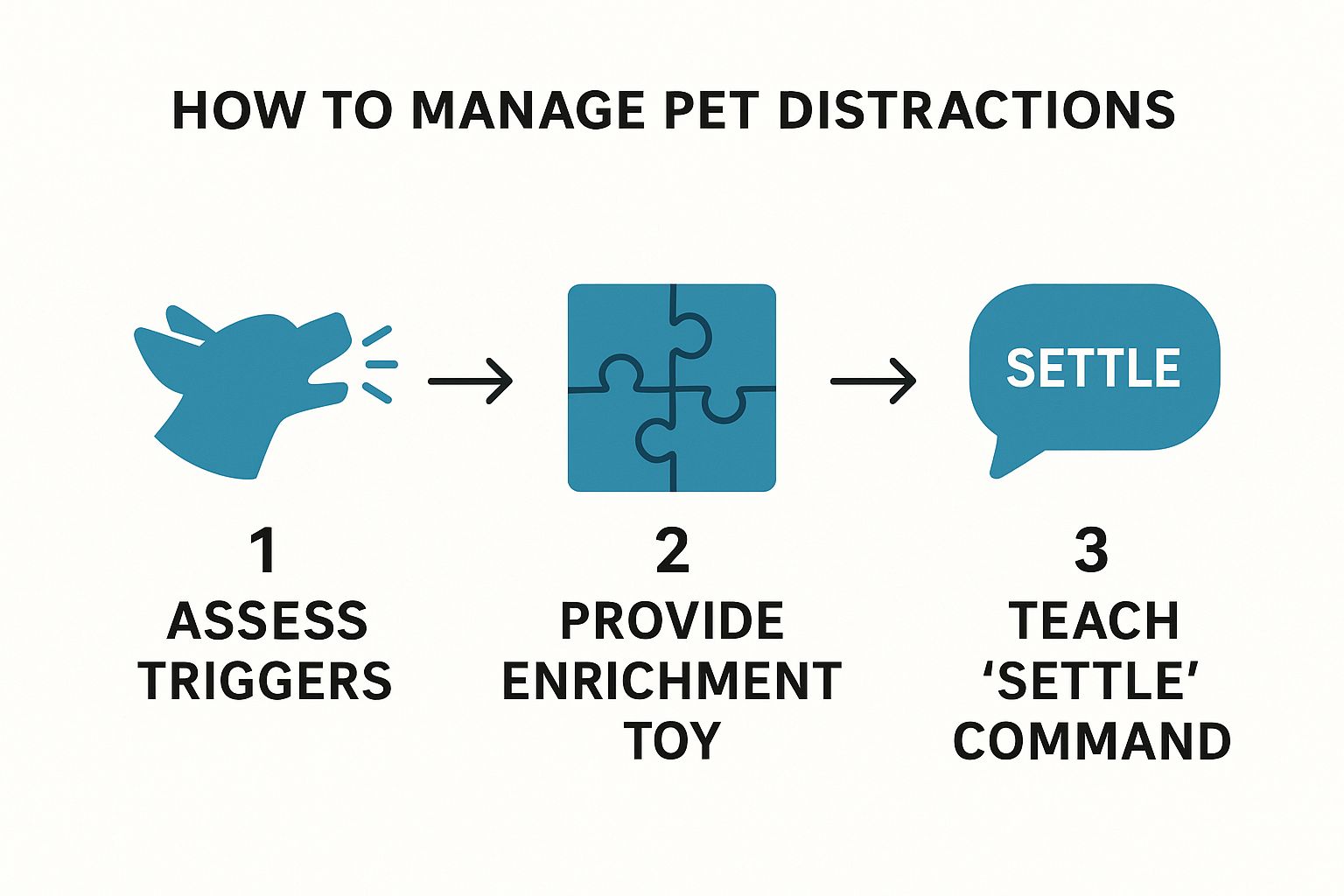
It’s a straightforward approach: understand what sets them off, give them a better alternative, and praise them for choosing it.
The Power of Enrichment
At my daycare, I tell pet parents all the time: a bored pet is a mischievous pet. Enrichment is your single most effective tool for keeping your furry coworker content and out of your hair. These activities are designed to tap into your pet’s natural instincts—like sniffing, chewing, and problem-solving. You'd be amazed how much mental stimulation can tire a pet out, often more than a long walk.
Think of it as giving your dog or cat a "job" to do while you're busy with yours. This is especially critical for those super-smart, high-energy breeds that get restless just by looking at you type.
Here are a few of my tried-and-true enrichment tools that are a lifesaver for my clients:
Puzzle Toys: These things are brilliant. You stuff them with treats, and your pet has to work to get them out. They come in all sorts of difficulty levels, so you can start simple and give them more of a challenge as they get the hang of it.
Snuffle Mats: Imagine a shaggy rug where every strand hides a piece of kibble. These mats encourage your dog to use their incredible sense of smell to forage for food, which is a deeply satisfying and calming activity for them.
Long-Lasting Chews: A high-quality, safe chew can buy you a solid block of uninterrupted work time. I always recommend natural options like bully sticks or beef tendons. You can also stuff a durable rubber toy (like a Kong) with wet food and freeze it. Just remember to always supervise your pet the first few times they have a new type of chew.
For our feline friends, enrichment often needs to mimic the thrill of the hunt. Interactive wand toys, puzzle feeders designed for cats, and even a safely used laser pointer can keep their sharp minds occupied. And never, ever underestimate the power of vertical space! A good cat tree provides a perch to watch the world go by, giving them a sense of security and keeping them off your desk.
Create a High-Value Distraction for Critical Moments
We all have those "do not disturb" windows in our workday—the big presentation, the new client call, the podcast interview. For these moments, you need a secret weapon. I always advise my clients to have a super high-value treat or toy that only comes out during these can't-be-interrupted times.
This could be that frozen Kong stuffed with peanut butter, a special bully stick they rarely get, or a particularly tricky puzzle toy packed with their favorite smelly treats. Because it's a novelty, it will hold their attention for far longer. Give it to them a few minutes before you need to focus, and they'll be too blissfully engaged to bother you.
The goal is to make your important work time a positive and rewarding experience for them, too. They start to associate you being on a video call with them getting the best treat ever.
Teach the Art of Doing Nothing
While toys and chews are fantastic for active engagement, it’s equally important to teach your pet how to just be calm while you work. This is where a "settle" or "place" command becomes your best friend. The idea is to teach your pet to go to a specific spot—their bed, a mat—and chill out until you release them.
Start small. Lure your pet onto their bed with a treat, say your command ("settle!"), and reward them for staying. At first, it might only be for a few seconds. Slowly increase the duration they have to wait before getting that reward. With consistent practice, this becomes their go-to move whenever they see you sit down at your desk.
Positive reinforcement is key here. Any time you catch your pet lying quietly or chewing a toy on their own instead of nudging your elbow, calmly praise them or toss a small treat their way. You're rewarding the exact behavior you want to see more of. For more interactive ideas, you might find some great tips in our guide on how to play with your dog to strengthen your bond. It’s all about making your time together count.
Sample Weekly Enrichment Schedule
To keep things fresh and prevent your pet from getting bored with the same old routine, try rotating different types of enrichment activities throughout the week. A little variety goes a long way.
Day of the Week | Morning Focus Activity | Afternoon Quiet Time Toy |
|---|---|---|
Monday | Snuffle Mat with Kibble | Frozen Stuffed Kong |
Tuesday | Food Puzzle Toy (Easy) | Long-Lasting Chew (Bully Stick) |
Wednesday | "Find It" Game (Hide Treats) | LickiMat with Yogurt/Peanut Butter |
Thursday | Training Session (10 mins) | Durable Rubber Chew Toy |
Friday | Food Puzzle Toy (Hard) | Frozen Stuffed Kong |
This is just a sample, of course. The best schedule is one that works for you and your pet, keeping them happy, engaged, and letting you get your work done in peace.
Finding Balance as a Remote Working Pet Parent
Working from home has completely smudged the lines between our professional and personal lives, with our pets sitting right at that intersection. As a doggy daycare owner, I see the incredible benefits firsthand—less stress for us, a richer life for them—but I also see the real challenges that come with this new reality. Finding the right balance is everything.
Nurturing this bond with our pets isn't just a nice perk of the job; it’s essential for our own well-being and job satisfaction. It's about creating a fulfilling, integrated lifestyle for your entire family, and that absolutely includes the furry members.
Learning to Read the Room (and Your Pet)
One of the most important skills you can develop as a remote working pet parent is learning to read your pet’s body language. They can’t just tell you they’re feeling stressed or under-stimulated, but they show you in dozens of small ways. A dog who is constantly pacing, whining, or dropping toys at your feet isn’t necessarily being “bad”—they’re communicating a need.
Even if you’re swamped with deadlines, taking a moment to recognize these signals is crucial.
Pacing or Restlessness: This often screams pent-up energy. A quick five-minute game of tug or a fetch session down the hallway can make a world of difference.
Excessive Licking or Chewing: This can be a self-soothing behavior, indicating anxiety or just plain boredom. It’s a cue to offer a puzzle toy or take a short cuddle break.
Constant Attention-Seeking: Is your elbow getting nudged off the desk? Are toys magically appearing on your keyboard? This is when a scheduled brain break is needed most.
Understanding these subtle cues helps you proactively meet their needs before they escalate into major distractions. If you notice a sudden shift in their behavior that seems out of character, it might be worth exploring further. Our guide on understanding dog behavior changes and their causes can offer some valuable insights.
Navigating the Pitfalls of Constant Togetherness
While being home all the time sounds like a pet owner's dream, it has a potential downside: separation anxiety. When a pet gets used to having you around 24/7, it can become incredibly stressful for them when you eventually do need to leave for a few hours.
It's vital to practice healthy separation even when you're home. This means scheduling short periods where your pet is in another room with a great chew toy, teaching them that being alone is safe and okay.
Without this practice, you risk creating a "velcro pet" who can't cope on their own. This isn't just about preventing destructive behavior when you're gone; it’s about their long-term emotional well-being.
Why Pet-Friendly Policies Are the New Standard
For so many of us, the ability to care for our pets during the day is no longer a simple "perk"—it's a core part of what makes a job sustainable. The modern workplace is finally starting to recognize this fundamental shift in priorities.
This isn't just a feeling; the data backs it up. In a comprehensive 2024 survey, nearly half (47%) of working pet owners said they would consider looking for a new job due to the costs and challenges of pet care if forced back to the office. This sentiment is even stronger among younger generations, with 62% of Gen Z owners prioritizing pet-friendly workplaces. You can discover more insights about pets in the modern workplace from the full survey.
Ultimately, finding balance while working from home with pets is about being present—both for your work and for them. It’s about creating routines that honor their needs, setting boundaries that protect everyone’s sanity, and cherishing the unique opportunity we have to share our days with our best friends.
Frequently Asked Questions (from a Pro!)
As a doggy daycare owner, I've heard it all from pet parents trying to navigate the new world of working from home. It's a balancing act, and it's completely normal to hit a few snags. Here are some of the most common questions that land in my inbox, along with some real-world advice that actually works.
How Can I Stop My Dog From Barking During Video Calls?
This is the big one. The key is to be proactive, not reactive. If you're scrambling to mute your mic while your dog is already barking, you've missed your window. The goal is to set your dog up for a quiet session before the call even starts.
A tired dog is a quiet dog. It’s a cliché for a reason. Before a can't-miss meeting, get them out for a brisk walk or a high-energy game of fetch. Burning off that excess energy makes them far more likely to settle down for a nap instead of a bark-fest.
Then, about ten minutes before you log on, give them a high-value distraction. This is the perfect moment for a frozen Kong stuffed with peanut butter or a special, long-lasting chew they only get during "quiet time."
Is your dog's trigger the mail carrier or a neighborhood cat? A simple white noise machine near the window can be a game-changer. It helps drown out those sudden sounds that send them into a frenzy.
For a longer-term fix, teaching a "quiet" command is your best bet. It takes patience and consistency, but rewarding silence with treats is always more effective than scolding them for making noise.
My Pet Seems More Anxious Now That I'm Home All Day. What's Going On?
This is a surprisingly common problem I've seen pop up more and more. It can feel counterintuitive—shouldn't they be happier? But constant access to you can sometimes create a sort of "velcro dog" syndrome, which can lead to separation anxiety later on.
The best thing you can do is practice healthy separation, even when you're under the same roof.
Start by scheduling dedicated "alone time" for your pet. This doesn't have to be complicated. Just have them relax in another room with the door closed for 30 minutes while you work. Toss them a favorite toy and let them learn to be content on their own. As they get comfortable, you can slowly increase the time.
It's also crucial to ignore attention-seeking behaviors like whining, pawing, or nudging your hand off the keyboard. It's tough, I know! But giving in just reinforces that pestering you gets them what they want.
Instead, make a point to shower them with praise and affection when you see them resting quietly on their own. This teaches them that being independent is a good thing and builds their confidence for when you actually do need to leave the house.
Is It Okay to Crate My Dog While I Work From Home?
One hundred percent, yes! As long as the crate is treated as a safe, cozy den—and never, ever as a punishment—it can be one of the most valuable tools in your WFH toolkit.
Think of it as their own private room. A crate gives your dog a quiet space where they can decompress without being disturbed. It signals that it's time to chill out, which is perfect for those times you need to buckle down and focus.
Of course, they shouldn't be crated for your entire eight-hour shift. I usually recommend using the crate for focused work blocks of two-to-three-hour stretches.
Just make sure they've had a solid round of exercise and a potty break beforehand. Tossing in a safe chew toy can also help keep them happily occupied in their space while you crush your to-do list.
At Pawcation, we know that juggling work and pet parenthood is a beautiful, messy, wonderful challenge. If you're in the King of Prussia, PA, area and need a safe, fun place for your dog to hang out while you work, we've got you covered. Learn more about our doggy daycare and boarding services.
Comments