8 Tell-Tale Signs of Dog Stress Every Owner Should Know
- ericavdippold
- Nov 1, 2025
- 15 min read

Hey there, fellow dog lover! As the owner of a cozy doggy daycare, my day is filled with happy barks, wagging tails, and lots of furry cuddles. But after decades of sharing my life and home with dogs, I've learned that even the most joyful pups have their off days. Sometimes, their stress isn't as obvious as a whimper or a tucked tail; they often "talk" to us in a much more subtle language. Dogs use their bodies to show us when they're feeling overwhelmed, anxious, or just plain stressed out.
Understanding these cues is one of the most important things we can do as pet parents. It strengthens our bond, helps us prevent bigger behavioral issues down the road, and ultimately ensures our best friends feel safe and secure with us. Being able to spot the early signs of dog stress allows you to intervene before a small worry becomes a major problem.
This guide will go beyond the basics. We're going to dive deep into 8 of the most common physical and behavioral signals I see every day. My goal is to help you decode your dog's unique language, so you can become a true expert on your own beloved companion's well-being. Let's get started.
1. Tail Position and Movement Changes
As a doggy daycare owner, one of the first things I teach my team is how to "read the tail." A dog's tail is like a barometer for their emotional state, and it’s often one of the most immediate and telling signs of dog stress you can observe. It's so much more than just a happy wag! A relaxed, content dog typically holds their tail in a neutral position, specific to their breed, with a loose, sweeping wag.
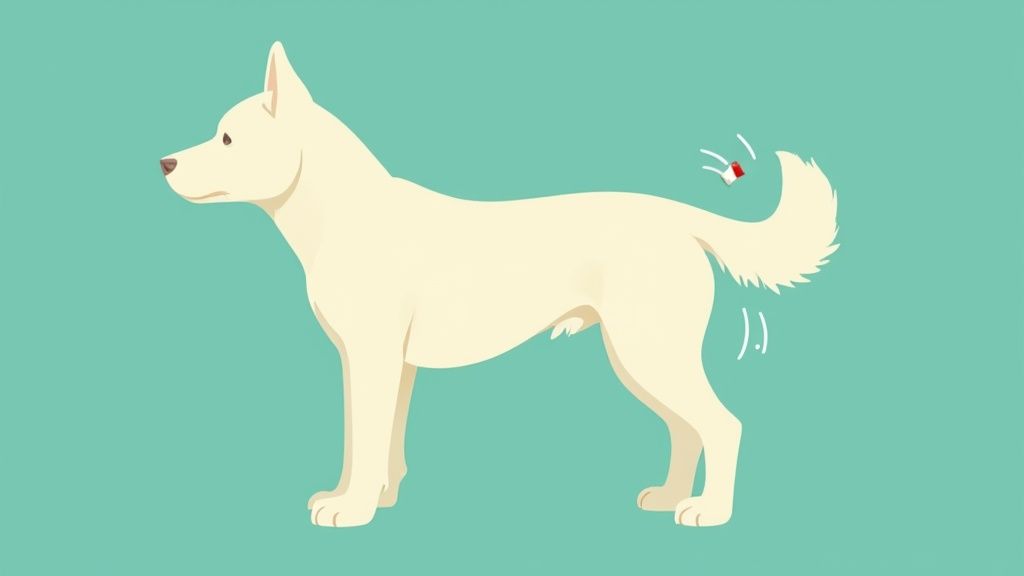
When stress enters the picture, this changes dramatically. A common reaction to fear or anxiety is a tucked tail, held low and tight against their hind legs. Think of a dog during a loud thunderstorm or fireworks. Conversely, a tail held high and stiff, sometimes with rapid, short wags, isn't necessarily a sign of happiness; it can indicate high arousal, tension, or a potential threat. These jerky, "helicopter" wags are very different from the fluid motion of a happy pup.
How to Monitor Tail Behavior
Observing your dog's tail is crucial for recognizing stress early. By understanding their unique tail language, you can intervene before a situation escalates.
Establish a Baseline: Pay close attention to how your dog carries their tail when they are completely relaxed at home. This is their "normal," and any deviation from it is worth noting.
Context is Key: A low tail during a vet visit is a clear stress signal. Combine this observation with other body language cues for a complete picture. You can learn more by exploring a complete guide to understanding dog body language to become a pro at reading these signs.
Track Patterns: If you notice your dog's tail is consistently low around a specific person, dog, or environment, it's a strong indicator of a persistent stressor.
Understanding these subtle shifts allows you to advocate for your dog's comfort and safety. This video provides a great visual guide to the different types of tail wags and what they mean.
2. Excessive Panting and Rapid Breathing
When a new dog joins our daycare pack, we closely watch their breathing. While panting is a dog's primary way to cool down, especially after a good romp in the yard, it's also a classic physiological response to stress. This is one of the most common and often misunderstood signs of dog stress. A dog panting heavily during a vet visit or a car ride when they haven't been exercising is not cooling off; they are reacting to anxiety.
This stress-induced panting is different from post-play panting. It’s often more shallow and rapid, and the dog's mouth might be tense with the corners pulled back. This is their body’s fight-or-flight system kicking in, preparing them for a perceived threat, like the loud clap of thunder or the unfamiliar sounds of a new environment. Recognizing when panting is out of context is a huge step in understanding your dog's emotional state.
How to Monitor Breathing Behavior
Learning to differentiate between normal and stressed breathing can help you quickly identify when your dog needs support. Knowing their baseline is key to spotting an issue.
Establish a Baseline: When your dog is calm and resting, count their breaths for one minute (one breath = one rise and fall of the chest). A normal resting respiratory rate for a dog is typically between 12 and 30 breaths per minute.
Context is Key: If your dog is panting heavily but has been sleeping on the couch while it storms outside, this is a clear sign of stress, not heat. Pair this observation with other cues like trembling or hiding for confirmation.
Track Patterns: Notice if the rapid breathing consistently happens in certain situations, like before you leave for work or when a specific neighbor walks by. This helps pinpoint the exact trigger for their anxiety.
Monitoring your dog's breathing is a direct window into their nervous system. For a deeper understanding of their physiological responses, you can also check out this guide to monitoring your dog's heart rate to get a more complete picture of their well-being.
3. Ears Pinned Back or Flattened
Just like the tail, a dog's ears are incredibly expressive and offer a direct window into their emotional state. In my daycare, we pay close attention to ear position, as it's a subtle but significant one of the signs of dog stress. A relaxed, curious dog will typically have their ears in a neutral or slightly forward position, actively listening to their environment. This is their baseline happy state.
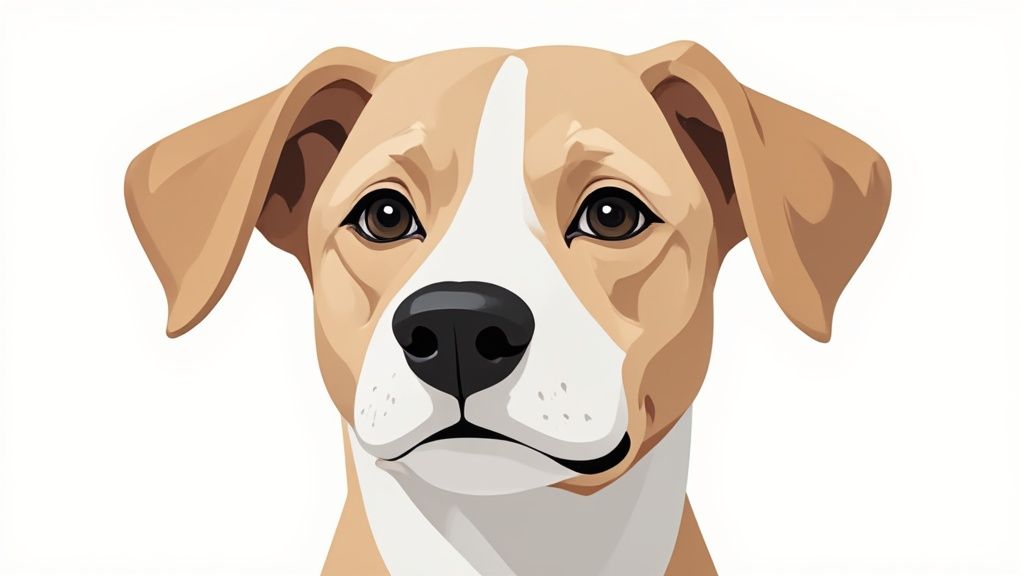
When a dog feels anxious, fearful, or uncertain, their ears will often swivel backward and flatten against their head. This can range from a slight pullback to being pinned so tightly they almost disappear. I often see this in newly rescued dogs during their first few days as they acclimate, or in dogs who are nervous at the grooming station. This pinned-back position is a submissive or appeasing gesture, signaling that the dog feels threatened and is trying to appear smaller and non-confrontational.
How to Monitor Ear Position
Understanding your dog's unique ear language is a powerful tool for proactively managing their well-being. By noticing these changes, you can identify and remove stressors before your dog becomes overwhelmed.
Know Your Dog's "Normal": Every dog's ears are different, from pointy German Shepherd ears to floppy Basset Hound ears. Observe how your dog holds their ears when they are content and relaxed at home. This baseline is your reference point for detecting stress.
Watch for Contextual Clues: A dog's ears might pin back briefly when greeting you affectionately, which is different from them being flattened for a prolonged period during a car ride or a vet visit. The context helps you interpret the signal correctly.
Track Changes Over Time: If you're working on socializing a nervous dog, taking photos or videos can help you track their progress. You might notice their ears are less pinned back around new people over time, which is a great sign of growing confidence.
4. Excessive Yawning and Lip Licking
When a new dog joins our playgroup, two of the most subtle yet significant behaviors we watch for are yawning and lip licking. It’s easy to dismiss a yawn as a sign of tiredness, but in the world of canine communication, it’s a classic appeasement gesture and one of the most common signs of dog stress. These actions, known as "calming signals," are a dog's way of trying to de-escalate a situation and self-soothe when they feel anxious or uncomfortable.
A dog at the vet might repeatedly lick their lips, not because they are thirsty, but because they are nervous about the examination. Similarly, a dog in a training class might start yawning excessively not from boredom, but from the pressure of learning a new command. These are involuntary responses to internal stress, like a person fidgeting when they're nervous.
How to Monitor Calming Signals
Recognizing these quiet signals is key to understanding your dog's emotional state and providing support before their stress levels rise. It allows you to become a more empathetic and effective advocate for your pet.
Context is Everything: A yawn after a long nap is normal. A series of rapid yawns when a stranger approaches is a stress signal. Pay attention to when the behavior happens.
Look for Clusters: One isolated lip lick might not mean much. However, if you see lip licking combined with a tucked tail, pinned ears, and avoidance, you're seeing a clear picture of a stressed-out pup.
Document and Adjust: Keep a log of when you notice these behaviors. If your dog always yawns and licks their lips during car rides, it's a strong sign of travel anxiety. This gives you a clear starting point to address that specific stressor.
By learning to spot these early warnings, you can remove your dog from an overwhelming situation or change the environment to help them feel more secure.
5. Dilated Pupils and Whale Eye
Just like with us humans, a dog's eyes can be incredibly revealing. As a professional who watches dogs interact all day, I often tell my staff that the eyes are one of the most honest signs of dog stress. When a dog is feeling anxious, fearful, or highly aroused, two distinct changes often occur: their pupils will dilate, and you may see what’s known as "whale eye."
Whale eye is when the whites of a dog's eyes (the sclera) are visible in a half-moon shape. This often happens when a dog turns their head away from something that is making them uncomfortable but keeps their eyes fixed on it. At the same time, their pupils may become very large, even in a brightly lit room. This is an involuntary physiological reaction, part of the "fight-or-flight" response, where the body prepares to take in as much visual information as possible about a perceived threat. We frequently see this in newly rescued dogs who are overwhelmed by their new environment.
How to Monitor Your Dog's Eyes
Learning to spot these subtle facial cues can help you de-escalate a stressful situation before your dog feels the need to react more strongly, such as by growling or snapping.
Know Their Normal: Look at your dog’s eyes when they are calm and relaxed. What is their normal pupil size in different lighting? How much, if any, of the whites of their eyes do you typically see? This is your baseline.
Context is Everything: Seeing whale eye when a stranger is reaching over your dog’s head is a clear signal of discomfort. A dog showing this during a vet exam is communicating their fear.
Capture the Moment: If you’re trying to identify a stressor, taking a quick photo can help. It allows you to objectively compare pupil size and see the extent of whale eye without staring, which can be intimidating for a stressed dog.
These eye signals are your dog's way of saying, "I'm not comfortable with this." By recognizing and responding to them, you are showing your dog that you are listening and will protect them from what scares them.
6. Trembling, Shaking, or Freezing
At the daycare, we sometimes see dogs come in who are completely overwhelmed by the new environment. One of the most unmistakable signs of dog stress we watch for is physical trembling. This isn't just a shiver from the cold; it's an involuntary response that shows their nervous system is overloaded. It's often paired with another, less obvious reaction: freezing. A dog that suddenly becomes rigid and still, like a statue, is experiencing an intense fight-or-flight response, and it’s a clear signal that they feel trapped and terrified.

This reaction is pure survival instinct. A dog trembling during a thunderstorm, a newly adopted rescue shaking in their new home, or a shelter dog freezing when you approach their kennel are all communicating extreme fear. Recognizing these behaviors is vital because a dog in this state is not thinking clearly and can react unpredictably. It’s our job as their guardians to help them feel safe and de-escalate the situation before their stress becomes unmanageable.
How to Help a Shaking or Frozen Dog
When you see your dog trembling or freezing, your immediate goal is to reduce the perceived threat and create a sense of security. Pushing them to "face their fears" in that moment will only make things worse.
Create a Safe Retreat: Ensure your dog has a designated safe space, like a crate with a comfy blanket or a quiet room, where they can go to feel secure. Never force them out of it.
Avoid Forced Interaction: If your dog freezes, do not crowd them, pet them, or try to force them to move. Give them space and allow them to process the situation at their own pace. Use a calm, gentle voice if you need to speak.
Allow for Self-Soothing: While it's tempting to scoop them up and cuddle them, over-comforting can sometimes reinforce their fear. Instead, stay near them calmly, acting as a reassuring presence without adding more overwhelming sensory input.
Consider Calming Aids: For predictable stressors like fireworks or car rides, tools like anxiety wraps (which provide gentle, constant pressure) or calming supplements can be very effective. Always discuss these options with your veterinarian first to ensure they are right for your dog.
7. Loss of Appetite or Refusal to Eat
At my doggy daycare, one of the most immediate red flags we watch for is a dog refusing their lunch or treats. A sudden change in appetite is a powerful physical manifestation of anxiety and is one of the more serious signs of dog stress. When a dog is stressed, their body goes into "fight or flight" mode, diverting energy away from non-essential functions like digestion to prepare for a perceived threat. This physiological response often suppresses their appetite completely.
We see this frequently with new dogs on their first day; even the most food-motivated pup might turn their nose up at a favorite snack due to the overwhelming new environment. It's also common for dogs to refuse food during a vet visit or a boarding stay. This isn't them being picky; it's a direct result of their body’s stress response shutting down their digestive system. A dog who typically devours their meal but suddenly shows no interest is communicating significant distress.
How to Monitor Your Dog's Eating Habits
Tracking your dog's appetite provides a clear window into their emotional well-being and can help you identify underlying stressors.
Rule Out Medical Issues First: Before assuming stress is the cause, it's crucial to consult your veterinarian. A loss of appetite can also be a symptom of many health problems, so a professional check-up is always the first step.
Connect Eating to Events: Keep a simple log. Did your dog skip breakfast after a night of thunderstorms? Did they refuse dinner after a tense encounter with another dog at the park? Linking food refusal to specific events helps pinpoint the exact cause of their anxiety.
Don't Force It: Pressuring a stressed dog to eat can create a negative association with mealtime, making the problem worse. Instead, remove the food after about 15-20 minutes and offer it again later when they might be calmer.
Use Appetite as a Gauge: One of the most rewarding parts of working with rescue dogs is seeing their appetite return as they begin to feel safe and de-stress. You can use this at home, too. A return to a normal eating schedule is a fantastic indicator that your efforts to reduce their stress are working.
8. Excessive Shedding, Skin Issues, and Piloerection
As a doggy daycare owner, I often tell my clients that a dog’s skin and coat are windows into their overall well-being. Beyond just looking good, they can reveal a lot about a dog's internal state. Sudden changes like a flurry of shedding or raised hackles are potent physical signs of dog stress that are often overlooked. These aren't just grooming issues; they are physiological responses to hormones like cortisol and adrenaline.
Piloerection, or "raised hackles," is an involuntary reaction where the fur along a dog's spine and shoulders stands on end. This happens during moments of high arousal, fear, or excitement. At the same time, acute stress can cause a dog to "blow their coat," shedding an astonishing amount of fur in a short period. I see this frequently in new dogs during their first day. If the stress becomes chronic, it can lead to more persistent problems like bald patches (alopecia) and other dermatological issues.
How to Monitor Your Dog's Coat and Skin
Paying attention to your dog's coat is a simple, non-invasive way to check in on their stress levels. You can integrate these checks into your daily petting and grooming routine.
Note Sudden Changes: A dog who suddenly starts shedding buckets of fur at the vet's office is clearly showing a stress response. Differentiate this from normal seasonal shedding, which is more gradual.
Track Patterns: Keep an eye out for piloerection. Does it happen around a specific person, animal, or during a particular activity like a walk near a busy road? This helps pinpoint exact stressors in their environment.
Consult a Professional: While a healthy coat often reflects a calm mind, persistent skin issues, bald spots, or excessive shedding can also indicate underlying medical problems. If stress-reduction techniques don't help, a visit to the vet or a veterinary dermatologist is a crucial next step.
Maintaining a healthy coat is part of managing your dog's overall health. You can find more helpful advice in this guide about at-home dog grooming and bathing to keep their skin in top condition.
8-Point Comparison of Dog Stress Signs
Sign / Signal | 🔄 Complexity | ⚡ Observation Ease / Resources | ⭐ Diagnostic Reliability | 📊 Expected Outcome / What it Indicates | 💡 Ideal Use Cases / Quick Tips |
|---|---|---|---|---|---|
Tail Position and Movement Changes | 🔄 Low — visually straightforward but breed variation | ⚡ High — visible from distance, quick check | ⭐⭐⭐ — reliable primary cue with caveats | 📊 Fear, submission, anxiety, arousal; often an early stress sign | 💡 Establish baseline; combine with other cues; avoid approaching tucked tails |
Excessive Panting and Rapid Breathing | 🔄 Low — physiological but context-dependent | ⚡ Moderate — easy to see; may require breath counting | ⭐⭐ — clear marker but confounded by heat/exertion or illness | 📊 Acute stress/anxiety; can indicate overheating or medical issues | 💡 Know resting RR; count breaths when calm; consult vet if persistent |
Ears Pinned Back or Flattened | 🔄 Low–Moderate — visible but breed-dependent (floppy/cropped) | ⚡ Moderate — may require proximity for detail | ⭐⭐⭐ — consistent across many breeds except structural exceptions | 📊 Anxiety, submission, discomfort; severity conveyed by degree | 💡 Learn dog's normal ear posture; use with facial/body signals; photo record |
Excessive Yawning and Lip Licking | 🔄 Low — subtle calming signals, easy to miss | ⚡ High — non-invasive; appears before major behaviors | ⭐⭐ — early indicator but highly context-dependent | 📊 Low-level stress or appeasement behaviors; precursor to escalation | 💡 Look for clusters and context; track frequency during events |
Dilated Pupils and Whale Eye | 🔄 Moderate — needs good lighting/proximity to assess | ⚡ Low–Moderate — may require photos; lighting sensitive | ⭐⭐⭐ — strong indicator of acute fear or escalating anxiety | 📊 Acute stress/fear; often precedes defensive or aggressive responses | 💡 Compare to baseline in calm photos; combine with other signals; give space |
Trembling, Shaking, or Freezing | 🔄 Low — overt and unambiguous when present | ⚡ High — hard to miss; immediate observable sign | ⭐⭐⭐⭐ — indicates significant stress needing intervention | 📊 Severe stress/fear (fight–flight–freeze); may signal pain or trauma | 💡 Provide safe retreat space; avoid forcing interaction; seek vet if needed |
Loss of Appetite or Refusal to Eat | 🔄 Moderate — requires repeated observation over time | ⚡ Low — takes time to detect patterns | ⭐⭐ — notable behavioral change but may be medical | 📊 Stress-induced digestive suppression; useful longitudinal wellness marker | 💡 Rule out medical causes; log eating vs. stressful events; avoid forcing food |
Excessive Shedding, Skin Issues & Piloerection | 🔄 Moderate — differentiate stress vs. seasonal/allergic causes | ⚡ Moderate — visible but needs history and follow-up | ⭐⭐⭐ — piloerection is a clear acute marker; chronic skin issues indicate long-term stress | 📊 Acute arousal (raised hackles) or chronic dermatologic impact from prolonged stress | 💡 Monitor coat over time; compare seasonal patterns; consult dermatologist/vet |
Your Next Steps to a Calmer, Happier Canine Companion
We've just unpacked a lot of information, from the subtle flick of an ear to more obvious signals like trembling or refusing a meal. It can feel like a lot to remember, but you don't need to be a professional trainer to become an expert in your own dog's communication. The most powerful tool you now have is awareness. By simply knowing what to look for, you've already taken the first and most crucial step in strengthening your bond and supporting your furry family member through their anxieties.
The goal isn't to create a completely stress-free world for our dogs, that’s just not realistic. Just like us, dogs experience stress as a normal part of life. Our true mission as their guardians is to recognize when that stress becomes overwhelming and to step in as their advocate. You are their safe space, and now you have the decoder ring to better understand when they need you to be just that.
Turning Knowledge into Action
So, what are the immediate, practical next steps? It starts with observation. Over the next week, make a conscious effort to watch your dog during different situations—a quiet evening at home, a walk in the park, or when a visitor arrives.
Establish Their "Normal": Get a clear picture of your dog's baseline behavior. What does their tail look like when they're relaxed? How fast do they normally breathe after a light walk? Knowing their neutral state is essential for spotting deviations that signal distress.
Identify Stress Triggers: When you notice some of the signs of dog stress we've discussed, take note of the context. Was there a loud noise? Did another dog approach too quickly? Pinpointing triggers is the first step toward managing them effectively through training or avoidance.
Create a "Stress First-Aid Kit": This isn't a physical kit, but a mental one. Know your dog's favorite calming activities. For some, it might be a gentle chew toy; for others, it could be practicing simple commands like "sit" to give their brain a job, or simply moving to a quieter room.
The Long-Term Commitment to Their Well-Being
Mastering these concepts is more than just a party trick; it's a fundamental part of responsible and compassionate pet ownership. When you can accurately read your dog's emotional state, you can prevent negative experiences from escalating. You can build their confidence by not pushing them too far past their comfort zone, and you can intervene before a small fear develops into a significant behavioral issue. This proactive approach not only leads to a happier, more well-adjusted dog but also a more peaceful and fulfilling relationship for you both. Remember, every time you correctly interpret their silent signals, you're telling them, "I see you, I hear you, and I've got your back."
Are you looking for a safe, enriching environment where your dog will be understood and cared for by people who live and breathe this stuff? At Pawcation, our entire team is trained to recognize these subtle signs of dog stress, ensuring every guest has a positive and comfortable experience. Visit us online at Pawcation to learn more about our stress-aware approach to doggy daycare and boarding.
Comments