A Doggy Daycare Owner's Guide To Happy Paws and Stress-Free Nail Trims
- ericavdippold
- Oct 23, 2025
- 11 min read

Hey there, fellow dog lover! As the owner of a busy doggy daycare, I've seen it all when it comes to our furry friends, especially their paws. Keeping your dog’s nails trimmed isn’t just about protecting your floors from scratches; it's a huge part of their overall health and happiness. When nails get too long, they can lead to some surprisingly painful problems, changing how your dog walks and even causing joint damage down the road. But don't worry—a simple, regular trim routine can prevent all that and even become a nice bonding moment for you both. I'm here to walk you through it, one paw at a time.
Why Good Dog Nail Care Is So Important
One of the first things I notice about any pup that comes through our daycare doors is their paws. Healthy paws mean a dog can run, jump, and play without a second thought. But I get it—for a lot of owners, the very idea of trimming their dog's nails is enough to cause a little anxiety for everyone involved.
Let’s try to look at it differently. Nail care isn't a dreaded chore; it's as essential to your dog's well-being as their daily walks or a good meal. When a dog's nails are too long, they're constantly pushing into the ground, which forces their toe bones out of their natural alignment. It’s a subtle but constant pressure that really adds up.
Think about what it would feel like to wear shoes that are two sizes too small, all day, every day. That’s a pretty good comparison for what a dog with overgrown nails experiences. Eventually, this chronic discomfort makes them adjust their posture and gait, which can lead to serious skeletal problems like arthritis.
More Than Just Comfort
Good dog nail care is about more than just avoiding pain; it's also a big deal for their safety and overall health.
Better Traction: When nails are the right length, your dog's paw pads can make proper contact with the floor. This gives them a much better grip, especially on slick surfaces like hardwood or tile. No more Bambi on ice!
Fewer Injuries: Long nails are notorious for snagging on carpets, blankets, or even roots and branches outside. A snag can easily lead to a torn or broken nail, which is incredibly painful for your pup.
Preventing Infections: In severe cases, overgrown nails can curl around and grow right into the paw pad. This creates painful wounds that are a prime spot for nasty infections.
In my experience at the daycare, I’ve seen time and again how a simple, regular nail trim can completely change a dog's demeanor. Pups with well-kept paws are often more confident, active, and eager to play.
It seems like more and more pet parents are recognizing this. In places like North America, where over 60% of households have at least one pet, there's a growing awareness of how grooming impacts a dog's quality of life. This has led to more owners getting the right tools for the job—you can read more about the growing market for dog nail clippers to see just how big this shift is.
Choosing The Right Nail Care Tools
Walking into the pet store's grooming aisle can feel pretty overwhelming, can't it? You've got scissor-style clippers, the guillotine kind, and then there’s that buzzing grinder thing. As someone who’s wrangled more paws than I can count at our doggy daycare, I can tell you there’s no single "best" tool—it all comes down to what works for you and your dog.
Let's break down the main contenders.
Traditional clippers, whether they're the scissor or guillotine type, are the classic choice for a reason. They're quick and efficient. You get a clean, sharp cut, which is fantastic for dogs who are already used to the process and just want to get it over with.
On the other hand, a lot of pet parents are now leaning towards nail grinders. Instead of clipping, these tools file the nail down smoothly. This practically eliminates the risk of accidentally cutting into the "quick"—that sensitive part of the nail with the blood supply. They’re a game-changer for dogs with dark nails where the quick is impossible to see, and for pups who get spooked by the sharp "snap" of clippers.
Dog Nail Clippers vs Grinders A Quick Comparison
Here’s a simple breakdown to help you choose the best tool for your dog's nail care routine.
Tool Type | Best For | Pros | Cons |
|---|---|---|---|
Scissor Clippers | Medium to large dogs; confident owners. | Fast, clean cut; no noise or vibration. | Easy to cut the quick; requires more force. |
Guillotine Clippers | Small to medium dogs with thinner nails. | Easy to use; single, quick slice. | Blade can dull; not great for thick nails. |
Nail Grinder | Anxious dogs; dogs with dark nails; owners nervous about clippers. | Low risk of cutting the quick; smooth finish. | Slower process; noise and vibration can bother some dogs. |
Ultimately, the right tool is the one that makes both you and your dog feel the most confident and comfortable.
Your Complete Dog Nail Care Toolkit
Whether you land on clippers or a grinder, there are a few other items you'll absolutely want to have ready to go. Think of this as your nail-trimming success kit.
Styptic Powder: This stuff is non-negotiable. If you accidentally trim a nail too short and it starts to bleed, a little pinch of this powder will stop it almost instantly. Just having it nearby gives you incredible peace of mind.
High-Value Treats: We're not talking about their everyday kibble. Think tiny pieces of cheese, chicken, or whatever snack makes their tail go into overdrive. The goal is to build a positive association with nail trims, and rewards are the quickest way there.
A Comfortable Spot: Find a well-lit area where both of you can settle in. Maybe that’s on the floor with a yoga mat for grip, or cuddled up on the couch with a towel in your lap. Comfort is key.
It’s fascinating to see the shift in owner preferences. The global market for electric dog nail grinders is now estimated at $500 million and is actually growing faster than the market for traditional clippers. This really highlights how many people are actively searching for a painless, low-stress solution for their dogs.
Having the right gear is just one piece of the puzzle. When you combine great tools with a patient approach, you'll master at-home grooming in no time. For a deeper dive into keeping your pup looking and feeling great, check out our guide on at-home dog grooming and bathing.
Creating a Calm Nail Trimming Experience
So, you've got your clippers and a pocket full of treats. You’re ready to tackle those talons. But the real secret to a successful nail trim has nothing to do with speed and everything to do with creating a calm, positive vibe. This isn't a chore to rush through; it's a moment of trust between you and your dog.
I've seen it a hundred times at my daycare: a little patience upfront saves you a lifetime of wrestling matches. So many people jump right in with the clippers, but the real first step is just getting your dog comfortable with you handling their paws.
Start slow. Pick a time when your dog is already chilled out—maybe they're snoozing on the couch after a good walk. Gently touch one of their paws for just a second, then immediately give them a super tasty treat and some praise. That’s it. Do this a few times a day for a week until their reaction is, "Oh, human touching my paw means I get cheese!"
Finding Your Position and the Perfect Hold
Once your dog is cool with you touching their feet, you need to find a comfortable position for the main event. This could be with them lying on their side, sitting in your lap, or even standing between your legs for bigger dogs. The most important thing is that you both feel stable and secure.
When you hold their paw, be firm but gentle. Never squeeze. I find it easiest to support the paw from underneath with my non-dominant hand. I place my thumb on the top of the toe and gently push any fur back so I have a clear view of the nail.
Keep a close eye on your dog's reactions. Are their ears back? Are they lip-licking? These subtle cues tell you everything. You can learn more about what they're trying to communicate by checking out our guide to understanding dog body language.
Before you even think about clipping, get your station set up. This infographic gives a great overview of the process.
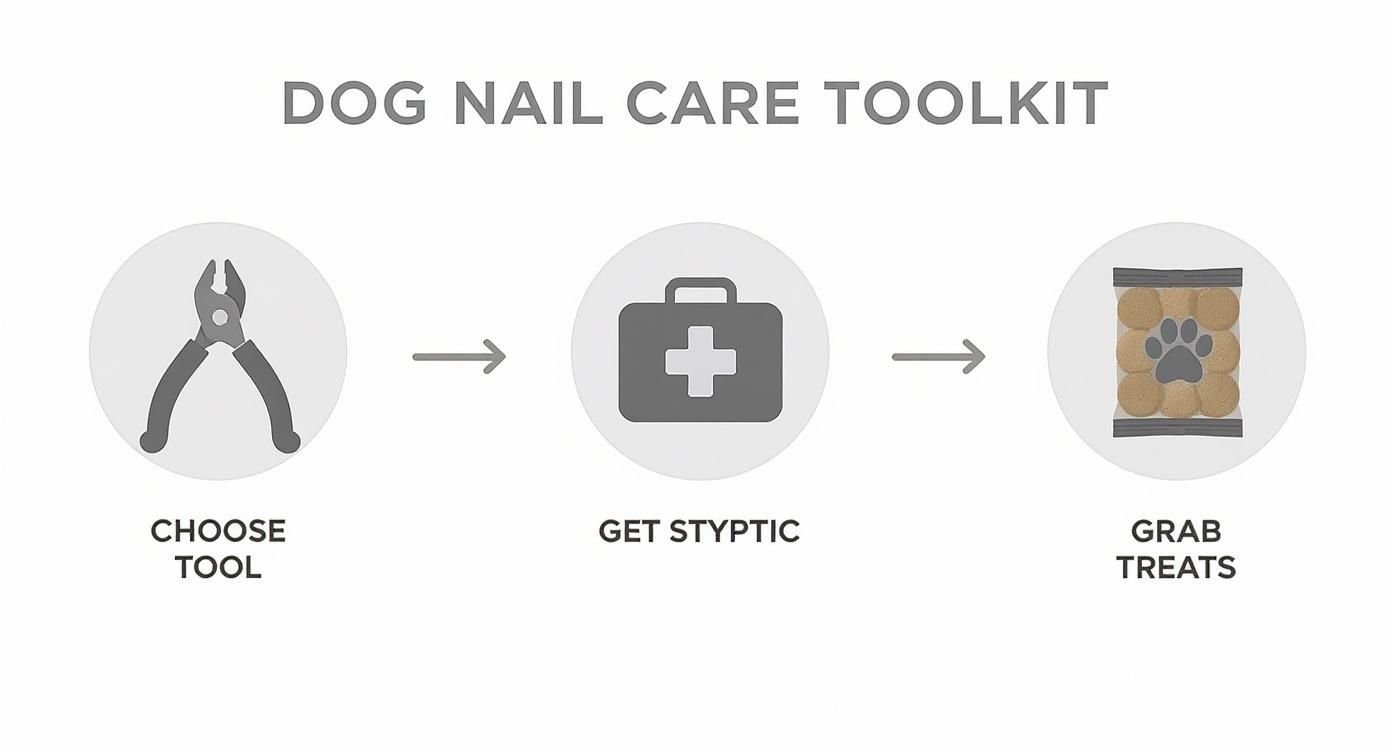
Having your clippers, styptic powder, and treats all within arm's reach means you can keep the process smooth and stay prepared for any little nicks.
The Tiny Sliver Method
The number one fear for every dog owner is cutting the quick—that little vein inside the nail. It hurts, it bleeds, and it can set your progress back by months. To avoid it, I swear by the "tiny sliver" method. Forget trying to take off a big chunk at once. Just trim the very, very tip.
For light-colored nails: This is the easy mode. You can actually see the pink quick inside the nail. Just trim the white part and stay a safe distance from the pink.
For dark-colored nails: This takes a bit more detective work. After you clip off one tiny sliver, look at the cut edge of the nail. As you get closer to the quick, you'll start to see a small, dark circle appear in the center. That's your stop sign!
Key Takeaway: It is always, always better to trim too little than too much. The goal isn't perfect, show-dog nails in one sitting. It's building trust so that nail care becomes a painless, routine part of life together.
What To Do If You Trim The Quick
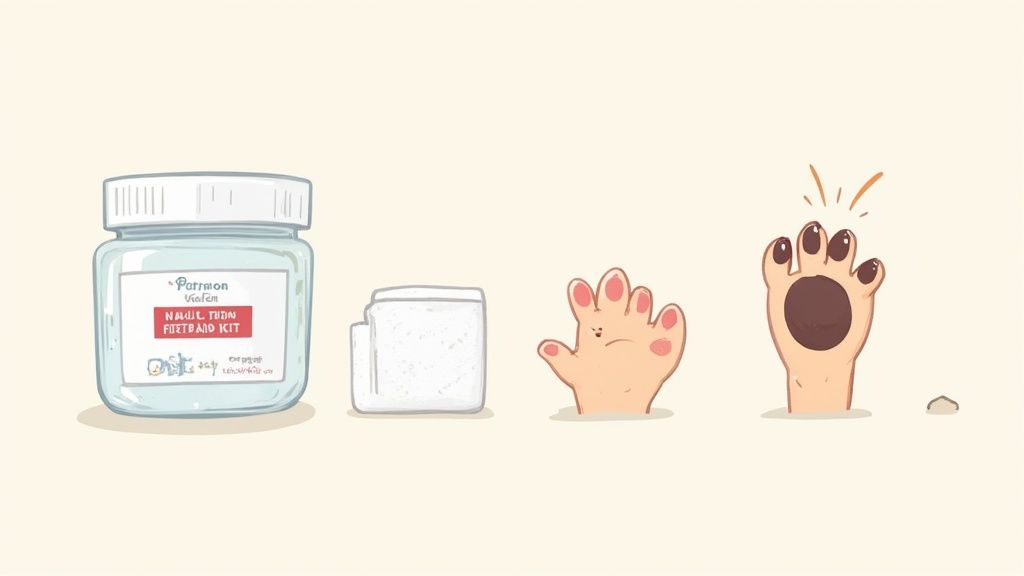
Okay, let's talk about the one thing every dog owner dreads: hitting the quick. It’s that heart-sinking moment when you see a drop of blood. First thing's first: take a deep breath. It happens to literally everyone, from first-timers to seasoned pros like me. The absolute most important thing you can do is stay calm.
Your dog will feed off your energy. If you panic, they'll panic, and the whole situation escalates. Instead, calmly reach for your styptic powder. Apply a decent pinch directly to the tip of the bleeding nail and hold it there with firm pressure for a few seconds. In most cases, the bleeding will stop almost immediately.
Once the bleeding is under control, shower your dog with praise and offer a high-value treat. You need to end the experience on a positive note, not a scary one. This simple step helps prevent them from associating dog nail care with pain and fear in the future.
How to Handle Dark Nails
The biggest challenge with dark nails is, of course, that the quick is completely hidden. This is where you have to play nail detective. Rather than trying to take off a big chunk, just trim a tiny sliver from the very end.
After each tiny cut, take a close look at the cross-section of the nail. You're looking for clues.
At first, the cut surface will look chalky white or grayish. This means you're still in the clear.
As you get closer to the quick, you’ll see a small, dark dot appear right in the center.
That little dot is the beginning of the live tissue. It’s your signal to stop trimming that nail right away.
Your goal isn't just to trim the nails; it's to be prepared for those little "oops" moments. Knowing exactly what to do builds your confidence and keeps your dog from having a bad experience. This is why I always tell people that understanding basic pet first aid is so invaluable.
Having styptic powder on hand and knowing these techniques turns a potentially traumatic event into a minor, manageable hiccup. Gaining this kind of knowledge is empowering, and if you want to be even more prepared, learning that a pet first aid class is a must for every pet parent is a great next step.
Building A Consistent Paw Care Routine
Alright, you made it through the trim—and you both survived. Great job! But here’s the thing: successful dog nail care isn’t a one-and-done deal. It's a marathon, not a sprint, and the real goal is to make this a regular, stress-free part of your life together.
So, how often do you actually need to do this? There's no magic number because it all comes down to your dog's lifestyle. A city dog pounding the pavement every day will naturally wear down their nails much faster than a suburban pup who mainly romps around on soft grass.
The easiest way to know for sure? Just listen. Once you start hearing that tell-tale 'click-clack' on your hardwood or tile floors, it’s officially time for a trim. For most dogs, this usually works out to be about every 3-4 weeks.
Creating A Simple Paw Care Schedule
Consistency is absolutely your best friend here. When you stick to a routine, your dog learns what to expect, which can dramatically lower their anxiety over time. As a bonus, it keeps the quick from growing out too far, making every future trim that much easier on both of you.
Here’s a simple routine you can make your own:
Weekly Paw Check: Once a week, maybe while you’re snuggling on the couch, gently handle each of your dog's paws. Look between their pads for any trapped debris, check for cracks, and just get them comfortable with you touching their feet. This simple act makes the actual trim feel far less invasive.
Bi-Weekly Trim Time: Every two weeks, set aside just five minutes for a quick maintenance trim. You don’t need to get every nail perfect. Maybe you just snip the tips off a couple of nails on each paw, focusing on any that look a bit long.
Monthly Full Groom: Once a month, plan to do a more thorough job. This is a great time to also check their ears and give their coat a good brush, tying all their grooming needs together.
The real secret is turning paw maintenance into a positive, routine interaction. By incorporating quick, gentle paw inspections into your daily snuggles, you normalize the process and reinforce your bond.
It’s encouraging to see how many pet owners are taking this kind of routine care seriously. The global dog nail trimmer market was valued at a whopping 744.1 million USD in 2024 and is only expected to grow. This reflects a wonderful shift toward treating our dogs like true family members, where their comfort and health are a top priority. You can discover more insights about this growing trend in pet care investment.
Got Questions About Dog Nail Care? I've Heard Them All.
Working with dogs every day, I get a lot of questions from pet parents who are just trying to do the right thing. When it comes to nail care, a little uncertainty is completely normal! Let’s go through some of the most common questions I hear at the daycare.
So, How Often Do I Really Need to Trim My Dog's Nails?
Honestly, there isn't a one-size-fits-all schedule. The easiest way to tell is to just listen. If you can hear a "click-clack" sound when your dog walks across a hard floor, their nails are too long.
For most dogs, this works out to a trim every 3-4 weeks. But a city dog who walks on pavement every day might naturally wear them down and need less frequent trims. On the other hand, an older, less active dog might need a touch-up every couple of weeks. Just get in the habit of checking their paws weekly.
My Dog Absolutely Hates Nail Trims. What Do I Do?
First off, know that you are not alone in this struggle. The key here is patience and rebuilding trust, not forcing the issue. We need to change their association with the clippers from something scary to something that brings amazing rewards.
Start small. I mean really small. Just touch their paw for a second, then immediately follow up with a high-value treat—think tiny pieces of chicken or cheese. Keep these sessions short and sweet, maybe just a minute or two. The goal is to end on a positive note, long before they get stressed. It’s far better to do one nail a day than to turn it into a wrestling match that ruins any progress.
The point isn't to get a perfect pedicure in one go. The real goal is to build a positive routine so that nail care becomes a calm, manageable part of your life together instead of a dreaded event.
Can I Just Use My Own Nail Clippers?
Please don't. I know it seems convenient, but it's a really bad idea for a simple reason: nail shape. Our nails are flat, so our clippers are designed to squeeze and cut flat things.
A dog's nail is round. When you use human clippers on it, you don't get a clean cut—you get a painful crushing motion that can easily splinter or crack the nail. Do your pup a favor and invest in a good pair of guillotine or scissor-style clippers made specifically for them. It makes the whole process safer and much more comfortable.
At Pawcation, we're obsessed with every detail of your dog’s well-being, from how they play to their paw health. If you’re around King of Prussia, PA, and looking for a place that cares as much as you do, check out our daycare and boarding services.
Comments