A Doggy Daycare Owner's Guide to Vaccination Requirements
- ericavdippold
- Sep 11
- 12 min read

Hello there! As the owner of a bustling doggy daycare and boarding facility, my top priority is making sure every single pup who trots through our doors is happy, safe, and healthy. I love thinking of our place as a fun-filled schoolyard for dogs—it’s packed with new friends, exciting games, and plenty of belly rubs. But just like any school, we have a few simple rules to keep everyone protected from pesky germs.
This guide is my way of personally walking you through the essential dog boarding vaccination requirements. We'll chat about which shots are absolute must-haves, why they're so important in a group setting, and how to get all the paperwork sorted out without any last-minute stress. My goal is to make the whole process crystal clear, so you can feel completely at ease and excited for your dog’s upcoming vacation with us.
Why Are Vaccinations Such a Big Deal for Boarding?
When a group of dogs gets together to play, they share more than just squeaky toys and water bowls—they can also share germs. It only takes one unvaccinated dog to potentially introduce an illness that could spread like wildfire through our entire guest list. This is precisely why having strict vaccination rules is the bedrock of any safe and responsible boarding facility.
Vaccination requirements aren't just about ticking boxes on a form; they're about creating a "bubble" of community immunity. When every dog is protected, it massively lowers the risk for everyone, ensuring a healthier and happier place to play and socialize.
Think of it this way: each vaccinated dog adds another brick to a wall of protection around the whole group. This "herd immunity" is what allows us to offer a fun, social, and worry-free experience. It’s the ultimate team effort in keeping our pups healthy.
The "Big Three" Vaccines: A Quick Look
To keep things simple, most dog boarding facilities, including ours, require proof of vaccination for Rabies, DHPP (Distemper, Hepatitis, Parainfluenza, and Parvovirus), and Bordetella (Kennel Cough). These are the non-negotiables that act as your dog's health passport for their stay.
Here's a quick summary of the core vaccines we'll need to see on your pup's records.
Quick Glance: Essential Boarding Vaccines
Vaccine | What It Protects Against | Why It's Required for Boarding |
|---|---|---|
Rabies | A fatal viral disease affecting the nervous system. | It's a serious public health risk and legally required in most places. |
DHPP | Distemper, Hepatitis, Parainfluenza, and Parvovirus. | Protects against highly contagious and often deadly airborne viruses. |
Bordetella | A primary cause of "Kennel Cough," a respiratory infection. | It spreads incredibly easily where dogs socialize in close quarters. |
These vaccines are the bare minimum needed to ensure a safe environment for every dog. Let's dive a little deeper into each one, so you know exactly what they do and why they're so important for any social pup.
The Big Three: Core Vaccines Every Boarding Dog Needs
Alright, let's talk about the essentials—the "core" vaccines. I like to think of these as your dog's fundamental suit of armor. They're the absolute must-haves, shielding your pup from some of the most contagious and dangerous diseases out there. We're talking about a critical trio: Rabies, Distemper, and Parvovirus.
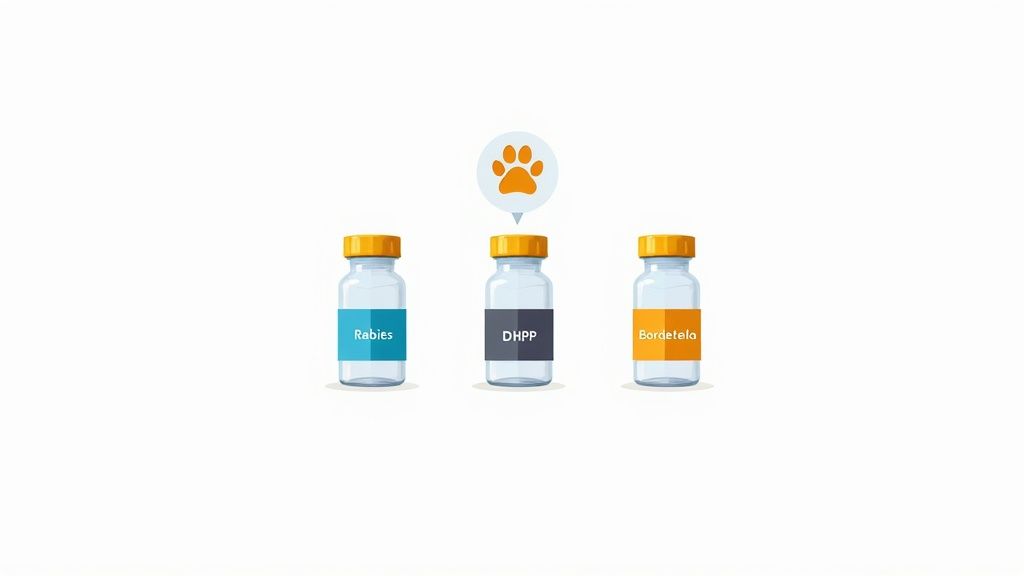
You'll often find these bundled into a single combination shot, which your vet might call DHPP or DAPP. This combo vaccine is a real superstar, giving your dog broad protection all in one go. Let's break down why each of these is so vital for any dog who's going to be making new friends.
Rabies: The Legal and Lifesaving Shot
First up is Rabies, and this one is a really big deal. The Rabies vaccine isn't just one of our rules; it's required by law in nearly every state. And for very good reason. Rabies is a fatal disease with no cure once symptoms appear, and tragically, it can be passed to humans.
Because it’s a public health concern, keeping every dog’s Rabies shot up to date is all about community safety. It’s the one vaccine that protects not only your dog but also every person and animal they might ever meet. For us, proof of a current Rabies vaccination is the first and most critical document we need to see at check-in.
The DHPP Vaccine: A Shield Against Multiple Threats
The DHPP shot is like a multi-tool for your dog's immune system, protecting them from several nasty illnesses at once. That acronym might look like alphabet soup, but it stands for Distemper, Hepatitis (Adenovirus), Parainfluenza, and Parvovirus. Let’s zoom in on the two heavy-hitters in that group: Distemper and Parvo.
Canine Distemper: This is a terrible virus that attacks a dog’s respiratory, gastrointestinal, and nervous systems. It's incredibly contagious and can be devastating, especially for puppies with developing immune systems.
Canine Parvovirus (Parvo): Parvo is another highly aggressive and contagious virus that goes after the gastrointestinal tract. What makes it so scary is its resilience—it can survive in the environment for months, posing a lingering threat wherever dogs gather.
Vaccination is the only truly effective way to stop these diseases. The DHPP shot ensures your dog is protected, allowing them to play and socialize without you having to worry. If you're planning on using a service like our overnight dog boarding, this protection is the key to a stress-free stay for everyone.
A common myth is that diseases like Parvo and Distemper are a thing of the past. While widespread vaccination has made them less common, outbreaks definitely still happen, and unvaccinated dogs are incredibly vulnerable. These core vaccines are what keep them at bay.
This isn't just our policy; it's a global standard. Reputable boarding facilities worldwide require these core vaccines because they prevent the spread of highly contagious and often fatal illnesses. Most places, including ours, will ask for proof of vaccination within the last 12 months to ensure every single guest is safe.
Why These Three Are Mandatory for Boarding
So, why are Rabies, Distemper, and Parvo the non-negotiables? It all comes down to one simple word: risk.
In a social environment like our facility—where dogs are sharing play yards, water bowls, and even the air they breathe—the risk of a virus spreading is much, much higher.
One unvaccinated dog could unknowingly carry in a virus that spreads like wildfire, leading to a serious and heartbreaking outbreak. By making sure every dog has this baseline protection, we create a safe "bubble" for the whole group. It's a shared responsibility—yours as a pet parent and ours as caregivers—to uphold these vaccination requirements for the health of every single pup that walks through our doors.
Why the Bordetella Vaccine Is a Boarding Essential
If you've ever heard a dog let out a sharp, "honking" cough that sounds almost like a goose, you've witnessed kennel cough in action. It’s basically the dog version of the human common cold—super contagious and always ready to make the rounds wherever dogs get together. This is exactly why the Bordetella vaccine is a non-negotiable requirement for boarding with us.

Think of it this way: you wouldn't send your kid to school during flu season without their flu shot. The Bordetella vaccine serves the same purpose for our pack. It's a simple, smart step we take to keep every single guest healthy, happy, and ready for playtime.
So, What Exactly Is Kennel Cough?
"Kennel cough" is the everyday name for a nasty respiratory infection called canine infectious tracheobronchitis. While a few different viruses and bacteria can be involved, the main culprit is almost always a bacterium called Bordetella bronchiseptica.
It spreads incredibly easily. An infected dog coughs or sneezes, and respiratory droplets fill the air. Other dogs can also catch it through direct nose-to-nose contact or by sharing things like water bowls and toys. That’s why places where lots of dogs hang out—like dog parks, daycares, and boarding kennels—are prime spots for an outbreak.
How the Bordetella Vaccine Actually Works
It’s really helpful to know what the Bordetella vaccine does and, just as importantly, what it doesn't do. Much like the human flu shot, it's not a magic shield that offers 100% protection against every possible strain. Instead, its real superpower is twofold:
It Lessens the Severity: If a vaccinated dog does happen to catch a bug, their illness will be far milder. Instead of a hacking, persistent cough that lasts for weeks, they might just get a case of the sniffles for a day or two.
It Minimizes the Spread: By keeping symptoms mild, the vaccine dramatically cuts down on how much bacteria a sick dog sheds. This makes them far less contagious to their furry friends and helps stop a small problem from becoming a big one.
For us, requiring the Bordetella vaccine is all about smart risk management. It's a proactive step that creates a healthier, more resilient community of dogs. One pup's mild sniffle shouldn't turn into a facility-wide issue, and this vaccine helps ensure it doesn't.
This simple immunization is one of the best tools we have for preventing widespread illness and keeping our playgroups safe and fun.
The Different Ways to Get the Vaccine
One of the nice things about the Bordetella vaccine is that it doesn't always have to be a needle. Your vet has a few options, so you can pick the one that works best for your dog's personality.
The three common forms are:
Injectable: This is the standard shot given under the skin. It’s a classic for a reason—it works great.
Intranasal: This is a gentle mist that’s squirted up your dog's nose. It's often the fastest-acting option because it delivers immunity right to the source of a potential infection—the nose and throat.
Oral: A newer, needle-free choice where a small amount of liquid is squirted into the dog's cheek pouch. It’s quick, painless, and a fantastic option for needle-shy pups.
Why Timing Your Dog's Bordetella Shot is Crucial
Okay, this is the part you really need to remember: timing is everything. A vaccine given the day before your dog's stay simply won't have had enough time to kick in and do its job.
Most reputable boarding facilities require the Bordetella vaccine to be given at least 7 to 14 days before check-in. This waiting period is non-negotiable because it gives your dog’s immune system the time it needs to build up protective antibodies. A little planning ahead ensures your dog arrives fully protected and ready for a fun and stress-free vacation.
Getting Your Vaccine Timelines and Paperwork Right
Let's talk logistics! Knowing which shots your dog needs is only half the battle. Understanding the when and the what of the paperwork is just as important. When it comes to vaccinations, timing is everything. A vaccine given the day before boarding just won’t cut it, because it takes time for your dog’s immune system to build up those protective antibodies.
Think of it like training for a marathon. You wouldn't try to run 26 miles the day after your first training session, right? Your body needs time to build strength. In the same way, your dog's immune system needs a little head start to get ready for action after a vaccine.
This "training period" is why most reputable boarding facilities, including ours, have a strict rule about timing. We require all necessary vaccinations to be administered at least 7 to 14 days before your dog’s stay begins. This little window is so important—it ensures their protection is at its peak when they arrive to meet their new friends.
The Paperwork: What We Need to See
Once you’ve got the timing down, the next step is the actual records. This part is usually super easy, but knowing what to look for will make your check-in process a breeze.
When your vet provides the vaccination records, we'll be looking for a few key details to verify everything is in order. Your dog’s official vaccine record should clearly show:
The Vaccine Name: This tells us exactly which shot your dog received (e.g., DHPP, Bordetella).
The Date of Administration: This is how we confirm the vaccine is current and was given within the required timeframe.
Your Veterinarian's Signature or Stamp: This authenticates the document, letting us know it's an official record from a licensed professional.
Most vet clinics are more than happy to email these records directly to us, which is often the easiest option for everyone. Just give them our email address, and they can send it over. It saves you a step and helps us get everything on file before you even walk through the door.
Visualizing the Process
To simplify it even further, here's a quick visual of the three main steps to get your dog ready for their stay.
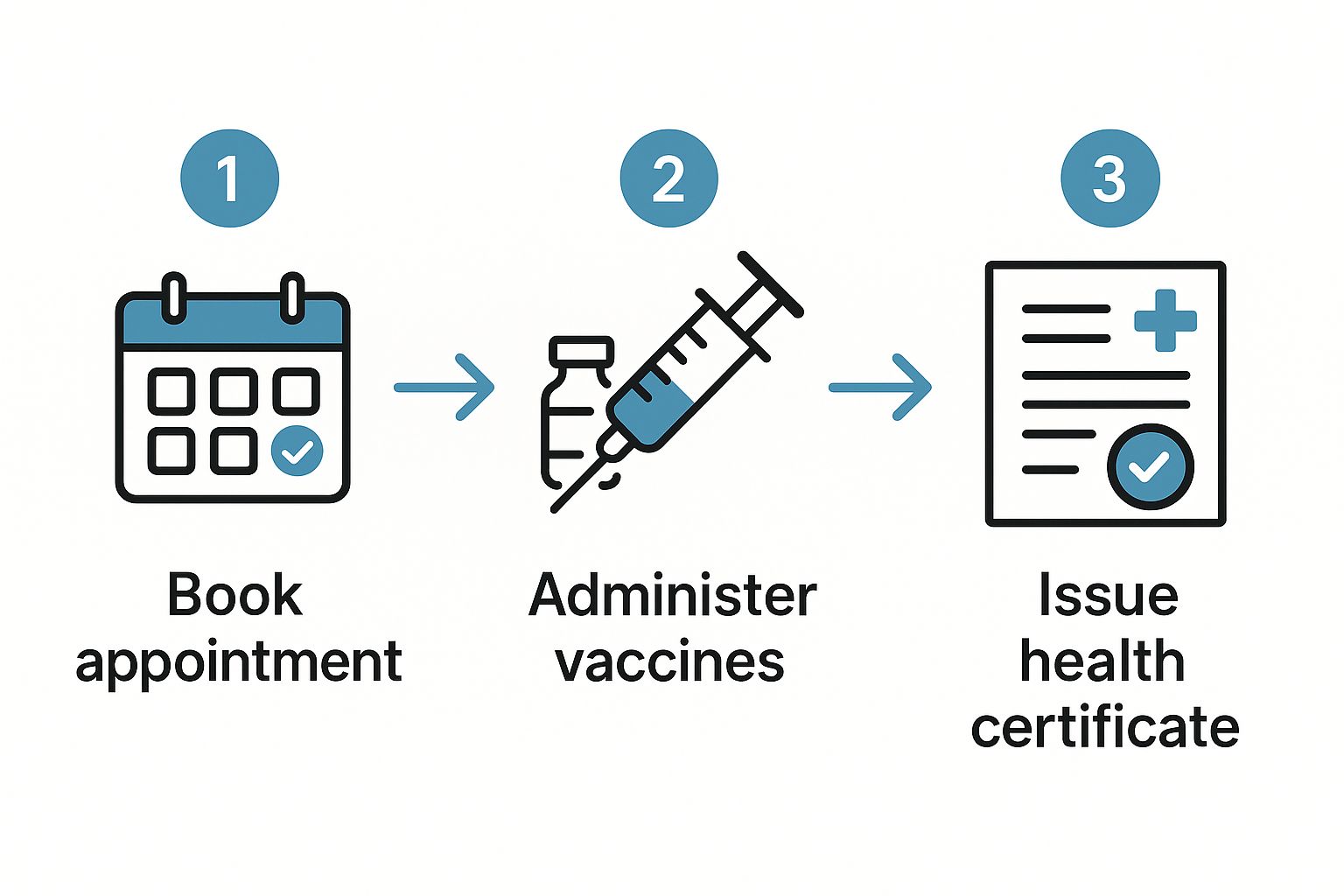
This simple chart breaks down the process into three easy stages, from scheduling the vet visit to having the final paperwork in hand. Following this flow takes all the guesswork out of preparing for boarding.
The bottom line is this: getting the timing and paperwork sorted out ahead of time makes drop-off day completely stress-free. It allows us to focus on what truly matters—welcoming your dog and getting them settled in for a fantastic stay.
Handling these details a couple of weeks in advance is the real secret to a smooth experience. While professional boarding is a wonderful option for social dogs, some pups thrive in a quieter environment. For dogs who might feel overwhelmed in a group setting, options like in-home pet sitting can offer a more familiar, one-on-one experience. It’s all about finding the perfect fit for your dog’s unique personality.
Understanding Titer Tests and Medical Exemptions
Here at our facility, we know every dog is an individual. While our vaccination rules are strict for the safety of the entire pack, we also recognize that a one-size-fits-all approach doesn't always work. For dogs with specific health conditions or for owners concerned about over-vaccination, there are practical alternatives we can explore together.
Our goal is to strike the right balance between your dog’s personal health needs and the collective well-being of all our guests. This means we have clear, vet-approved procedures for situations where a standard booster isn't the best choice. It’s all about finding the safest path forward.
What Is a Titer Test?
So, what exactly is a titer test? Simply put, a titer test is a blood test that measures the level of antibodies your dog has against a specific disease.
Think of it like checking the charge on a battery. The test shows us if your dog's immune system is still "charged up" and ready to fight off an illness, or if it's running low and needs a boost. It’s a scientific way to confirm their existing protection is still doing its job.
For core vaccines like Distemper and Parvovirus, a positive titer test is often an acceptable substitute for a booster. We just need the official results from your licensed veterinarian, who can interpret the antibody levels and certify that your dog has enough immunity to be safe.
A titer test provides concrete proof of immunity, moving beyond the vaccination schedule to show us what’s actually happening inside your dog’s body. For many owners, this offers incredible peace of mind and prevents unnecessary vaccinations.
When Medical Exemptions Are Necessary
Sometimes, a dog has a medical condition that makes vaccination genuinely risky. This could be an autoimmune disorder, a history of severe allergic reactions to a vaccine, or another serious health issue where a vet advises against it.
In these special cases, we can accept a medical exemption. This isn't just a casual note—it must be a formal, signed letter from your veterinarian.
This letter needs to clearly state a few key things:
The specific medical reason why a vaccine would be harmful to your dog.
Which vaccine(s) your dog is being exempted from.
A statement from the vet confirming they understand your dog will be in a group setting.
This official documentation is crucial. It helps us make an informed decision that protects your dog while maintaining the safety standards our entire community relies on. It’s a vital part of the comprehensive dog boarding vaccination requirements that ensure every guest has a safe and fantastic stay.
Answering Your Most Common Vaccination Questions
You've got questions, and as a daycare owner, I've heard them all from caring pet parents just like you! It’s completely normal to want to clarify a few things. Let's tackle some of the most common ones so you can feel confident and prepared.
My team and I are always happy to help, but here are the answers to the questions we get asked the most about our dog boarding vaccination requirements.
Do Puppies Have Different Vaccine Needs?
Yes, they absolutely do! A puppy's immune system is still a work in progress, so their vaccination schedule looks very different from an adult dog's. Instead of a single annual shot, they get a series of vaccines every few weeks, usually starting when they're around 6-8 weeks old.
This series is critical for building a strong foundation of immunity. For boarding, we’ll need to see proof from your vet that your little one has completed their full puppy series. After that, they'll graduate to the standard adult booster schedule.
What If My Dog’s Vaccines Are About to Expire?
This is a fantastic question and one we hear all the time! A little planning goes a long way here. If you notice your dog's shots are due to expire just before or during their stay, the best thing to do is schedule a vet visit to get them updated.
Just remember our 7-14 day rule. The vaccine needs to be in their system for at least a week or two before they arrive to be fully effective. A last-minute shot on the way to drop-off won't meet our safety standards, so a quick calendar check a few weeks in advance is the perfect solution.
Planning ahead for vaccine renewals isn't just about following rules; it's about ensuring your dog has a seamless, stress-free start to their vacation. A little foresight prevents any hiccups at check-in and keeps the focus on fun from the moment they arrive.
Can My Vet Send the Records Directly to You?
Yes, please! In fact, this is our favorite way to handle the paperwork. It’s the easiest and most efficient option for everyone. Just give your vet's office a quick call and ask them to email your dog’s latest vaccination records straight to us.
When we get the records ahead of time, we can review everything and set up your dog’s profile before you even walk in the door. It makes the drop-off process so much faster and smoother for both you and your pup.
Asking these kinds of questions shows you're a wonderfully responsible owner. If you're looking into all your care options, make sure you're prepared with our guide on the essential questions to ask a dog sitter before hiring to find the perfect match for your best friend.
At Pawcation, we're committed to providing a safe, fun, and loving environment for your best friend. If you have any more questions or are ready to book their next stay, visit us at https://pawcation.co
Comments