A Guide to Dogs in Daycare
- ericavdippold
- Oct 16, 2025
- 11 min read

Ever get that pang of guilt leaving for work, wondering what your best furry friend is really doing all day? If you're picturing them staring at the door, waiting for you, I'm here to tell you there's a much better way. As a doggy daycare owner, I get to see the alternative every single day: a day packed with safe play, new friends, and expert care that sends them home happy, tired, and fulfilled.
It's so much more than just a place to drop off your pup; it's a community we've built entirely around their well-being.
Welcome to the World of Doggy Daycare

I honestly believe I have the best job in the world—I get to witness pure, tail-wagging joy every morning when the dogs come through our door. For so many pet parents I've met over the years, finding a great daycare is a total game-changer, and it's a world away from just having a dog-sitter stop by.
Think about it. Instead of waiting alone for hours, your best friend could be part of a supervised, vibrant pack of friends. We've designed our entire environment to meet their instinctual needs for social interaction, physical exercise, and mental engagement. It’s what they crave!
More Than Just a Playdate
We’ve all been there—a bored dog can quickly become a mischievous one. That shredded cushion or chorus of barking you hear from the neighbors? That’s often just a dog’s way of saying, "I need something to do!" Doggy daycare is all about channeling that pent-up energy into positive, healthy fun. We carefully structure the day to balance high-energy romps with essential downtime.
So, what does a typical day for dogs in daycare actually look like at a place like mine?
Supervised Group Play: This is where the magic happens. Under our watchful eyes, dogs learn crucial social cues from each other, interacting with all sorts of breeds and personalities.
Mental Stimulation: We keep their brains buzzing with puzzle toys, scent games, and other engaging activities. A tired brain is just as important as a tired body.
Structured Rest Periods: Just like kids at school, dogs can get overstimulated. We build quiet nap times into the schedule to let them recharge properly and stay happy.
Lots of Love: My staff and I are all dog people, through and through. Belly rubs, ear scratches, and affection are always on the agenda.
I’ve seen shy, timid dogs completely blossom into confident social butterflies, and I've watched high-energy pups learn the art of polite play. It’s an incredible thing to see them thrive in a community setting.
In a way, doggy daycare is like a perfectly balanced school day for your pup. They get physical education during group play, social studies while making new friends, and quiet time to absorb it all. The result? They go home content, mentally satisfied, and ready for a quiet evening of cuddles with you. That's a win-win for everyone.
Is Your Dog a Good Daycare Candidate?
As a daycare owner, one of the most common—and important—questions I hear is, "Will my dog actually like it here?" It’s a fantastic question, because the truth is, the hustle and bustle of a group environment isn't for every dog. And that's completely okay. My number one job is to ensure every single dog in our care is safe and happy, which starts with making sure they're set up for success from day one.
Just like people, dogs have their own unique personalities. Some are total social butterflies, practically pulling you toward the door to meet new friends. Others are a bit more introverted and prefer quiet, one-on-one time. A dog who thrives at the dog park, greets other pups with a friendly tail wag, and genuinely loves to play is usually a fantastic candidate. On the flip side, a dog who gets anxious around new dogs or seems overwhelmed by a lot of activity might find daycare to be too much.
The All-Important Temperament Test
This is exactly why any good daycare will insist on a professional assessment, often called a temperament test or a trial day. Please don't think of it as a pass/fail exam! It's really more like a meet-and-greet. It's our chance to see if your dog will genuinely enjoy the social scene we offer.
During this evaluation, my trained staff and I will carefully observe how your dog interacts with the group. We're watching for relaxed body language, how they invite other dogs to play, and their overall comfort level with the energy of the pack. Reading those subtle signals is crucial, and if you're curious about what we look for, our guide to understanding dog body language is a great place to start learning.
This decision tree gives you a visual idea of the key things we consider.
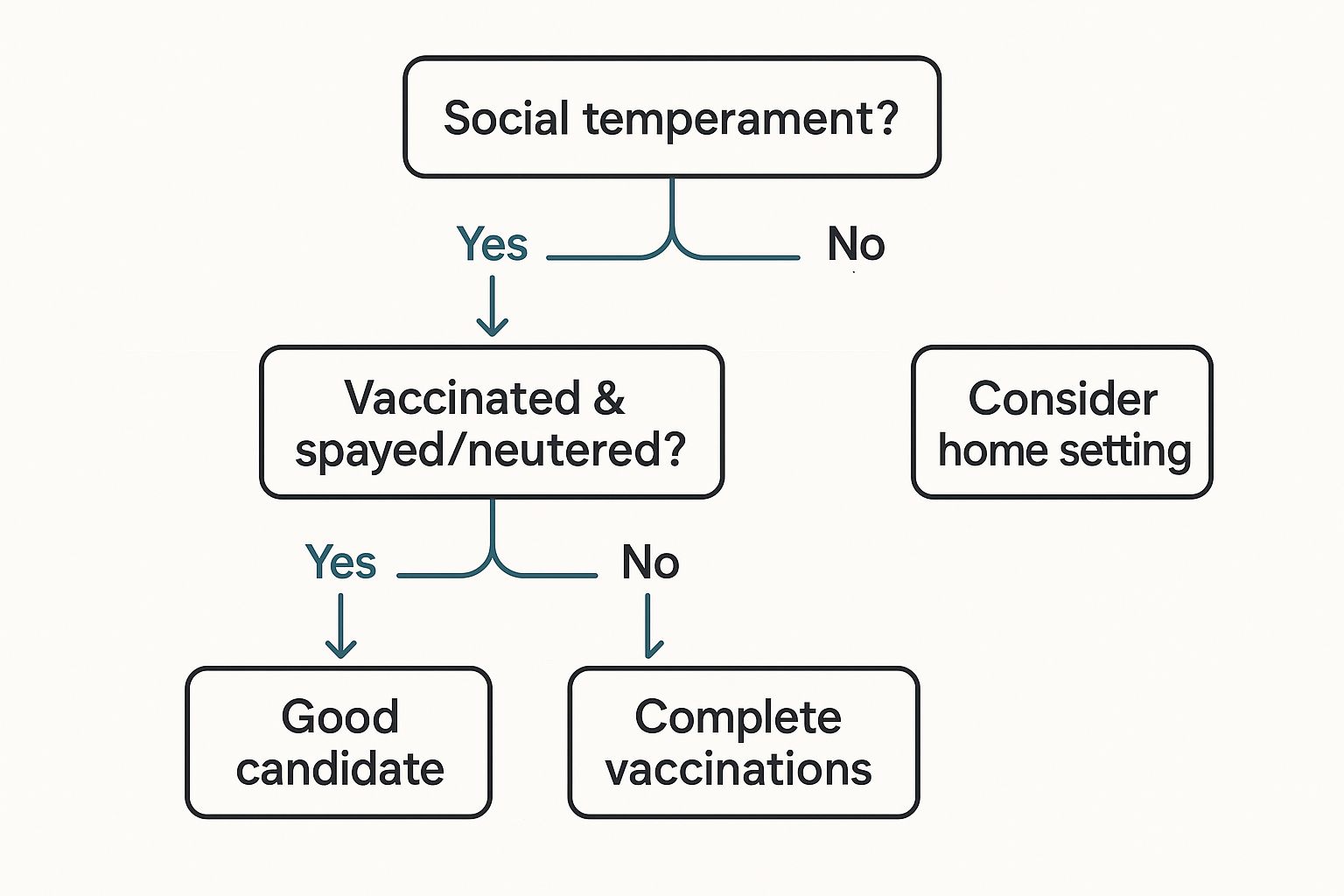
As you can see, it all starts with your dog's social comfort, followed by the essential health and safety checks that protect our entire pack.
A successful daycare experience is all about finding the right match. We're looking for dogs who genuinely enjoy the company of other dogs and can thrive in a structured, social environment.
Beyond temperament, there are also some practical health requirements. These are non-negotiable for keeping all the dogs in daycare safe and healthy. Generally, this means your dog must be up-to-date on core vaccinations (like Rabies, DHPP, and Bordetella) and be spayed or neutered by a certain age to help keep group dynamics positive and predictable.
Daycare Readiness Checklist
Still wondering if your pup is ready for the playground? This checklist can help you gauge where they stand. It’s a good starting point for a conversation with a potential daycare provider like me.
Characteristic | Good Fit for Daycare | May Need More Consideration |
|---|---|---|
Social History | Enjoys dog parks and meeting new dogs; plays well with others. | Prefers to be alone; shows fear or aggression around other dogs. |
Energy Level | High energy; needs a lot of daily exercise and stimulation. | Lower energy; happy with a couple of short walks a day. |
Separation Anxiety | Comfortable being away from you for several hours. | Becomes highly distressed, destructive, or vocal when left alone. |
Play Style | Engages in give-and-take play; reads social cues from other dogs. | Can be a bit of a bully; doesn't know when to back off during play. |
Health & Age | In good health, fully vaccinated, and over 4 months old. | Has medical issues, is not spayed/neutered, or is a very young puppy. |
Remember, this is just a guide! If your dog falls into the "May Need More Consideration" column for a few points, it doesn't automatically rule them out. It just means it's extra important to find a facility with experienced staff who can help them have a positive and safe experience.
The Real Benefits for Your Dog and You
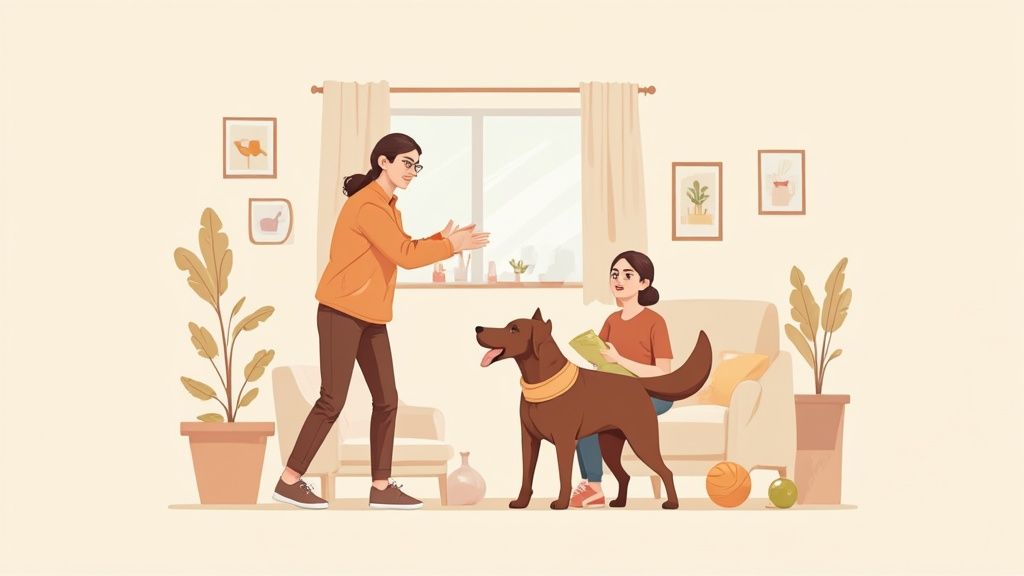
So, what's the big deal with doggy daycare, really? It’s a question I hear all the time, and honestly, the benefits run much deeper than just having a place for your dog to hang out while you're at work. I like to think of it as school, a gym, and a social club all rolled into one for your furry best friend.
For the dogs, the number one advantage is socialization. In a well-run daycare like ours, they learn how to "speak dog" fluently by interacting with different breeds, sizes, and personalities in a safe, supervised setting. This is so crucial for developing a confident, well-behaved companion who knows how to act politely at the park or when guests come over.
Beyond that, it’s an amazing outlet for all that canine energy. A bored dog will always find a job to do, and it usually involves chewing your favorite shoes or barking at squirrels. Daycare provides the physical exercise and mental puzzles they crave, which often leads to a huge decrease in destructive behaviors at home.
It’s Not Just for the Dogs
Let's be real—the peace of mind for you, the owner, is a massive part of the equation. Imagine clocking out after a long day and coming home to a happy, relaxed pup who’s ready for a quiet cuddle, not a frantic dog who’s been bouncing off the walls waiting for you.
You get to go about your day completely guilt-free, knowing your dog isn't lonely or getting into trouble. You can focus on your work or errands, confident they are safe, engaged, and having an absolute blast.
The real magic of daycare is how it strengthens your bond. When your dog's social and exercise needs are met during the day, your time together in the evenings becomes pure quality time, free from the stress of managing all that pent-up energy.
This shift in pet care is why our industry is booming. The global pet daycare market was recently valued at $4.66 billion, and it's only expected to grow as more people recognize the importance of this kind of enrichment. You can read more about these pet care business trends on GingrApp.com. It shows that providing a rich, social life for our pets is quickly becoming the new standard of great pet ownership.
How to Choose the Right Daycare Facility
Okay, so you're sold on the idea of doggy daycare. That’s fantastic! But now for the tricky part: how do you find the right one? As a business owner, I know what good looks like, and this is a huge decision. You need to feel 100% confident that you’re leaving your best friend in a place that’s not just fun, but fundamentally safe.
Your first move should always be to schedule an in-person tour. Trust your senses the moment you walk in. What's your first impression? It should smell clean—like dogs, sure, but not like a dirty kennel. A strong, unpleasant odor is often a red flag that points to poor cleaning routines.
Key Questions for Your Tour
Think of yourself as a friendly detective during the tour. Your mission is to get a clear picture of how they run things when owners aren't around. Here’s a checklist of what I'd ask if I were in your shoes:
What is your staff-to-dog ratio? For me, a well-supervised group should have at least one staff member for every 10-15 dogs. Any more than that, and it's tough to keep a close eye on everyone.
How do you separate the playgroups? This is a big one. They absolutely must have separate, secure areas for large and small dogs. This isn't just about size; it's about preventing accidental injuries and making sure smaller pups don't feel intimidated.
What kind of training does your staff have? Are they trained in pet first aid and CPR? Just as important, ask how they’re taught to read dog body language. A proactive team can spot the subtle signs of stress and de-escalate a situation before a fight ever breaks out.
What are your emergency procedures? A professional facility will have a clear, rehearsed plan for everything from a minor scratch to a serious medical issue. They should also have an established relationship with a nearby vet.
What are your vaccination requirements? Strict vaccine policies are a sign of a responsible daycare. They’re there to protect all the dogs in daycare. To dig deeper into this, check out our doggie daycare owner's guide to vaccination requirements.
Your gut feeling is your most powerful tool. If something feels off during your visit—even if you can't quite put your finger on why—listen to that instinct. The right place will make both you and your dog feel comfortable and secure from the moment you step inside.
At the end of the day, you are your dog’s number one advocate. By taking the time to ask these questions and observe the environment, you can find a wonderful home-away-from-home where they will be happy, engaged, and genuinely cared for.
A Day in the Life of a Daycare Dog
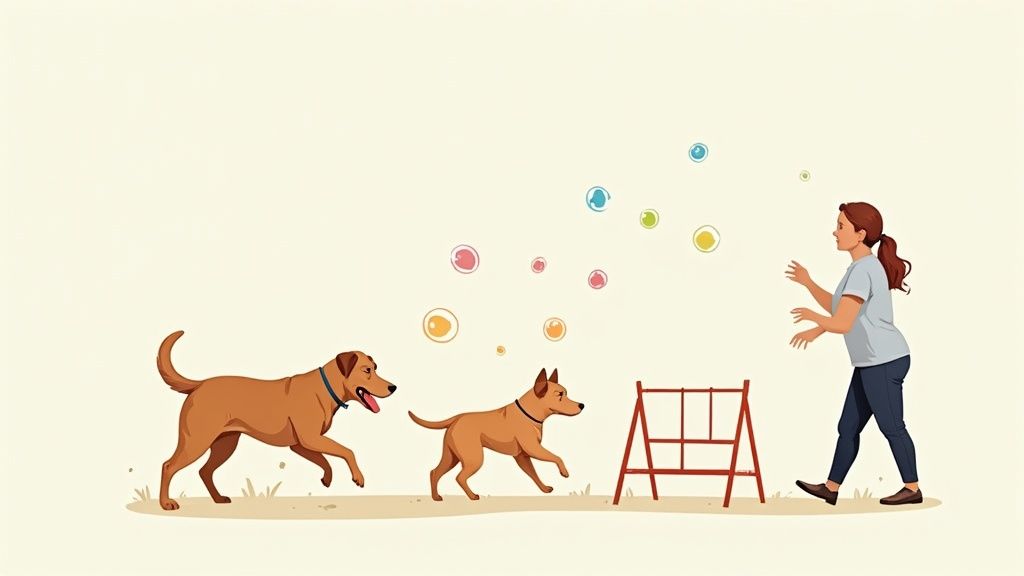
Ever drop your dog off and spend the rest of the day wondering what they're really up to? As a daycare owner, I get a front-row seat to the action, and I can tell you it’s so much more than just a free-for-all puppy party. A well-run daycare day is a carefully crafted mix of supervised play, structured activities, and crucial downtime.
The morning kicks off with a flurry of wagging tails and happy greetings. My staff and I are experts at managing this energy, making sure every new arrival has a smooth and positive introduction to the group. We start with some supervised free play, which lets the dogs say hello to their buddies and shake off that morning excitement.
Playtime, Rest, Repeat
Once the whole pack has arrived and settled in, we move on to more structured fun. This isn’t just about letting them run wild; we want to engage their brains, too. Some days we'll break out the bubble machine (a huge favorite!), and on others, we might set up a simple agility course. This kind of mental enrichment is just as vital as physical exercise for a well-rounded, happy dog.
Of course, all that fun is exhausting! That’s why scheduled naps are non-negotiable in our facility.
The secret to a happy and safe playgroup is managing energy levels. We enforce mandatory rest periods in a quiet, comfy space where dogs can decompress and recharge. This prevents overstimulation and keeps the vibe positive for everyone.
This cycle of play and rest is the backbone of a successful daycare day. Managing their needs also includes regular potty breaks, which you can learn more about in our guide on how long dogs can hold their pee.
It’s clear that owners value this kind of balanced care. According to market data, dogs in daycare make up roughly 77% of the pet daycare industry's revenue. This huge share shows just how much people prioritize giving their dogs a safe and social outlet. For a deeper dive, check out these insights on the pet daycare market.
When you show up at the end of the day, you’ll be picking up a tired, happy, and content companion who’s had a fantastic day.
Your Top Questions, Answered
After years in this business, I've heard every question under the sun from loving dog owners. It's completely natural to have concerns, and I want to tackle the most common ones head-on. My goal is to give you the same transparent answers I'd want for my own furry family member.
So, what about the shy dogs? This is a big one. I can assure you, a great daycare will never just toss a timid pup into a big, rowdy group and hope for the best. The right approach is a slow and steady one, starting with carefully controlled introductions to just a few calm, friendly dogs. We give them plenty of space to watch from a distance and decide to join the fun on their own terms.
What If My Dog Doesn't Get Along With Another Dog?
This happens! Just like people, not all dogs are destined to be best friends. Our staff are trained to be fluent in "dog," reading subtle body language cues like a stiff tail or a hard stare. We can step in and redirect that energy before it even thinks about turning into a spat.
If two dogs just aren't a good match, it's simple: we separate them into different playgroups. Everyone's day should be positive and stress-free.
Will Daycare Undermine Our Training at Home?
Actually, it's quite the opposite! A well-run daycare is a fantastic partner in your training efforts. We consistently reinforce basic commands like "sit" and "come" throughout the day. More importantly, your dog learns priceless social skills from the other dogs—things you just can't teach at home.
"Will my dog be safe? Will they be happy?" At the end of the day, these are the questions that drive every single thing we do. A professional daycare's entire world revolves around ensuring the physical and emotional well-being of every dog that walks through the door.
The pet care world has had its challenges, but the demand for high-quality care for dogs in daycare is bouncing back stronger than ever. More and more owners are looking for premium, safe, and genuinely enriching places for their dogs to spend the day. You can see more about the trends in the pet daycare industry for yourself.
Ready to give your dog a day full of play, friends, and fun? At Pawcation, we treat your dog like they're one of our own. Learn more about our doggy daycare services and book a visit today!
Comments