Can a Dog Get Kennel Cough If Vaccinated? A Daycare Owner Explains
- ericavdippold
- Sep 12, 2025
- 14 min read

Hi there! As someone who runs a busy doggy daycare, this is probably the number one question I get from caring pet parents, and I completely understand the confusion. You did the right thing, you got your pup the vaccine, and then you heard about another dog at the park coming down with that awful honking cough.
So, what gives?
The short answer is yes, your dog can absolutely get kennel cough even if they're vaccinated. But stick with me, because the "why" is really important, and it doesn't mean the vaccine didn't do its job.
Why Your Vaccinated Dog Can Still Get Kennel Cough
Let's clear this up right away. The best way I can explain the kennel cough vaccine is to compare it to the annual flu shot for us humans. It’s incredibly helpful—it dramatically lowers the risk of getting sick and makes any potential infection much milder—but it’s not an invisible force field. A few key reasons explain why a vaccinated pup might still show symptoms.
First, "kennel cough" isn't a single disease. It’s more of a catch-all term for a respiratory infection, kind of like how we talk about the "common cold." The vaccine primarily targets the most common bacterial culprit, **Bordella bronchiseptica**, but a whole host of different viruses can cause the exact same symptoms.
This means a dog could be fully protected against Bordetella but pick up a different respiratory virus that the vaccine was never designed to fight. It's not that the vaccine failed; it was simply up against a different germ than the one it was built for.
Understanding Vaccine Effectiveness
The main goal of the vaccine is less about building an impenetrable fortress and more about preparing your dog's immune system for a fight. When a vaccinated dog is exposed, its body recognizes the invader quickly and mounts a much stronger, faster defense.
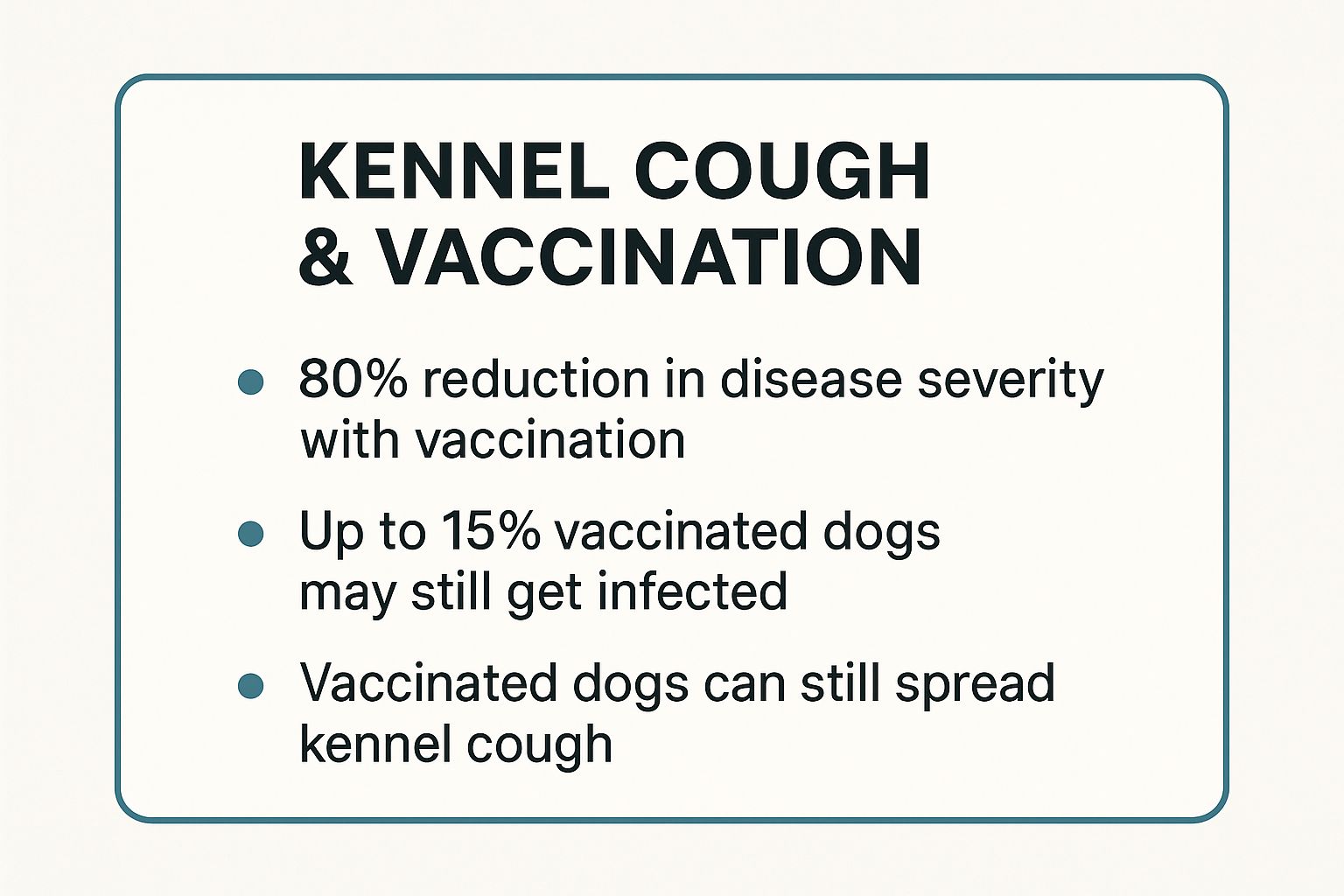
From what I see every day and what the science tells us, even though a small percentage of vaccinated dogs might still get sick, the vaccine is extremely good at reducing how severe that sickness becomes.
The most important takeaway is this: Vaccination transforms a potentially serious illness into a much more manageable one. Your dog may get a mild cough for a few days instead of a severe infection that could lead to dangerous complications like pneumonia.
This reality is backed up by what we see in the real world. Research has found that a surprising number of dogs diagnosed with kennel cough—sometimes between 40% and 60%—had already received their vaccination. This just reinforces that the vaccine's main job is to lessen the severity and duration of the illness, not to prevent it entirely. You can learn more about these kennel cough findings if you want to dig deeper.
Here’s a quick summary of the main reasons your vaccinated dog might still get sick.
Why the Vaccine Is Not a Perfect Shield
Reason | Simple Explanation |
|---|---|
Multiple Causes | The term "kennel cough" covers many different viruses and bacteria, but the vaccine only protects against the most common ones. |
Exposure Timing | A dog might be exposed just before or right after getting vaccinated, before their immunity has fully kicked in. |
Weakened Immunity | Just like people, a dog’s immune system can be weakened by stress, other illnesses, or age, making them more susceptible. |
Ultimately, while no vaccine offers 100% guaranteed protection, the Bordetella vaccine is a critical tool for keeping our furry friends safe and healthy in social settings.
How the Kennel Cough Vaccine Actually Works
So, let's pull back the curtain on how this vaccine actually works its magic. It isn’t some invisible force field, but it is a brilliant way to get your dog’s immune system ready for a fight.
Think of it as a training exercise for their body's internal security team.
The most common kennel cough vaccine has one main target: a bacterium called **Bordetella bronchiseptica**. This is the big one, the primary culprit behind that awful, honking cough we all hate to hear. The vaccine introduces a safe, weakened, or inactive piece of this germ into your dog's system.
This "boot camp" gives their immune system a chance to study the enemy, figure out its weaknesses, and build up a specific defense plan. That way, if your dog ever bumps into the real Bordetella bug, their body is primed and ready to launch a fast, effective counter-attack, often stopping the infection before it even gets started.
One Bug Among Many
Now, here’s where things get a bit more complicated, and it’s the key to understanding why a vaccinated dog might still get sick. "Kennel cough" isn't one single disease; it's more of an umbrella term for a respiratory infection that can be caused by a whole cocktail of different germs.
While the vaccine is fantastic at protecting against Bordetella, it can't guard against every single virus that causes a cough. Other common players in this respiratory game include:
Canine Parainfluenza Virus: A very common viral part of the kennel cough complex.
Canine Adenovirus-2: Another virus that can lead to respiratory trouble.
Canine Influenza Virus: This is a completely different bug, better known as the "dog flu."
So, even with a perfectly up-to-date Bordetella vaccine, your dog could still pick up one of these other viruses at the park and come down with a cough. The vaccine did its job, but it was up against a different opponent. It’s like having the world’s best rain jacket during a blizzard—it helps, but it wasn’t designed for that specific problem.
Different Types of Protection
Not all kennel cough vaccines are the same, and your vet is the best person to recommend the right one for your dog's lifestyle. Each type works a little differently to prep the immune system for action.
The key is that all vaccine types aim for the same goal: to create immunity right where the infection starts—in your dog’s nose and throat.
You'll generally come across three main types:
The Nasal Mist (Intranasal): This is the one we see most often for social dogs. It’s a quick squirt up the nose that gets to work fast, building localized immunity sometimes within just a few days.
The Injection: A classic shot that provides protection throughout the dog's whole system. This one can take a little longer to become fully effective—often up to two weeks—but it offers strong, lasting immunity.
The Oral Drops: A needle-free option where a liquid is given directly into the dog's mouth. This is another great way to build immunity right in the respiratory tract.
Knowing which vaccine your dog has is important, which is why we strictly follow veterinary guidance. If you're curious about our facility's policies, we've broken it all down in our doggy daycare owner's guide to vaccination requirements. Your vet will always be your best partner in choosing the right vaccine and schedule to keep your pup as safe as possible.
So, Why Did My Vaccinated Dog Still Get Kennel Cough?
You did everything right. You took your dog to the vet for their kennel cough vaccine, but now they're hacking away. It’s a frustrating and surprisingly common situation. So, what gives?
This is what we call a “breakthrough” infection, and it doesn't mean the vaccine "failed." As someone who runs a doggy daycare, I see this happen from time to time, and it's usually due to a few key factors coming together. Think of the vaccine less like a brick wall and more like a highly-skilled bodyguard for your dog's immune system. It’s fantastic at its job, but certain situations can still create a perfect storm for a mild illness.
The “Kennel Cough” Mix-Up
The most significant piece of the puzzle is that kennel cough isn't one single thing. It’s more of a catch-all term for a respiratory infection, and it can be caused by a whole cocktail of different viruses and bacteria. The standard vaccine is laser-focused on the biggest troublemaker, the bacteria _Bordetella bronchiseptica_.
Imagine you install a state-of-the-art security system to stop the most well-known burglar in town (Bordetella). It works perfectly! But it wasn't designed to stop a sneaky cat burglar (like the parainfluenza virus) who slips in through an open window. The system did exactly what it was supposed to do, but your dog still ended up with an intruder. This is, by far, the most common reason a vaccinated dog will still develop a cough.
The Immunity Waiting Game
Timing is everything. After a vaccine is administered, your dog’s immune system needs time to rev up and build its army of defenders. It’s not an instant force field. For an injectable vaccine, this process can take up to two weeks to reach full strength.
This creates a little window of vulnerability. If your pup gets their shot on Monday and heads to the dog park on Wednesday, their body just hasn't had enough time to mount a proper defense. That’s why we always tell our clients to get their dogs vaccinated well ahead of any planned boarding, grooming, or daycare stays.
It's also important to set realistic expectations. No vaccine is 100% effective at preventing all symptoms. The goal is to prevent serious illness, not necessarily every single cough.
In fact, some field trials have shown that even excellent intranasal vaccines were only about 20.7% to 24.4% effective at preventing coughing altogether when compared to a placebo. The real value is in reducing the severity and duration of the illness. If you're curious about the data, you can read more about these vaccine efficacy findings directly.
The High-Traffic Environment Factor
Finally, we have to consider the environment itself. Places where dogs gather—like my daycare, the dog park, or training classes—are naturally high-exposure zones. Dogs are breathing the same air, sniffing each other from nose to tail, and maybe even sharing a slobbery toy or water bowl.
I often compare the vaccine to a really good raincoat. In a light drizzle, you'll stay completely dry. But if you walk into a hurricane (a high-exposure environment with lots of germs swirling around), you might still get a bit damp. The coat still protected you from getting soaked to the bone, but a little water got through. Similarly, a vaccinated dog's immune system can simply get overwhelmed by constant exposure, leading to a mild breakthrough case.
How to Spot Kennel Cough Symptoms in Your Dog

As someone who listens to a symphony of barks, yips, and happy noises all day, I can tell you that one sound always makes my ears perk up for the wrong reasons—that first, unmistakable kennel cough. Knowing the signs is your absolute best tool, especially since a vaccinated dog can still get a mild case.
The most famous symptom is, of course, the cough itself. It’s not a soft little "ahem." It’s a loud, forceful, and often dry honking cough that sounds alarmingly like a goose is stuck in your dog's throat. Many owners describe it as their dog trying to clear something, and it often comes in fits or spasms, especially after a burst of excitement or during the night.
But the cough is just the headliner. A whole host of other, more subtle symptoms can show up first, and spotting them early is key to keeping your pup comfortable and protecting other dogs.
Beyond the "Honk": What to Watch For
At our daycare, we’re trained to look for the full picture, not just the obvious cough. Sometimes the earliest clues are a change in behavior. A dog who is usually a ball of energy but suddenly seems a bit quiet is always a dog we keep a close eye on.
To help you do the same at home, here's a checklist of the most common signs.
Kennel Cough Symptoms Checklist
This table outlines the key symptoms of kennel cough, what they look like, and their typical severity.
Symptom | What to Look For | Severity Level |
|---|---|---|
Hacking Cough | A loud, dry, "honking" sound, often in fits. | Mild to Severe |
Runny Nose | Clear, watery discharge from the nostrils. | Mild |
Sneezing | More frequent sneezing than usual. | Mild |
Watery Eyes | Slight tearing or discharge from the eyes. | Mild |
Retching/Gagging | Gagging after a cough, sometimes with white foam. | Mild to Moderate |
Lethargy | Unusual tiredness or lack of interest in play. | Moderate to Severe |
Loss of Appetite | Refusing food or eating less than normal. | Moderate to Severe |
Fever | Feeling warm to the touch, acting sluggish. | Moderate to Severe |
Remember, seeing one or two mild symptoms isn't usually cause for panic, but if you notice several signs or any of the more severe ones, it's time to act.
When a Mild Case Becomes a Major Concern
Most breakthrough infections in vaccinated dogs are thankfully mild and resolve on their own with some rest and TLC. But it's crucial to know when to call your veterinarian. A mild case is typically just the cough and some sneezing, with your dog still acting pretty much like themselves.
A more severe infection is when you see a change in their overall well-being. This is the line we never cross without getting a vet involved.
Pay close attention to these more concerning signs:
Lethargy: If your normally playful pup is suddenly tired, uninterested in walks, and just wants to sleep, that’s a red flag.
Loss of Appetite: A dog who turns their nose up at their food is telling you they don’t feel well.
Fever: While you may not be able to check their temperature at home, a dog with a fever will often feel warm to the touch and act sluggish.
If you see any of these more serious symptoms, it's time to call your vet. They can make sure a simple case of kennel cough hasn’t escalated into something more dangerous, like pneumonia. Being your dog’s best health advocate means knowing when to let them rest and when to call for backup.
What to Do If Your Vaccinated Dog Gets Kennel Cough
Okay, so you've spotted the signs. Maybe you heard that classic "honking" sound, and you're starting to suspect your vaccinated dog has kennel cough. The first thing I always tell the pet parents at my daycare is simple: don't panic.
The best news here is that because your dog is vaccinated, the illness is almost always going to be a much milder, shorter version of what it could have been.
Your first step, without question, should be to call your veterinarian for guidance. Even if the symptoms seem really minor, that quick phone call gives you a solid plan and some much-needed peace of mind. Your vet can tell you whether to just keep an eye on things at home or if it's best to bring your pup in for a check-up.
Your Vet Visit and Home Care Plan
If your vet does want to see your dog, they'll do a physical exam to confirm it's kennel cough and rule out anything more serious. For most of these mild breakthrough cases, the treatment plan is refreshingly simple and all about supportive care at home.
Think of it like how you'd get over a common cold. The main goal is just to keep your dog comfortable and let their immune system handle the rest. Your vet will most likely recommend:
Plenty of Rest: Cut back on intense exercise and roughhousing. A few days of being a total couch potato will do wonders for their recovery.
Good Hydration and Nutrition: Make sure fresh water is always available and that they're still eating their regular meals.
A Comfortable Environment: A humidifier running in the room where your dog sleeps can add moisture to the air, which really helps soothe an irritated throat and airway.
The most important rule—and one we live by at the daycare—is isolation. To protect the wider dog community, you have to keep your sick dog away from all other pups until your vet gives you the official all-clear. This means no dog parks, no playdates, and definitely no daycare.
When Medication Might Be Needed
While most cases just need a little time and TLC, your vet might recommend medication in certain situations. If the cough is really disruptive and keeping everyone awake at night, they may prescribe a cough suppressant to offer some relief.
Your vet will also be on the lookout for any signs of a secondary bacterial infection. Sometimes, a simple respiratory bug can pave the way for a more serious problem like pneumonia. If this is a concern, they'll prescribe antibiotics as a critical step to keep things from escalating.
This is just one more reason why that initial call to the vet is so important. Following their advice ensures you're giving your best friend the right care while also doing your part to protect the broader community—something we take very seriously in our own doggy day care services.
Why the Kennel Cough Vaccine Is Still Worth It
So, after all this, you might be wondering, "If my dog can still get kennel cough even with the vaccine, what's the point?" It's a fair question, and as a dog lover first and a professional second, my answer is an absolute, unqualified yes. It's still worth it.
The goal of the vaccine isn't necessarily to create an impenetrable shield against the cough itself. The real win is in dramatically reducing the severity of the illness. Think of it as the difference between a minor cold and a full-blown case of pneumonia. The vaccine is our best tool for preventing a simple cough from spiraling into something far more dangerous.
It’s About Protecting the Whole Pack
Vaccinating your dog goes way beyond just their own health; it’s a crucial part of being a responsible member of the dog community. A vaccinated dog who catches a mild case will shed far fewer infectious particles than an unvaccinated dog would. This simple act helps break the chain of transmission.
This protects the most vulnerable dogs in our community—the young puppies, the senior dogs, and those with compromised immune systems who can't fight off infection as easily.
It’s a lot like the flu shot for people. Many of us get it not just to avoid getting sick ourselves, but to protect our grandparents, young children, or friends with health issues. Vaccinating your dog is a compassionate choice that creates a safer environment for every dog they meet.
This is exactly why any reputable doggy daycare, boarding facility, or groomer will insist on it. It’s the single best defense we have to ensure the well-being of every single dog that comes through our doors.
The Science Doesn't Lie
The effectiveness of the Bordetella vaccine isn't just something we see in our day-to-day work; it's backed by solid scientific evidence.
A 2020 study on an oral Bordetella vaccine, for example, delivered some pretty stunning results under controlled conditions. In that trial, 100% of the vaccinated dogs were completely protected from the illness. Meanwhile, a staggering 76.5% of the unvaccinated dogs developed clear signs of infection. If you're a data person, you can read the full study about vaccine effectiveness for yourself.
While no vaccine is ever a 100% guarantee, the kennel cough vaccine is an essential part of responsible pet ownership. It keeps your own dog safer, helps them bounce back much faster if they do get sick, and does its part to protect the entire canine community.
Answering Your Top Questions About Kennel Cough
Over the years, I've heard just about every question you can imagine from concerned pet parents. It’s my job to help you feel confident and prepared, so here are a few straightforward answers to some of the most common questions I hear about kennel cough.
How Often Should My Dog Get the Vaccine?
That's a fantastic question, and the answer really depends on your dog's lifestyle. For most pups, getting the kennel cough vaccine once a year is a solid plan. We usually roll it right into their annual check-up and booster schedule.
But what if your dog is a social butterfly? If they're a regular at daycare, the groomer, or boarding facilities, your vet might suggest a booster every six months. This keeps their immunity topped up, giving them the best protection in those high-traffic, germy environments.
Is Kennel Cough the Same as Dog Flu?
They can look surprisingly similar, but they're two different illnesses. I like to explain it this way: think of it like the common cold versus the flu in people.
Kennel cough is a general term for an upper respiratory infection, usually caused by the Bordetella bacteria or the parainfluenza virus. Dog flu, however, is caused by very specific strains of canine influenza virus.
Can My Vaccinated Dog Still Spread It?
The short answer is yes, it's possible. A vaccinated dog with a breakthrough case can still be contagious, but there's a really important catch. The vaccine helps dramatically reduce the amount of germs they "shed," making them less contagious than an unvaccinated dog would be.
This is a huge reason why vaccination is so important for community health. It helps slow the spread and protects more vulnerable pups from getting sick.
The minute you notice any symptoms, the best thing you can do is isolate your dog. It's the most effective way to stop the spread in its tracks. For more helpful tips and deep dives into dog health, be sure to check out some of the other articles on our Pawcation blog.
At Pawcation, your dog's health and happiness are our top priorities. If you're looking for a safe, caring, and fun environment for your pup, we'd love to welcome you. Learn more about our doggy daycare and boarding services at https://pawcation.co.
Comments