Dog Barking All Night? A Pro's Guide to Peaceful Sleep
- ericavdippold
- Oct 28, 2025
- 13 min read

When a dog is barking all night, I promise you it's almost always a signal that something is off, not a simple act of defiance. From all my years running a doggy daycare, I can tell you the real reasons usually trace back to fundamental needs—boredom, loneliness, anxiety, or a reaction to things going bump in the night. Figuring out why your dog is barking is the absolute first step toward getting some peace and quiet back in your home.
Decoding Your Dog's Nightly Barks

If you're reading this, I'm guessing you're tired. I mean, really tired. I've had countless conversations with exhausted owners who feel like they've tried absolutely everything. The first thing I always tell them is this: you’re not alone, and we can figure this out together.
A dog who barks all night isn't trying to ruin your sleep on purpose. They're communicating the only way they know how. Your job is to become a bit of a detective. Our first task isn’t to stop the barking but to understand what’s causing it. Every single bark has a reason, a “why” behind the “woof.”
Finding the Trigger Behind the Bark
Does your dog let out a sharp, repetitive bark every time a car’s headlights sweep across the window? That's a classic alarm bark. Or is it a more mournful, continuous howl when they realize they're alone in the room? That’s a good sign it’s loneliness or even separation anxiety. By paying close attention to the context, you can start to piece together their message.
Here are some of the most common culprits I see in my work:
Environmental Noises: A dog's hearing is incredible. The faint sound of another dog down the street, a raccoon rustling in the bushes, or even the garbage truck making its late-night rounds can be more than enough to set them off.
Boredom and Pent-Up Energy: If a dog hasn't had enough physical or mental stimulation during the day, they'll have a tank full of energy at night with absolutely nowhere to direct it. This is a big one!
Loneliness or Anxiety: Dogs are pack animals. Being separated from you at night can be deeply stressful, especially for a dog already prone to anxiety. This is a very common issue, and you can learn more about spotting the signs by exploring our guide to understanding dog behavior changes.
Physical Needs: Sometimes, the answer is surprisingly simple. Your dog might just need to go to the bathroom, or they could be physically uncomfortable or in pain.
The key is to shift your mindset from "How do I make it stop?" to "What is my dog trying to tell me?" This simple change in perspective is the foundation for finding a real, lasting solution.
This isn't just your problem, either. It’s far more common than people think. In fact, complaints about barking dogs can account for 30% to 40% of all animal-related noise complaints in many cities.
To help you get started, here's a quick reference table to match your dog's behavior with potential triggers.
Common Night Barking Triggers at a Glance
This table is designed to help you quickly identify the likely cause of your dog's barking by connecting what you're seeing and hearing to the most common triggers.
Trigger Type | Common Causes | What to Look For |
|---|---|---|
Alert/Alarm | Passing cars, people walking by, wildlife in the yard, other dogs barking | Sharp, rapid-fire barks. Dog is often tense, alert, and facing a window or door. |
Boredom/Energy | Lack of daytime exercise or mental stimulation, long periods of inactivity | Persistent, monotonous barking. May be accompanied by digging or chewing. |
Loneliness/Anxiety | Separation from you, new environment, changes in routine | Whining that escalates into howling or barking. Pacing, panting, or destructive behavior. |
Attention-Seeking | Dog has learned that barking gets a reaction from you (even a negative one) | Barking stops when you enter the room and resumes when you leave. |
Physical Need | Needs to go to the bathroom, thirsty, hungry, uncomfortable, or in physical pain | Whining or a single, insistent bark. May be pacing near the door or their water bowl. |
By observing your dog for a night or two with this chart in mind, you can start to narrow down the possibilities. Once you've identified the likely trigger, you're in a much better position to address the root cause, not just the noisy symptom.
How to Create a Soothing Sleep Sanctuary
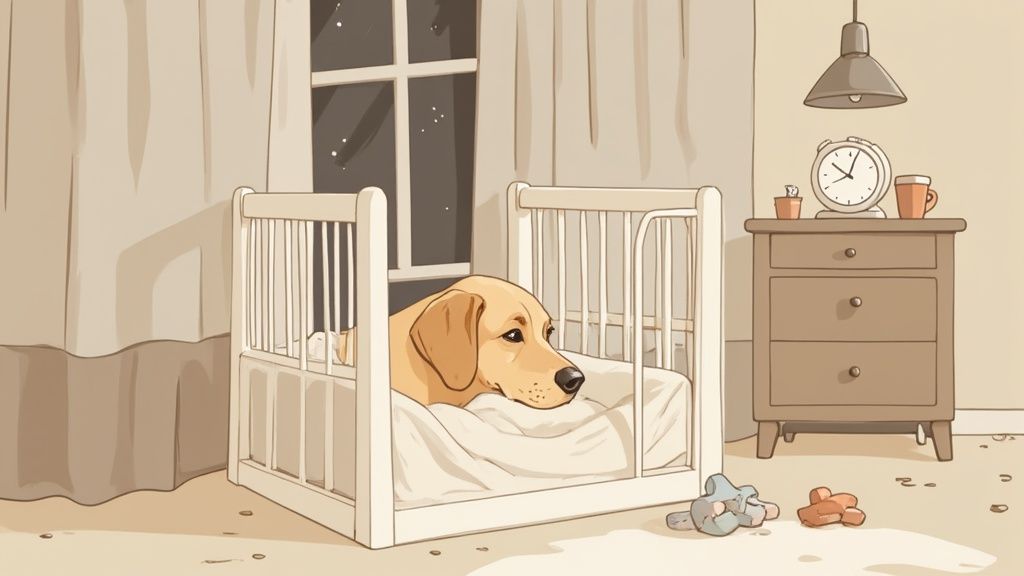
Now that we’ve explored why your dog might be barking, let's get practical and look at their bedroom. Just like us, a dog won't settle easily if their sleeping space isn't comfortable, secure, and peaceful. A dog barking all night is often a symptom of an environment that's just not working for them.
The mission is to build a true sleep sanctuary—a personal den where your dog feels completely safe. This is more than just throwing a bed in the corner; it’s about intentionally creating a space that tells your dog it's time to switch off and rest.
The Magic of a Den
One of my favorite tools for this job is the humble crate. I know some owners feel guilty about crating, but it's time to reframe that thinking. When introduced properly, a crate isn't a cage. It’s a safe, cozy den that taps into a dog’s natural instinct to find a small, enclosed space to relax. It becomes their private room where the world can't bother them.
Making the crate a happy place is non-negotiable. Start by feeding them meals inside or scattering a few high-value treats for them to find on their own. The cardinal rule? Never use it for punishment. The goal is for your dog to want to go in because it's their ultimate comfort zone. And if you have an older dog, don't sweat it. You absolutely can teach an old dog new tricks, and this guide on how to gently crate train an older dog can show you exactly how.
A well-managed crate provides both physical and psychological security. It removes their 'job' of patrolling the whole house, allowing their brain to finally switch off and relax.
Setting the Scene for Silence
Once you've established their den, it's time to manage the environment around it. Many dogs are incredibly light sleepers, ready to alert-bark at the slightest disturbance. Here’s how to minimize those nighttime triggers:
Block Out Visuals: This one is huge. Get some real blackout curtains for any windows in the room. Headlights, a passing cat, or even branches swaying in the wind can look like a major threat in the dark. Removing those visual cues eliminates a common cause of alarm barking.
Mask Startling Sounds: A white noise machine can be a total game-changer. That consistent, gentle hum does a fantastic job of drowning out sudden noises like a car door slamming or the neighbor's dog having a late-night chat. This prevents your dog from being startled awake and feeling the need to sound the alarm.
Provide a Calming "Job": Give your dog’s brain something quiet to do as they wind down. A durable chew toy or a puzzle feeder with a few treats can encourage them to focus on a self-soothing activity. It's a far better alternative to them listening for every creak and groan the house makes.
By creating this structured, predictable, and—let's be honest—slightly boring sleep environment, you're making a massive difference. You aren't just crossing your fingers and hoping they'll be quiet; you're actively setting them up for a successful, peaceful night.
The Secret to a Quiet Night is an Active Day
Here’s one of the biggest secrets I’ve learned from years of running a doggy daycare: a tired dog is a quiet dog. A huge percentage of calls I get about a dog barking all night can be traced back to what happens—or more accurately, what doesn't happen—during the day.
Think of your dog's energy like a battery that needs to be fully drained before bedtime. If that battery is still half-full when you turn the lights out, that stored-up energy has to go somewhere. It often comes out as restlessness, anxiety, and, you guessed it, barking. The solution isn't just a quick walk around the block; it's about building a daily routine that tires out both their body and their brain.
More Than Just a Walk
A simple leash walk is a nice "potty break," but for most dogs, it barely scratches the surface of their exercise needs. It's like asking an athlete to warm up with a few stretches and then calling it a day. To truly drain that energy battery, we need to add some high-intensity, engaging activities into their routine.
Here are a few ideas that work wonders for the dogs at my daycare:
A good old-fashioned game of fetch. This is a classic for a reason. A few 15-minute sessions of sprinting after a ball can provide more physical exertion than a 40-minute walk.
Invest in a flirt pole. It’s essentially a giant cat toy for dogs, and it’s incredible for tapping into their prey drive in a controlled way. They get to chase, jump, and pivot, which is both physically and mentally demanding.
Play scent work games. Hide a few treats around the yard or house and encourage your dog to "find it!" Sniffing is a dog’s superpower, and using their nose is incredibly taxing on their brain.
Of course, the right amount of exercise varies wildly by breed and age. To get a better idea of what your specific pup needs, it's worth checking out this guide on dog exercise requirements by breed. This can help you tailor your daily plan for maximum impact.
A dog’s mind is just as important as their muscles. Mental stimulation can burn as much energy as physical running, sometimes even more.
Give Their Brain a Workout
A physically tired dog might still have a bored and restless mind. This is where mental enrichment comes in, and it's your secret weapon against nighttime nuisance barking.
It’s no surprise that with dogs being the most popular pet in the majority of G20 countries, creative solutions for their well-being are in high demand. In the U.S. alone, nearly 50% of all households include a dog, and providing for their mental health is a big part of responsible ownership. You can discover more insights about global pet ownership trends on katzenworld.co.uk.
Simple brain games can make a huge difference. Ditch their regular food bowl and start using puzzle feeders or snuffle mats for meals. This forces them to think, problem-solve, and work for their food, mimicking their natural foraging instincts.
Even short, 5-minute training sessions throughout the day—practicing "sit," "stay," or a fun new trick—can leave a dog's brain happily exhausted. By creating a predictable schedule that includes robust physical exercise and engaging mental challenges, you build a calmer, more confident dog. They learn to expect active days and restful nights, reducing the evening anxiety that so often leads to a dog barking all night.
It's Time to Teach Your Dog a Better Way
Alright, you’ve sorted out your dog's daily routine and made their sleeping area a sanctuary. Now for the fun part: the hands-on training. This isn't about becoming a drill sergeant. It's about showing your dog that being quiet is a fantastic choice—one that earns them way more good stuff than barking ever will.
I see it all the time: a dog barks, and the owner’s first reaction is to yell, "Quiet!" But think about it from your dog's perspective. Your loud, intense voice just sounds like you're joining the party. You’re just the biggest, loudest dog in the pack! We're going to take a much smarter approach using positive reinforcement.
How to Teach the "Quiet" Command
This might sound a little backward, but the most effective way to teach "Quiet" is to first put their barking on cue. We're going to teach them to "Speak."
Step 1: Get them barking. Find a trigger that gets a reliable bark or two out of your dog. A simple knock on the door usually does the trick.
Step 2: Name the behavior. The second they bark, say "Speak!" in an excited voice and immediately pop a high-value treat in their mouth. Do this a few times until you see the lightbulb go on.
Step 3: Introduce "Quiet." Now, ask for a "Speak." Let them bark once, then hold a really smelly, delicious treat right up to their nose. They'll have to stop barking to sniff it.
Step 4: Reward the silence. The very instant they go silent, say "Quiet" and give them the treat along with plenty of praise.
You’re showing them that while barking is something you understand, the real prize comes when they stop. Keep your training sessions short and sweet—just a few minutes a day is all you need.
Taking the Fear Out of Scary Noises
Is it the garbage truck at 5 AM or the neighbor's car door that sets your dog off? If specific sounds are the culprit, we need to change how your dog feels about them. This is a process called desensitization and counter-conditioning, and it works wonders.
First, find a recording of the trigger sound online—YouTube is great for this. Play it at a super low volume, so low that your dog barely notices it and definitely doesn't bark. The moment they hear it without reacting, toss them an amazing treat.
The goal here is simple: make the scary sound predict the arrival of something awesome, like tiny pieces of chicken or cheese. Eventually, your dog will hear that noise and, instead of tensing up, will look right at you, thinking, "Where's my snack?"
You'll need to increase the volume very gradually over many sessions. If your dog starts to bark, you’ve pushed a little too far, too fast. No big deal. Just dial the volume back to the last successful level and build up more slowly.
It’s pretty amazing to think about how universal barking is. Humans have come up with words to describe a dog's bark in at least 40 different languages, from the "woof, woof" we know to "guau, guau" in Spanish. If you're curious, you can explore how different cultures interpret this classic sound.
Giving Your Dog a "Job" with the Settle Command
Finally, one of the most powerful tools in your kit is teaching a solid "Settle" or "Place" command. This gives your dog a default action to perform when they feel anxious or unsure, instead of just barking into the void.
Pick a designated spot—a comfy dog bed or a specific mat works perfectly. Lure your dog onto it with a treat, say your cue word ("Settle!"), and then reward them for being on the mat.
Start with just a few seconds at a time and slowly build up how long they can stay there. This becomes their safe space, their "job" when things feel uncertain. For a dog that barks all night out of anxiety, giving them this sense of purpose can be a game-changer.
Your 2 AM Action Plan for When Barking Starts
It’s two in the morning, and the barking shatters the silence. That moment right there—when you’re ripped from a deep sleep, groggy and frustrated—is the most critical. What you do next can either reinforce the unwanted behavior or start guiding your dog toward a quieter night.
The biggest mistake I see owners make is reacting with emotion. Yelling "No!" or "Quiet!" across the house just sounds like you’re joining in on the ruckus. Rushing to their crate to soothe them teaches a powerful lesson: barking makes my human appear. Both reactions, even the angry one, can accidentally reward the very thing you want to stop.
What to Do in the Moment
Your immediate goal is to stay calm, quiet, and honestly, a little boring. You need to interrupt the behavior without creating a fun, attention-filled event. I usually recommend a simple, neutral correction. A firm but quiet "Enough" or even a sharp, single clap can often be enough to break their focus.
After you make the sound, wait a few seconds. If the barking stops, great. If it continues, you might need to investigate, but it has to be on your terms.
This simple infographic outlines the two core training paths—teaching a quiet command and desensitizing them to sounds—which are the long-term solutions this 2 AM plan supports.
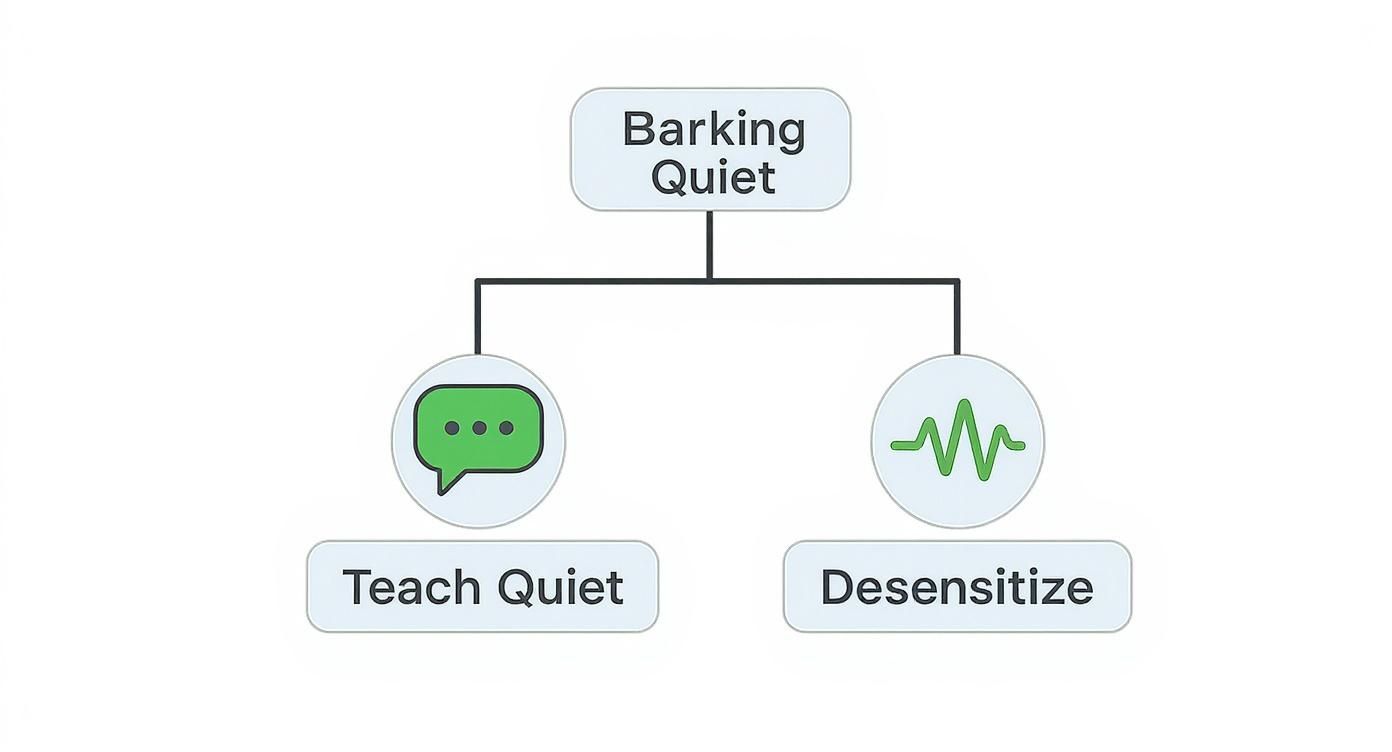
As you can see, both proactive training during the day and gradual exposure to their trigger sounds are essential to stop a dog from barking all night for good.
The Boring Potty Check
If your verbal cue doesn't work, it's time for the "potty check." But let's be clear: this isn't a walk or playtime. Think of it as a brief, no-nonsense business trip.
No eye contact: Don't look at or talk to your dog. Keep your interactions minimal.
Keep it brief: Leash them up, walk them directly to their designated potty spot, and give them a minute.
No praise or play: If they go, fine. If not, also fine. The second they're done (or it's clear they don't need to go), it’s straight back to the crate or bed.
The entire interaction should feel clinical and uninteresting. This ensures you’re meeting a potential physical need without rewarding a demand for attention. It removes any fun from the middle-of-the-night wakeup call.
Consistency is everything. Every single person in the house has to be on the same page, following the exact same plan every single time. If one person gets up and plays while another gives a firm correction, your dog will just get confused and keep trying. This 2 AM action plan only works if it reinforces the long-term training you’re doing during the day, sending a clear, consistent message that nighttime is for sleeping.
Common Questions About Nighttime Barking
I get these questions all the time from clients, and trust me, there's no such thing as a silly question when you're sleep-deprived. Here are some quick, honest answers to the most common concerns I hear about a dog barking all night.
Think of this as our little troubleshooting guide to help you fine-tune your approach and finally get some rest.
What If My Dog Barks in Their Crate?
This is a classic! When a dog is barking in their crate, it almost always boils down to one of two things.
First, the crate might not be the cozy den it’s supposed to be. If it has ever been used for punishment, it's time to rebuild that trust. Work on creating positive associations with special toys or high-value treats that they only get in their crate.
Second, they might have figured out that barking gets them out. Even if you let them out "just this once" to get some peace, they've learned a powerful lesson: noise works. To break this cycle, stick to that boring, all-business potty check routine we talked about. This way, you aren't accidentally rewarding the ruckus.
Why Did My Older Dog Suddenly Start Barking at Night?
A sudden change in an older dog's behavior, especially nighttime barking, should immediately signal a trip to the vet. It could be something as simple as their hearing or vision declining, which can make familiar nighttime sounds or shadows suddenly feel a lot spookier.
But it can also be a sign of something more serious. Cognitive dysfunction (which is very similar to dementia in humans) or underlying pain from conditions like arthritis often manifest this way. Never just assume it's a new bad habit. Always rule out medical causes first with a professional.
When a long-established routine suddenly breaks, it's often the dog's way of telling you something has changed internally. Listen to that signal and get them checked out.
Can I Use a Bark Collar?
This is a really controversial topic, and I personally advise against them. While tools like shock, vibration, or citronella collars can interrupt barking, they don't solve the underlying problem. It's like putting a piece of tape over a flashing warning light on your car's dashboard.
The barking is a symptom of something else—be it anxiety, boredom, or fear. Using a punishment-based tool often makes that anxiety worse, which can lead to other unwanted behaviors down the line.
Focusing on positive training, sufficient exercise, and managing their environment is always a safer and more effective long-term strategy for a dog barking all night. You'll build a relationship based on trust, not fear.
At Pawcation, we know that a well-exercised and socialized dog is a happy and quiet dog. If you need a hand tiring your pup out during the day, check out our doggy daycare services.
Comments