How to Reduce Dog Separation Anxiety: Top Tips from a Doggy Daycare Owner
- ericavdippold
- Oct 9, 2025
- 17 min read

Hi there, fellow dog lover. As the owner of a doggy daycare, I see that worried look on owners' faces all the time. It’s that mix of guilt, frustration, and love when they drop off a dog who just can't handle goodbyes. Trust me, I get it. Your heart sinks when you close the door, knowing your best friend is on the other side, completely stressed out.
Before we can start helping your dog, we first have to be sure separation anxiety is what we're actually dealing with. A lot of the time, what looks like panic is just a severe case of boredom. The key is to look past the chewed-up couch and understand the why behind it. One is a cry for help; the other is a cry for a job to do.
Recognizing True Separation Anxiety in Your Dog
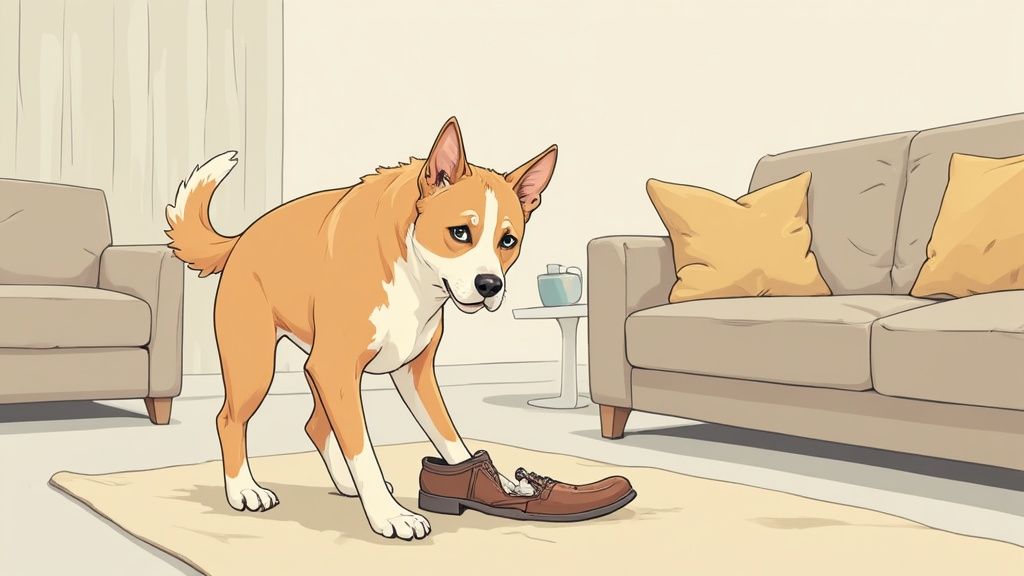
The first, and most important, step in helping your pup is to figure out what’s really going on.
Many owners come to me convinced their dog has separation anxiety when, after we chat for a bit, it becomes clear we're dealing with a dog who is simply bored out of their mind. Both can result in a destroyed living room, but the motivation is worlds apart. Getting this right is everything because the solutions are completely different.
If you’re seeing these behaviors, you're not alone—especially in the last few years. One survey highlighted a staggering 760% rise in separation anxiety in dogs between 2020 and 2022, with nearly half of all owners reporting anxious behaviors. This spike makes sense when you think about it. We were all home, creating these incredibly tight bonds, which made our eventual return to the office that much harder for our pups.
Is It Panic or Just a Lack of Fun?
So, how do you tell the difference? A bored dog might shred a pillow because it’s something to do. An anxious dog, on the other hand, often focuses their destruction on escape routes.
Think about it this way:
Destruction near exits: Are the scratch marks and chew damage concentrated around doors or windows? This is a classic sign of panic. Your dog is desperately trying to get out and find you.
Vocalization patterns: A bored dog might bark at a passing squirrel for a minute and then move on. A dog with true separation anxiety often barks or howls relentlessly from the moment you leave until you return. It’s a sound of distress, not play.
Physical symptoms: Excessive drooling, panting when it's not hot, or frantic pacing are all physical signs of stress. Some dogs even have accidents in the house, despite being perfectly house-trained.
These aren't just "bad dog" behaviors; they are cries for help. Seeing them as symptoms of genuine fear is the first step toward finding a compassionate solution.
"True separation anxiety isn't a training issue; it's a panic disorder. Your dog isn't misbehaving to spite you—they are terrified that you've left them forever."
Sometimes it's tough to tell the behaviors apart. This little guide can help you spot the differences.
Separation Anxiety vs Boredom: A Quick Guide
Use this guide to distinguish between typical dog behavior and the more serious signs of separation anxiety.
Symptom | What It Looks Like | What It Could Mean |
|---|---|---|
Destructive Behavior | Chewing is focused on exit points like doors and windowsills. | Separation Anxiety: The dog is trying to escape to find you. |
Chewing is random—furniture, shoes, remote controls. | Boredom: The dog is looking for self-entertainment. | |
Vocalization | Persistent, high-pitched barking or howling that starts when you leave and continues. | Separation Anxiety: A distress call indicating panic. |
Intermittent barking, often triggered by outside noises (mail carrier, other dogs). | Boredom/Territorial Behavior: The dog is reacting to stimuli or is under-stimulated. | |
House Soiling | Accidents from a well-trained dog, but only when left alone. | Separation Anxiety: A physiological response to extreme stress, not a training lapse. |
No specific pattern; accidents might happen anytime. | Medical Issue/Incomplete House-Training: Rule out other causes with your vet. | |
Pacing/Restlessness | Frantic, repetitive pacing along a fixed path, often near the door. | Separation Anxiety: Anxious energy with no outlet. |
General restlessness, moving from spot to spot, but will eventually settle. | Boredom: The dog is looking for something interesting to do. |
While this table is a good starting point, remember that every dog is an individual. If you're seeing signs that point toward anxiety, it's time to start looking for solutions that address their fear.
The Subtle Clues You Might Be Missing
Beyond the obvious chaos, anxious dogs often show their stress in much quieter ways. They might become "Velcro dogs," shadowing your every move and getting agitated if you're just in another room with the door closed. Some lose their appetite or show zero interest in their favorite treats when they sense you’re getting ready to leave.
Learning to read these early warnings is crucial. It helps you understand your dog’s emotional state before it snowballs into a full-blown panic attack. A huge part of this is simply getting better at interpreting what your dog is trying to tell you. To learn more, check out our guide to understanding dog body language for invaluable insight. This knowledge is your foundation for building a plan that truly helps them feel safe and secure, even when you can't be there.
Creating a Calm and Confident Home Environment
Before you even think about grabbing your keys, the most important work happens right inside your home. A dog's ability to feel secure when you leave is built, piece by piece, during the time you actually spend together. Think of it as laying a foundation of confidence, not through intense training drills, but by creating an environment where your dog learns that being calm and independent is a good thing.
The goal here is to gently shift their perspective. For an anxious dog, your presence is their entire world. We need to teach them that the house is a safe, predictable, and even enjoyable place, with or without you glued to their side. This isn't about ignoring them; it's about nurturing a quiet self-assurance that will be their anchor when they're alone.
The Power of a Predictable Routine
Dogs may not have watches, but they are absolute masters of routine. They find incredible comfort in knowing what comes next—when they'll eat, when they'll go for a walk, and when it’s time to settle down. A consistent daily schedule is one of the simplest yet most effective tools for lowering a dog's overall anxiety.
When their world is predictable, they aren't constantly on edge wondering what's going to happen. This baseline of calm makes it much easier to tackle the much larger fear of you leaving. You're essentially giving them a roadmap for their day, and they feel much more secure knowing the route.
Designating a Safe Haven
Every dog needs a spot that is 100% their own—a personal den where they can retreat and feel completely secure. This is often a crate, but it could just as easily be a cozy bed in a quiet corner. The golden rule is that this space is always associated with positive, relaxing experiences.
Make it a V.I.P. lounge: Fill this space with the good stuff. Think comfy bedding, a favorite blanket, and a special high-value chew toy that they only get in this spot.
It's never a punishment: This is critical. The safe space can never be a time-out corner. Sending a dog there for misbehaving will poison the well, turning their sanctuary into a jail cell.
Keep the door open: When you're home, let your dog come and go as they please. This gives them a sense of control and reinforces that it’s a place of comfort, not confinement.
This infographic gives a great visual for setting up the perfect safe space to build that positive association right from the start.

As the image shows, a great safe space is all about simplicity, comfort, and engagement. It encourages your dog to see it as their personal retreat, not a place of isolation.
Fostering Happy Independence Through Enrichment
One of the best ways to build your dog’s confidence is to teach them how to entertain themselves. Mental stimulation, often called enrichment, is a game-changer. It gives their brain a job, channeling anxious energy into productive, rewarding problem-solving.
Puzzle toys are my go-to recommendation. A frozen KONG stuffed with some xylitol-free peanut butter or a snuffle mat that makes them hunt for their kibble can keep a dog happily focused for quite a while. These activities teach them to find joy in a solo task—a vital skill for any dog who struggles with being alone.
"Enrichment isn't just about preventing boredom; it's about building an independent dog who is a confident problem-solver. A dog who can happily figure out a puzzle toy on their own is learning to be content in their own company."
Gently Discouraging the Velcro Dog Syndrome
I see them all the time at my daycare—those adorable "Velcro dogs" who follow their owners from room to room, never letting them out of sight. While it comes from a place of deep affection, this constant shadowing can actually fuel separation anxiety. Our job is to gently show them that it’s perfectly okay for you to be out of sight for a moment.
Start small. Try asking your dog to "stay" on their bed while you walk into the kitchen for just a few seconds. Return and calmly praise them for staying put. Slowly, you can increase the duration you're gone. This isn't about pushing them away; it's about teaching them that a little distance is safe and that you always come back. By building this confidence at home, you’re creating the strong, secure dog who will one day be able to handle your departures with grace.
A Practical Plan for Peaceful Departures

Alright, now for the hands-on part. We've laid the groundwork for a calmer dog at home, and it's time to put that foundation to the test. This is where the real work begins, but don't feel overwhelmed—we’re going to approach this with small, achievable steps. Our goal is to completely reframe what "you leaving" means to your dog, transforming it from a catastrophe into a total non-event.
To do this, we’ll use two powerful techniques that are the gold standard among behavior professionals: desensitization and counter-conditioning.
Think of it like this: desensitization makes scary things less scary by exposing your dog to them in tiny, manageable doses. Counter-conditioning is about flipping their emotional response from "Oh no, they're leaving!" to "Oh boy, something good is about to happen!" When we put them together, your departure stops being the end of the world and starts becoming a cue for something awesome.
Making Your Departure Cues Meaningless
Right now, your dog is a furry little detective. They've memorized every single clue that signals you're about to walk out that door. The jingle of your keys, the rustle of your jacket, the sound of you grabbing your purse—these are all triggers that send their anxiety skyrocketing long before you're even gone.
Our first mission is to strip these cues of their power. We need to break the connection that keys in your hand always means you're abandoning them.
Here's how to start:
Pick up your keys and walk over to the fridge. Put them on the counter and grab a drink. Don't leave.
Put on your shoes and go sit on the couch. Watch TV for ten minutes, then take them off. Don't leave.
Grab your coat and walk to the front door. Check the mail, then come right back inside. Your "departure" lasted all of 15 seconds.
The idea is to perform these actions so frequently without actually leaving that your dog stops seeing them as a reliable warning sign. They’ll eventually learn to just shrug them off, which is precisely the reaction we're aiming for.
The Art of the Micro-Departure
Once your dog stops reacting to the little rituals that precede your exit, we can start practicing actual absences. The trick is to start ridiculously small—so small that your dog barely has time to realize you’re gone. We are building a new history of success, one where every single time you leave, you come back before they even have a chance to panic.
Start by simply stepping out the door and closing it behind you. Count to two, then immediately come back inside. No fanfare, no big reunion. Just act like you forgot something.
The whole point is to return while your dog is still calm. If you come back to frantic barking, you were gone too long. Next time, shorten the duration. It's all about watching your dog and pushing that boundary just enough to make progress without ever triggering their fear.
"Your dog’s only job during this training is to be successful. Our job is to set the bar so low that they can't fail. A successful one-second absence is a bigger victory than a failed five-minute one."
A Sample Training Progression
Every dog is different, so progress will vary. A gradual, steady schedule is what matters. This isn't a race; you're literally helping your dog rewire their brain's response to being alone, and that takes patience.
Here’s a rough idea of what a training progression might look like. Just remember to only move to the next step when your dog is completely comfortable with the current one.
Phase | Action | Goal |
|---|---|---|
Week 1 | Practice with departure cues randomly throughout the day. | Your dog no longer shows signs of anxiety when you pick up keys or put on your coat. |
Week 2 | Begin micro-departures: 1-5 seconds, then 10-30 seconds. | Your dog remains calm and relaxed during these very brief absences. |
Week 3 | Extend absences to 1-5 minutes, varying the times. | You can successfully leave for a few minutes without triggering a panic response. |
Week 4+ | Gradually increase duration: 10 mins, 20 mins, 45 mins. | Build up duration slowly, always returning before your dog becomes anxious. |
This process is a marathon, not a sprint. Some dogs might breeze through this in a month; others might take several. That’s perfectly fine. Let your dog set the pace, not the calendar.
It's also important to acknowledge how draining this can be for owners. The weight of this problem isn't just on our dogs. One survey revealed that 44% of pet owners actively worry about their pets having anxiety when left alone. The concern runs so deep that 40% of those surveyed said they would consider taking a pay cut to work from home. You can learn more about these emotional and financial impacts on dvm360.com.
When to Push and When to Pause
Learning to read your dog is the single most important skill you'll develop during this process. A calm dog might be lying down, casually watching the door, or happily occupied with a toy. An anxious dog, on the other hand, will show you they're stressed long before they start barking or destroying things.
Keep an eye out for these early warning signs on your pet cam:
Lip licking when there’s no food around
Yawning when they aren't tired
Whale eye (when you can see the whites of their eyes)
Pacing or an inability to settle down
If you spot these behaviors, you’ve pushed a little too far for that session. No big deal. The next time you train, just dial back the duration to their last successful time. This isn’t a failure—it's incredibly valuable information. It tells you exactly what your dog can handle right now. By listening to them, you’re building trust and proving that they have nothing to fear. You will always come back.
Helpful Tools and Professional Support Systems
Even with the most patient and consistent training plan, sometimes you and your dog need a little extra support. And that’s completely okay. At my daycare, I've seen firsthand that there's no single magic wand for separation anxiety. The journey is often about finding the right combination of tools that click for your individual dog.
Thinking about extra help isn’t a sign of failure. It’s a sign that you’re a dedicated owner exploring every avenue to help your best friend feel secure. From simple calming aids to professional guidance, these resources are here to complement your training efforts, not replace them.
Calming Aids and Supportive Gear
The market is flooded with products designed to soothe an anxious pup. It can feel a bit overwhelming, but many of them work by tapping into a dog's natural instincts to create a sense of security.
Here are a few options I’ve seen make a real difference for some of the dogs in my care:
Pheromone Diffusers: These plug-ins release a synthetic version of the calming pheromones a mother dog produces for her puppies. They're odorless to us but can create a subtle sense of well-being in the rooms where your dog spends the most time.
Anxiety Vests: Think of products like the ThunderShirt as a gentle, constant hug. They apply steady pressure to your dog’s torso, which is similar to swaddling an infant and can have a wonderfully calming effect.
Calming Supplements: Chewable supplements with ingredients like L-theanine, tryptophan, or chamomile can help take the edge off. Just be sure to chat with your vet before starting anything new to make sure it's a good fit for your dog's specific health needs.
A pro tip: help your dog build a positive association with these tools. For example, have your dog wear the anxiety vest for short periods while you're home, offering praise or a high-value treat. That way, they don't learn to see it as a sure sign you're about to leave.
When to Bring in the Professionals
While home training is powerful, there are times when a professional eye can change everything. Knowing when to ask for help is a strength. If you feel stuck, overwhelmed, or your dog’s anxiety is severe and not improving, it’s time to call for backup.
You’re not alone in this. The global market for canine separation anxiety treatments is projected to grow at 6% annually for the next decade, fueled by owners seeking real, effective solutions. This trend, detailed on biospace.com, just shows how common this struggle is.
Here’s who you can turn to for expert guidance:
Certified Dog Trainer: Look for a trainer with a specific certification in this area, like a CSAT (Certified Separation Anxiety Trainer). They can create a customized plan and provide the coaching you need to stay on track.
Veterinary Behaviorist: This is a veterinarian who has specialized in animal behavior. They are the top experts for severe cases and can diagnose underlying issues and discuss medication options.
Your Trusted Veterinarian: Your primary vet should always be your first call. They can rule out any medical conditions contributing to the anxiety and can refer you to a behaviorist or prescribe medication if they feel it’s appropriate.
"Reaching out to a professional isn't giving up; it's gearing up. It's adding an expert to your team who can provide a roadmap when you feel lost in the woods."
Exploring Medication as an Option
The idea of medicating a pet can make some owners feel uneasy, but for dogs with severe panic disorders, it can be a life-changing tool.
Think of it less as a "cure" and more as a way to lower your dog's anxiety just enough for your behavior modification training to actually sink in. A dog in a state of sheer panic is physically incapable of learning new, calmer behaviors.
Medication, prescribed by a vet, can help get them into a mental state where they are receptive to learning that being alone isn't scary. It’s a support system for their brain, allowing all your hard work in training to finally take root. If you're struggling to make progress, it’s a conversation worth having.
For dogs with milder anxiety or those who just need more socialization and stimulation, a structured environment like daycare can be a fantastic alternative. It provides mental and physical exercise that reduces overall stress. You can learn more about the many doggy day care benefits your pup will love in our detailed guide.
Maintaining Progress and Preventing Setbacks
You’ve put in the hard work, stayed patient, and are finally seeing a calm, happy dog when you walk back through the door. First off, pat yourself on the back—that’s a huge accomplishment! But as any dog owner knows, life happens. The real secret to managing separation anxiety for good is learning how to handle life's curveballs without sliding all the way back to square one.
This is all about making this new, peaceful state your dog’s default setting. I often tell owners at my daycare that the training never really stops; it just becomes a lifestyle of reinforcing your dog's confidence. The goal is to make your dog so secure in their own company that a change in routine is just a minor hiccup, not a full-blown crisis.
Adapting to Life's Curveballs
Sooner or later, your schedule will change. You might take a vacation, start a new job, or have family stay over for the holidays. For a dog who's overcome separation anxiety, these shifts can feel unsettling and dredge up old fears. The trick is to be proactive, not reactive.
If you know a change is on the horizon, start preparing your dog ahead of time.
Returning to the Office: If you're switching from working at home to being in the office, please don't make the first day a full eight-hour absence. A week or two beforehand, start practicing longer departures again. Gently build back up to a few hours at a time.
Going on Vacation: If a pet sitter is coming, have them visit several times before you actually leave. Let them be the one to give treats or take your dog for a short, fun walk while you're still home. This forges a positive connection, helping your dog see them as a friend, not just a stranger who shows up when you disappear.
You’re essentially dusting off the training tools you’ve already mastered, just to remind your dog that they have the skills to cope with this new situation.
Common Mistakes That Can Cause Setbacks
Even with the best intentions, it's easy to accidentally do things that undermine all your hard work. We can all fall back into old habits, especially when we feel a little guilty about leaving.
The biggest mistake I see is what I call the "guilt gift." This is when an owner, feeling bad about an upcoming long day, smothers their dog with excessive attention right before walking out the door. This actually makes the departure feel more dramatic by heightening the contrast between you being there and you being gone.
To sidestep this and other common pitfalls, be mindful of these subtle behaviors:
Long, Emotional Goodbyes: Dragging out your exit with tons of hugs, kisses, and a chorus of "be a good boy!" only amps up your dog's anxiety. It signals that something big and scary is about to happen. Keep your comings and goings low-key and brief.
Inconsistent Rules: If you sometimes let your dog follow you into the bathroom but other times you don't, it creates confusion and insecurity. Consistency with boundaries is key to helping them feel secure.
Stopping Enrichment Activities: Don't ditch the puzzle toys and snuffle mats just because the worst of the anxiety seems to be over. Daily mental stimulation is crucial for maintaining your dog’s confidence and independent problem-solving skills.
These small, consistent efforts are what reinforce the solid foundation you've built. For a deeper look into why these shifts in routine can have such an impact, our article on understanding dog behavior change causes and solutions has some fantastic insights.
Ultimately, maintaining progress is all about continuing the good habits that got you this far, ensuring a lifetime of peaceful goodbyes for you and your best friend.
Common Questions from Worried Pet Parents
Over my years running the daycare, I've seen the same worried expressions and heard the same heartfelt questions from owners who just want their dogs to feel safe. Tackling separation anxiety is a journey, and it's completely normal for questions to pop up along the way. Think of this as a little chat over the counter—my honest answers to the things I hear most often from pet parents just like you.
It's easy to feel lost or wonder if you're doing the right thing. Let's clear up a few of the biggest uncertainties that come up.
Will Getting Another Dog Help My Anxious One?
This is probably the number one question I get, and it comes from such a good place. The logic seems sound: if my dog is lonely, another dog will keep them company! Unfortunately, it rarely works out that way.
Separation anxiety is an intense, almost phobic, attachment to you, not just a general fear of being alone. Your dog isn't missing a companion; they are panicking because their specific person is gone. While a small handful of dogs might find some comfort in a furry friend, most will remain just as anxious when you walk out the door.
Even worse, sometimes the new dog can pick up on the anxious behaviors, leaving you with two stressed-out pups instead of one. It's always best to address the root anxiety in your current dog first.
The most reliable cure for separation anxiety is building your dog's confidence and independence, not outsourcing their comfort to another pet. Focus on solving the core issue before adding a new dynamic to your household.
How Long Will This Training Take to Work?
Oh, how I wish I could give you a simple, straightforward timeline. The truth is, every dog is different. There's no magic "six-week fix."
Your dog's progress depends on a lot of things: how severe their anxiety is, their unique personality, and how consistently you can practice the training.
For dogs with milder cases, you might see noticeable improvements in just a few weeks. For those with a deep-rooted history of panic, it could take several months of patient, steady work. The most important thing is to shift your focus from speed to success. Celebrate the small victories—a five-second departure without a peep, a calm reaction when you pick up your keys. Every tiny step forward is a huge win.
Is Crate Training a Good Idea for Anxious Dogs?
This is another tricky one where the answer is a firm "it depends." It all comes down to your dog's personal history with their crate.
If your dog already sees their crate as a safe, cozy den—a personal sanctuary they retreat to on their own—then yes, it can be an amazing tool in your separation anxiety plan.
However, if your dog panics the second the latch clicks shut or has started associating the crate with the terror of you leaving, forcing them inside will only make things much, much worse. It can escalate their fear and even lead to them injuring themselves trying to escape. If you want to use a crate, you have to start from scratch, building a wonderfully positive association with it that has absolutely nothing to do with you leaving the house.
Never use a crate to contain a panicking dog.
At Pawcation, we understand that every dog is unique. If you're near King of Prussia, PA, and need a safe, loving environment for your dog while you're away, we're here to help. I work from home, ensuring your pup gets all the walks, playtime, and personal attention they deserve. Learn more about our doggy day care and boarding services.
Comments