A Friendly Guide to Crate Training Older Dogs
- ericavdippold
- Nov 5, 2025
- 13 min read

Hey there! As the owner of a busy doggy daycare, I hear this one a lot: "Is my dog too old to be crate trained?" And my answer is always a resounding no! It's a total myth that you can't teach an old dog new tricks. I've seen dogs of all ages, from spunky seniors to wise old-timers, learn to love their crates.
The biggest hurdle is usually us, the humans. We look at a crate and see a "cage." But for a dog, it has the potential to be a private den—a safe, cozy sanctuary that's all their own. With a bit of patience and a whole lot of happy vibes, that new box can become your dog's favorite spot in the house. Trust me on this one.
Why a Crate Is a Wonderful Gift for Your Older Dog
I’ll never forget Buster, an older Golden Retriever who came to us after his family moved. The poor guy was a bundle of nerves—constantly pacing, unable to settle. We set up a comfy, open-door crate in a quiet corner of the room, filled it with a soft blanket, and just left it there. Within a week, it became his go-to spot anytime the hustle and bustle of the daycare felt overwhelming. It was his safe space.
That's the real magic of a crate for an older dog. It's not about confinement; it's about comfort and giving them a sense of security.
The Real-World Benefits for Your Furry Friend
A dedicated space like a crate can be a game-changer for reducing anxiety, especially for senior dogs adjusting to a new home or dealing with past trauma. Older dogs are creatures of habit, and a crate offers a predictable, secure environment they can count on. It’s a spot that belongs entirely to them, which does wonders for their confidence.
And let's be honest, the practical benefits for you are huge, too. A dog who sees their crate as a safe haven is easier and safer to manage in all sorts of situations.
Safer Travel: Car rides and trips to a new place become way less stressful when they can bring their familiar den along for the ride.
Stress-Free Vet Visits: An overnight stay or recovery from a procedure is much calmer when they're resting in a space they already associate with safety.
Household Harmony: It gives them a secure place to retreat during chaotic times, like when you have guests over or during a scary thunderstorm.
The goal isn't to lock them away. It's to give your older dog a place to go when the world feels a bit too much, empowering them with a sense of control and security.
It's Truly Never Too Late to Start
So many people worry their dog is too old or too set in their ways. But I promise you, with a patient, step-by-step approach rooted in positive reinforcement, even the most stubborn senior can learn to love their crate. It all comes down to building a happy association, starting with short, rewarding visits and gradually increasing the time.
Of course, anxiety can be a real hurdle in the beginning. Understanding what makes them nervous is half the battle. If you notice your dog seems uneasy, it's super helpful to learn about the 8 tell-tale signs of dog stress every owner should know. Recognizing these signals early on will help you move at your dog's pace, making sure the entire process is a positive one from day one.
Creating an Irresistible Den for Your Senior Dog
Alright, let's get to the fun part! Getting the setup right is more than half the battle when crate training an older dog. This isn't just about picking a box; it's about creating a personal den so inviting they choose to go there on their own. Over the years, I've seen a cozy, well-thought-out setup completely transform a dog's attitude toward their crate.
Your mission is to make this new space feel like the best spot in the house. Think of it as decorating their private room—it needs to be comfortable, safe, and filled with their favorite things. When a dog feels truly secure in their space, the whole training process becomes so much smoother.
Choosing the Perfect Crate
The type of crate you choose really matters, especially for a senior dog. Their needs are different from a puppy's; comfort and easy access are usually top priorities. Let's break down the most common options.
To help you decide, here's a quick look at the most popular types and what they offer for an older dog.
Choosing the Right Crate for Your Older Dog
Crate Type | Best For | Considerations |
|---|---|---|
Wire Crates | Dogs who like to see their surroundings; offers great ventilation. | Can feel exposed (a cover helps); some find the metal bottom noisy. |
Plastic Crates | Dogs who prefer a cozier, more enclosed "den-like" feel. | Less ventilation; can be harder to clean than wire crates. |
Soft-Sided Crates | Travel and portability; dogs who are already crate trained. | Not suitable for chewers or dogs who might try to escape. |
While each has its place, I usually find that a sturdy wire or plastic crate is the best starting point for most older dogs. You can easily toss a blanket over a wire crate to give it that den-like atmosphere while keeping the airflow.
This infographic lays out the core benefits of a properly prepared crate for your senior companion.
As you can see, the crate is much more than a box—it's a sanctuary that provides safety, comfort, and peace of mind.
Making It the Coziest Spot in the House
Now for the best part: making it absolutely irresistible! For older dogs, comfort is non-negotiable, especially for their aging joints.
An orthopedic or memory foam bed is one of the best investments you can make for your senior's crate. Seriously. It provides crucial support and eases the pressure on their hips and elbows, making it a place they genuinely want to relax.
Next, add a few personal touches that make it feel like home. A blanket or an old t-shirt that smells like you can be incredibly reassuring for a dog. This simple trick helps them associate the crate with your comforting presence, even when you're not in the room.
The secret to a successful setup is layering comfort and positive associations. Your dog should see their crate not as a place you put them, but as a place they get to be.
Finally, think about where you put it. Tucking the crate into a common area of your home, like the corner of the living room, is a great move. This lets your dog feel like part of the family pack instead of being isolated. They can relax in their den while still hearing and seeing the comforting, everyday buzz of their favorite people.
Alright, you’ve picked out the perfect crate and turned it into the coziest spot in the house. Now for the most important part—the actual training. The best piece of advice I can give you is this: throw any rigid timelines right out the window. When it comes to crate training older dogs, patience isn't just a virtue; it's the entire game plan.
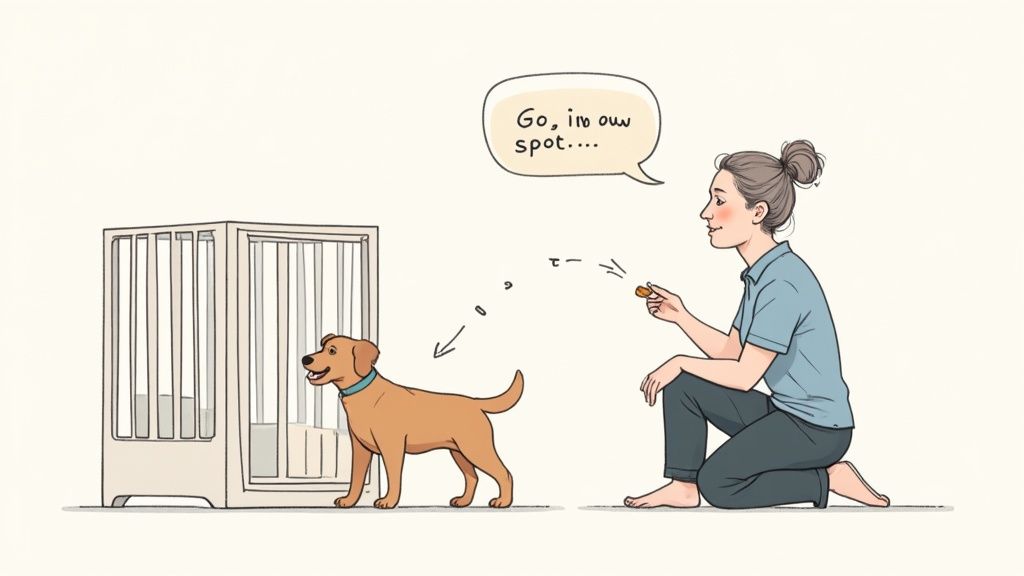
This whole process hinges on positive reinforcement and celebrating the smallest wins. We're going to break this down into tiny, manageable steps to make sure your dog feels safe and in control every step of the way. Our first goal is simple: help them believe the crate is a wonderful place, long before we even think about closing the door.
Step 1: Make the Crate a Fun Place to Be
First things first, we need to build a powerful, happy association with the crate. My favorite way to do this is by playing what I call "crate games." The rules are easy: the crate is where awesome things happen.
Grab some high-value treats—I’m talking tiny pieces of chicken, cheese, or whatever snack makes their tail go into overdrive. Start by tossing a treat near the crate. When they eat it, shower them with praise! After a few reps, toss a treat right at the entrance, and then eventually, just inside.
The key here is no pressure. Let them pop their head in, snatch the goody, and walk right back out. We're simply teaching them that good stuff happens in and around this space, and they’re always free to leave. Keep these sessions short and fun, and try to do a few throughout the day.
Step 2: Introduce a Verbal Cue and Routine
Once your dog is happily trotting over to the crate looking for treats, it's a good time to add a verbal cue. Something simple and positive like "go to your spot" or "crate time" works perfectly.
As they are about to step inside to get a treat, say your chosen phrase in an upbeat, happy tone. With a little repetition, they'll start connecting the words with the action of entering their new den.
You can also start weaving the crate into their favorite daily routines, and mealtime is a golden opportunity for this.
Start by placing their food bowl right next to the crate for a few meals.
Next, move the bowl just inside the entrance.
Gradually, over several more meals, move the bowl all the way to the back.
This simple trick helps them see the crate as the place where dinner—a fantastic daily event—happens. For the first week or two, make sure you leave the door wide open during their meals.
Reading your dog's body language is your most important tool. If you see signs of stress—like yawning, lip licking, or a tense body—you're moving too fast. Simply take a step back to where they were last successful and comfortable.
Step 3: The First Door Close
So, your dog is now comfortably eating meals inside their crate or eagerly running in for treats. It's time for a major milestone: closing the door. This needs to be incredibly brief and totally casual.
The very first time you do it, close the door for literally one or two seconds while they’re busy eating or chewing on a special toy, then open it right back up. Don't make a big deal out of it. Repeat this a few times during a session.
The goal is to teach them that a closed door is no big deal because it always, always reopens. From here, you can slowly begin to add a few more seconds.
Close it for 5 seconds, then open.
Close it for 10 seconds, then open.
Work your way up to 30 seconds, then open.
Always aim to open the door before they show any signs of wanting out. This way, you're reinforcing calm behavior, not anxious whining or scratching. Moving at their pace is the secret to successful and happy crate training for any older dog.
Troubleshooting Common Crate Training Challenges
Even with the most patient, step-by-step approach, you’re bound to hit a snag or two when crate training an older dog. First, take a deep breath. This is completely normal! Every dog has their own personality and history, so a few bumps in the road don’t mean you've failed. It just means it's time to listen a little closer to what your dog is trying to tell you.
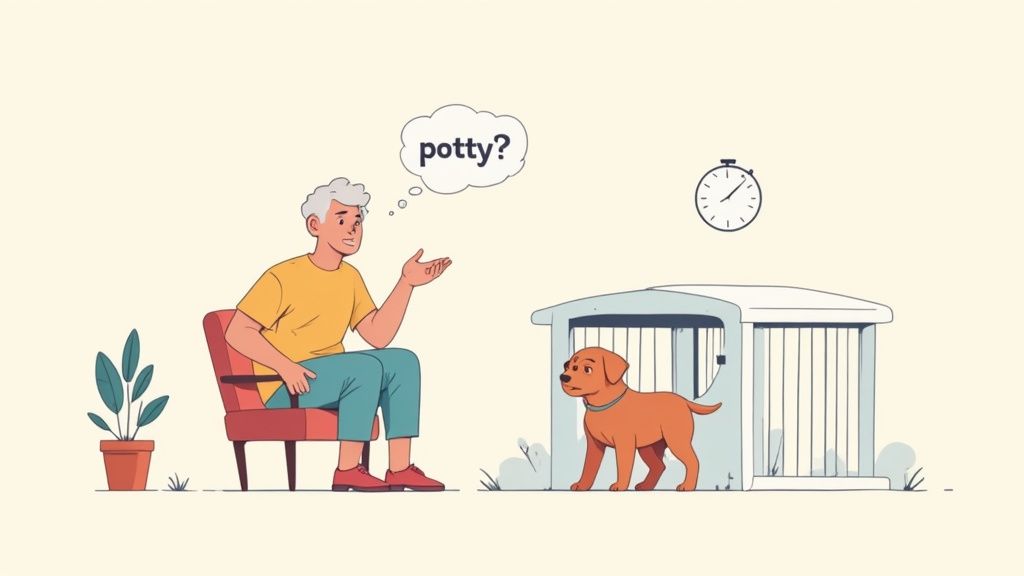
Think of this as our troubleshooting hub. After running my doggy daycare for years, I've seen just about every challenge you can imagine. We'll walk through the most common issues together and find gentle, effective solutions to get you both back on track.
Decoding Whines and Barks
This is the big one. Your dog is in their crate, and suddenly the whining, barking, or howling begins. It's so tempting to rush over and let them out, but how we respond is critical. We have to become detectives and figure out the why behind the noise.
Is it a high-pitched, urgent whine that means, "I really need to go potty"? Or is it a lower, more anxious moan that says, "I'm lonely and unsure about this"? Anxious vocalizations often come paired with other stress signals, like frantic pacing or heavy panting.
Attention-Seeking Barking: If you're positive all their needs are met and they're just testing the boundaries, the best response is often no response. Wait for a moment of silence—even just 2-3 seconds at first—and then open the door or reward them. This quickly teaches them that quiet gets your attention, not noise.
Potty Break Whining: This requires immediate action. Take them out on a leash for a boring, all-business potty trip. No games, no excited praise. Once they've done their thing, it’s straight back inside. This reinforces that this specific whine is reserved for bathroom emergencies only.
For senior dogs, it's especially important to understand their physical limitations. An older dog simply can't hold it as long as they used to. Our guide on how long dogs can hold their pee can give you a much clearer idea of what's reasonable to expect.
Overcoming Past Negative Experiences
What if your dog has a bad history with crates? Many older shelter dogs do. For them, a crate isn't a neutral object; it's a symbol of fear, abandonment, or punishment. Forcing them inside will only confirm their worst fears and destroy any trust you've built.
Rebuilding trust is your number one job. This isn't just about training; it's about helping them heal. You must show them, through consistent, gentle actions, that this time is different.
You'll need to go back to square one and move at a snail's pace. I've had clients keep the crate door completely removed for weeks. The goal is total desensitization.
Feed every single meal right next to the crate. Over days or weeks, inch the bowl closer and closer until it's just inside the entrance.
Play low-pressure games around the crate, never asking them to go in. Toss a toy nearby and celebrate when they retrieve it.
Leave amazing, high-value "surprise" treats inside for them to discover on their own schedule. Think small pieces of cheese or freeze-dried liver.
Whatever you do, never use the crate for punishment. It must always, always be a sanctuary. With unwavering patience, you can help them rewrite their story and finally see the crate as a place of true safety and peace.
Special Considerations for Rescue and Anxious Dogs
Bringing an older rescue dog home is one of the most rewarding things you can do, but it’s important to remember they often come with invisible baggage. Their past can make crate training a much more delicate journey, one that requires a deep well of empathy and a much slower pace.
For a rescue dog, the world has just been turned upside down. A crate offers them a consistent, secure spot in what can feel like a chaotic new environment. It’s the one place that is entirely theirs—a sanctuary where they can decompress and process their new life without feeling overwhelmed. This predictability is immensely comforting.
Building Confidence in An Anxious Dog
I’ve worked with countless anxious dogs over the years, and many of them share one common trait: a lack of confidence. They’re often easily startled and unsure of themselves. For these dogs, a crate is more than just a management tool; it’s a way to build genuine self-assurance.
When we successfully teach them that the crate is their personal retreat, we’re giving them a powerful coping mechanism. This is especially true for dogs struggling with separation anxiety, as the crate can help establish a calm, predictable routine around you leaving and coming home.
Your main goal is to show them, through gentle repetition and endless patience, that this space is safe and that you will always return. Their past may have taught them otherwise, so you are helping them build new, positive memories.
Older rescue dogs, in particular, can benefit from having a den of their own. A crate serves as a protective measure, preventing destructive behaviors that often stem from fear or confusion as they adjust. It's also an invaluable aid for house training and can significantly ease the stress that comes with settling into a new home.
A Compassionate Training Checklist
For these special dogs, an extra-slow and empathetic approach is non-negotiable. Their emotional well-being has to be our top priority.
Go Extremely Slow: Take all the foundational steps we’ve already covered and break them down into even smaller pieces. It might be weeks before you even think about closing the door. That’s perfectly okay.
Never Use Force: Don't ever push, pull, or trick your dog into the crate. Every single interaction with the crate needs to be their choice.
Read Their Body Language: Become a student of your dog’s subtle cues. A yawn, a quick lip lick, or showing the whites of their eyes ("whale eye") are all signals to back off and try again later when they're more comfortable.
The fear of being left alone is a huge hurdle for many of these dogs. If you notice signs of distress when you're getting ready to leave, our guide on easing dog anxiety when left alone offers more targeted advice. Your patience is the key to turning their crate into a trusted retreat, not a place of fear.
Answering Your Lingering Crate Training Questions
We’ve walked through the whole process, but I know you probably still have a few "what if" questions rattling around. After years of working with countless dogs and their awesome humans, I've heard just about every question in the book when it comes to crate training older dogs.
Let's tackle some of the most common ones I hear from owners so you can move forward with total confidence.
Can My Older Dog Stay in Their Crate While I'm at Work?
This is probably the number one question I get. The short answer? It's really not ideal for a full workday.
Generally, an adult dog shouldn't be left in a crate for more than 4-6 hours at a time. For senior dogs, who often have less bladder control, that time is even shorter. A full 8 or 9-hour workday is simply too long for them to hold it comfortably.
If you have a long commute and work schedule, you'll need a different plan. Think about:
Hiring a dog walker: Someone can pop in midday to let your dog out for a potty break and a quick stretch.
Creating a "dog-proofed" space: Use a baby gate to section off a small, safe room like a laundry room or kitchen.
Looking into doggy daycare: This gives them a chance to socialize and get plenty of potty breaks (we'd love to have them!).
How Long Can My Senior Dog Be in the Crate Overnight?
Nighttime is a different story. Most house-trained adult dogs can sleep through the night for 6-8 hours without an issue. Because they're resting and not active, they can usually hold it much longer than they can during the day.
That said, you need to listen to your older dog. If they start waking up and whining in the middle of the night, it's likely not a behavioral problem—it's a physical need. Just like older humans, they may need more frequent bathroom trips as they age.
The crate should always be a haven, never a place of punishment. Industry experts widely agree that for dogs of all ages, the crate should be a positive refuge, which is shown to improve mental health and overall behavior in senior dogs.
Veterinarians and trainers often point out that a crate can be an incredible management tool for older dogs, especially those with health issues. It gives them a safe, predictable space to rest. For more expert advice on using crates positively with seniors, you can find some great information on toegrips.com.
At Pawcation, we know that every dog has their own unique needs and personality. If you're looking for a safe, fun, and caring place for your dog to be while you're busy, we're here for you. Check out our doggy daycare and boarding services.
Comments