Easing Dog Anxiety When Left Alone
- ericavdippold
- Nov 4, 2025
- 13 min read

Hey there, it's one of the most common questions I get from worried dog parents who come through my daycare doors: "Is my dog just being naughty when I'm gone, or is it something more?" It's a tough one, because the line between boredom and true separation anxiety can be blurry. But figuring out the difference is the absolute first step to helping your best friend feel safe and happy.
At its core, dog anxiety when left alone isn't about mischief—it's about a deep, genuine fear of being abandoned. A bored dog is just looking for a job to do; an anxious dog is in a state of panic.
Is It Anxiety or Just Boredom?
After seeing countless dogs come through my daycare, I can tell you that a pup who casually chews a shoe out of boredom is a world away from one experiencing genuine separation anxiety. Let's untangle these behaviors so you can understand what's really going on in your dog's head when you walk out that door.
This has become such a massive issue recently. After years of having us home 24/7, our dogs got used to constant companionship. Now, as our routines shift back to normal, a lot of them are really struggling to cope.
One survey found that observed dog separation anxiety behaviors increased by over 760% since 2020. That's a staggering number, and it shows just how widespread this problem has become.
Becoming a Dog Detective at Home
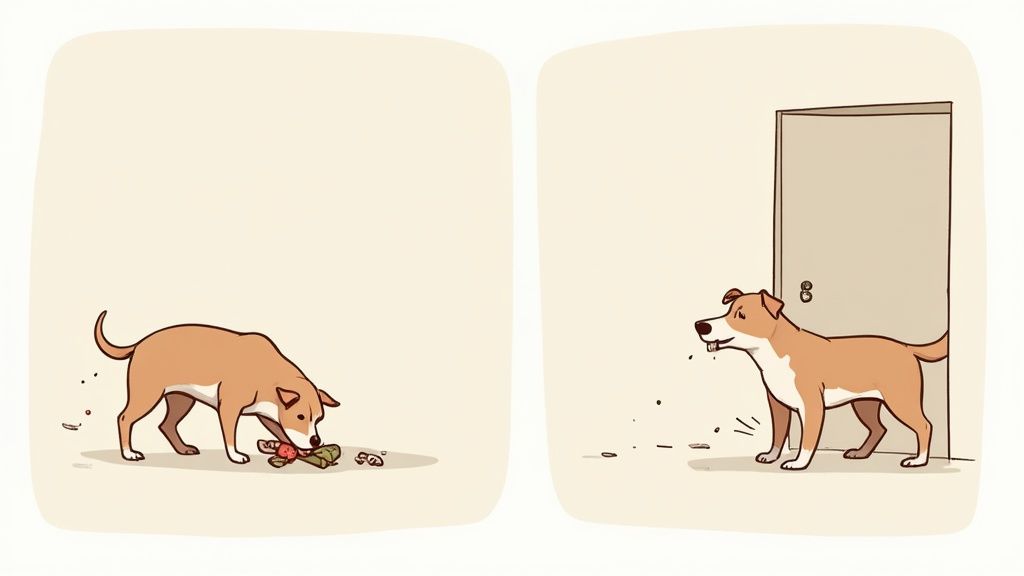
To figure out what’s really going on, you have to put on your detective hat. A bored dog might pull tissues out of a box or chew on a pillow simply because it’s something to do. The behavior of an anxious dog, on the other hand, is driven by sheer panic.
Look for these classic signs of dog anxiety when left alone:
Destruction at Exits: Is the chewing and scratching focused on door frames, window sills, or the front door? These are often frantic attempts to escape and find you.
Immediate Vocalization: Anxious barking, howling, or whining usually kicks in right as you leave or just after. It’s a distress call, not just random noise.
House Soiling: If your fully potty-trained dog is having accidents only when you're gone, that’s a major red flag for severe stress.
The biggest clue I always look for is timing. Anxious behaviors are almost always directly linked to your departure and absence. A bored dog might get into trouble anytime, not just when they're alone.
To help clarify things, here's a quick reference guide to help distinguish between signs of true separation anxiety and simple boredom in your dog.
Anxiety vs Boredom Key Behavioral Differences
Behavior | Sign of Anxiety | Sign of Boredom |
|---|---|---|
Destruction | Focused on escape routes like doors and windows. Can be severe and self-injurious. | Random, often focused on easily accessible and "fun" items like pillows or trash. |
Vocalization | Persistent, high-pitched barking, howling, or whining that starts around your departure. | Can be intermittent. May bark at external sounds (mail carrier, other dogs). |
House Soiling | Urination or defecation (sometimes diarrhea) despite being house-trained. | Unlikely if the dog is properly house-trained and has had opportunities to go out. |
Timing | Behaviors occur exclusively when the dog is left alone or separated from you. | Can occur at any time, even when you are home but not paying attention to them. |
Body Language | Pacing, trembling, excessive drooling, panting, or hiding before you leave. | Appears relaxed before you leave. May look for things to do but isn't panicked. |
This table is a great starting point, but remember, every dog is an individual. The key is to observe when and why the behaviors are happening.
Pinpointing Your Dog's Triggers
Understanding these subtle differences is crucial because the solutions are worlds apart. You can't fix panic with a puzzle toy.
Pay close attention to subtle cues like pacing, excessive drooling, or trembling right before you leave—these are clear signs of rising panic. You can learn to spot these by checking out our guide on the 8 tell-tale signs of dog stress every owner should know.
Identifying the root cause is the most important step toward a solution that actually works. Does the panic start with the jingle of your keys? The moment you put on your work shoes? Simply grabbing your purse? Once you know the trigger, you can start the work of desensitizing your dog and changing their emotional response from fear to calm confidence.
Creating Your Dog's Safe Haven
Your home should be your dog's ultimate comfort zone, but for a pup with separation anxiety, it can feel like a scary, unpredictable place without you. The good news is, you can completely change that perspective. This is all about being intentional with their space, and it's a lot more involved than just tossing them a chew toy on your way out the door.
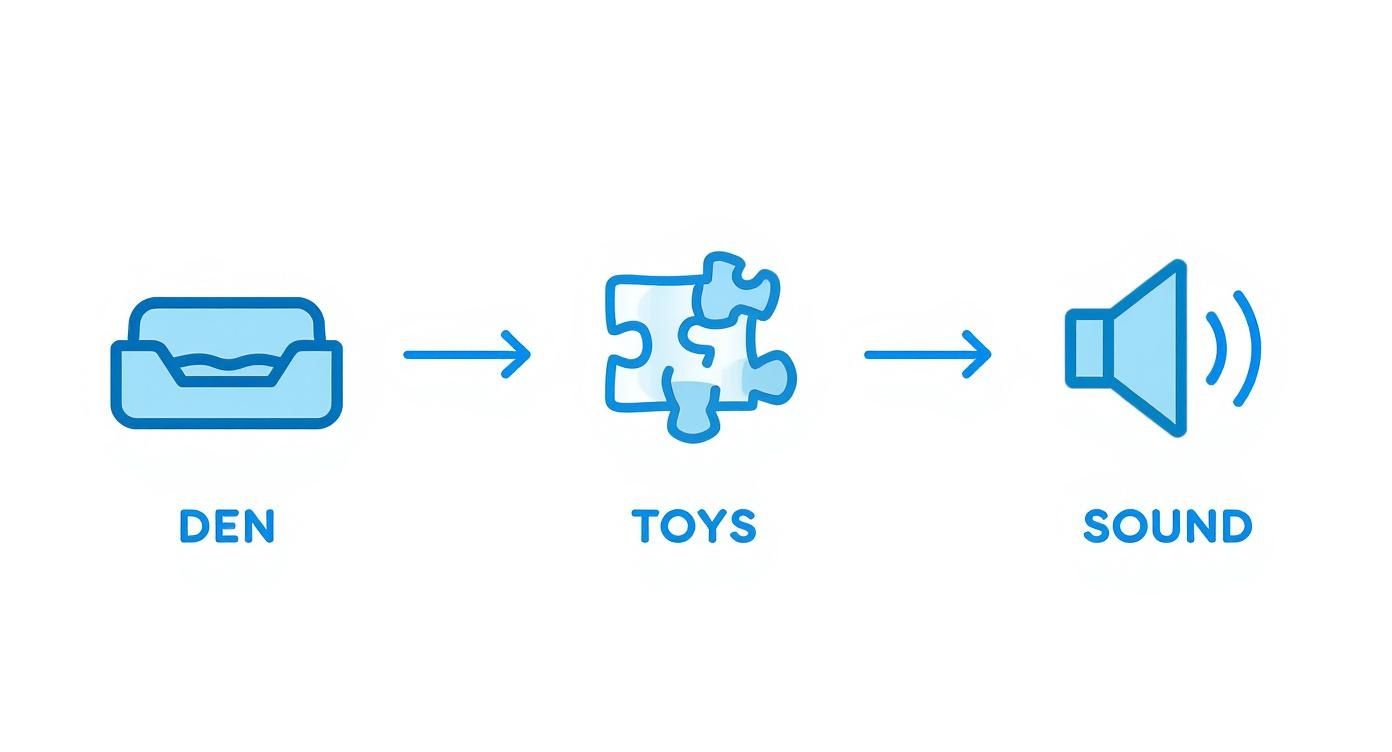
Think about it from your dog’s point of view. At their core, dogs are den animals. They instinctively crave a small, cozy space that feels like their own. You can tap into this instinct by creating a dedicated 'den' for them. This could be a crate with the door left open and a comfy bed inside, a quiet corner of the living room, or even a small, dog-proofed room. The critical thing here is that this spot is never used for punishment; it's a private retreat filled with only good vibes.
Make Their Space a Happy Place
To build that positive association, you need to make their safe haven the headquarters for all things awesome. This is where they get their most prized, high-value treats—think a frozen Kong stuffed with peanut butter, special toys they only get when you're preparing to leave, or a long-lasting chew to settle in with.
The goal is to make this space predictably wonderful. When your dog knows their den is a reliable source of calm and reward, they'll start choosing to go there on their own to relax, even when you're home. That's when you know it's working.
Once they genuinely love their spot, you can start layering in other calming elements that we use at the daycare to help soothe anxious pups.
Soothing Sounds: Dead silence can make every little creak and outdoor noise sound like a major event. Instead, try playing some calming classical music, a specific podcast, or even just a white noise machine on a low volume. This creates a consistent audio backdrop that helps muffle startling sounds from outside.
Comforting Textures: A soft, high-sided calming bed can do wonders. It provides a sense of security by mimicking the feeling of cuddling with their littermates. And don't underestimate the power of your own scent—leaving a recently worn t-shirt or a blanket that smells like you can be incredibly comforting.
Dog-Proofing for Peace of Mind
Finally, let’s talk about setting your dog up for success by thoroughly 'dog-proofing' the area. This isn't just about their safety; it’s about removing temptations that can trigger destructive behaviors fueled by anxiety.
Tuck away shoes, grab the remote controls, and clear out anything else that might become a target for nervous chewing. By managing their environment, you remove the possibility of them "getting into trouble." This prevents the scenario where you come home to a mess and react with frustration—the last thing an anxious dog needs. Your return should always be a happy, positive reunion, and a tidy, temptation-free space helps guarantee it.
Mastering Calm Departures and Returns
Believe me, how you leave your house and how you come back can completely change the game for a dog struggling with anxiety. I see it all the time at my daycare—owners accidentally ramp up their dog's stress with long, emotional goodbyes. The goal is to make your comings and goings the most boring, uneventful part of their day.
This is where my 'No Big Deal' method comes in. It’s a simple concept that's all about teaching your dog that your departure isn’t a reason to panic. Honestly, this is often more about retraining our habits than our dog's. We have to learn to stop making such a fuss.
Desensitizing Your Departure Cues
For most dogs with dog anxiety when left alone, the panic doesn't just switch on the second you walk out the door. It starts building much earlier, triggered by your everyday routine. The jingle of your keys, the sound of you putting on your work shoes, grabbing your purse—these are all "cues" that tell your dog you're about to leave.
To fix this, we need to break that association. Start practicing these cues randomly throughout the day without actually leaving.
Pick up your keys and then just go sit on the couch.
Put on your shoes and then walk to the kitchen for a snack.
Grab your coat and then start watching TV.
When you do this repeatedly, these actions start to lose their power. They no longer scream, "I'm abandoning you!" Instead, they just become meaningless background noise. This simple exercise is a critical first step in lowering their baseline anxiety.
This is a widespread problem. A recent survey found that a staggering 44% of pet owners worry about their pets having separation anxiety. The study showed that nearly half of dogs follow their owners to the door looking sad, a third whine, and over a fifth pace anxiously. You can dive deeper into these findings on DVM360.com.
Practicing Short, Successful Separations
Once your departure cues are less scary, it’s time to start building your dog’s confidence with very short, controlled absences. And when I say short, I mean it. Start by just stepping outside the door for 10 seconds and then coming right back in. The absolute key is to return before they have a chance to get distressed.
From there, you can gradually increase the duration: 30 seconds, one minute, five minutes. This process has to be slow and steady. If your dog starts to panic at the five-minute mark, dial it back to three minutes for a few days before trying again. It’s all about setting them up for success.
Your return is just as important as your departure. When you walk back in the door, ignore your dog for the first few minutes. I know, this is the hard part! But showering them with affection the second you return only reinforces the idea that your homecoming is a huge, emotional event. Wait until they are calm, and then give them a quiet, gentle greeting. This teaches them that you coming home is also 'no big deal.'
Enrichment That Busts Loneliness
As a daycare owner, I've found that a tired, mentally stimulated dog is almost always a happy, relaxed dog. So much of what we label as dog anxiety when left alone is actually a cocktail of fear mixed with a whole lot of pent-up energy and boredom. The secret is giving your dog a fulfilling 'job' to do while you're away—it can completely change their perspective on alone time.
This goes way beyond just tossing them a basic chew toy. We're talking about meaningful activities that engage their incredible brains and natural instincts. Think of it this way: you're not just trying to distract them; you're trying to empower them by building their confidence.
Give Them a Job Before You Go
One of the biggest mistakes I see owners make is leaving a dog who is just bursting with unspent energy. A brisk walk or a lively game of fetch right before you head out the door is non-negotiable in my book.
The goal isn't to exhaust them to the point of collapse, but to simply take the edge off. This gets them into a more relaxed state of mind where they're ready for a good nap.
This pre-departure routine accomplishes two key things:
Physical Release: It burns off that anxious energy that could otherwise fuel pacing, barking, or destructive behaviors.
Mental Connection: It provides focused, one-on-one time, which really fills up their "attention cup" before you have to leave.
If you want to make that pre-departure playtime really count, you can learn more about how to play with your dog like a pro to strengthen your bond in our other guide.
A common misconception is that a long run will "fix" anxiety. While physical exercise is crucial, mental work is just as, if not more, important. A 15-minute scent game can tire a dog out more than a 30-minute run.
Make Mealtime an Adventure
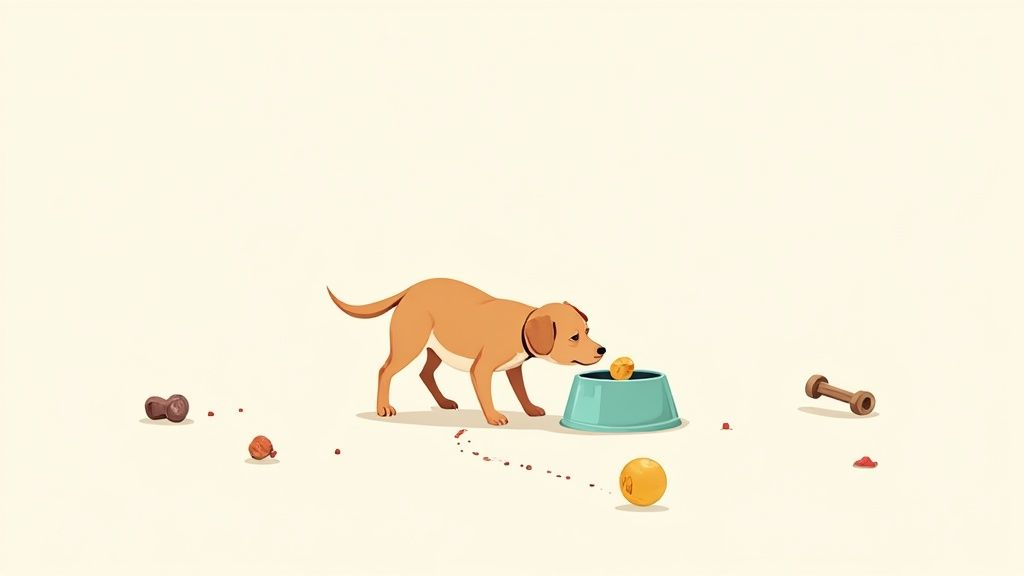
Ditch the bowl! Seriously. Instead of just dumping their breakfast out, make them work for it. This simple switch taps into their natural foraging instincts and turns a two-minute meal into a 20-minute brain game. Puzzle feeders, snuffle mats, and food-dispensing toys are fantastic for this.
This strategy is a game-changer because it teaches your dog that being alone can lead to rewarding and engaging experiences. It shifts their focus from, "Oh no, they're leaving!" to, "Oh boy, I get my special puzzle now!"
Weekly Enrichment Idea Planner
Consistency is key, but variety is what keeps things interesting. To prevent boredom from creeping in, it's a great idea to mix up your dog's activities throughout the week.
Here is a sample schedule with daily ideas to provide both mental and physical stimulation. Think of it as a launchpad for your own routine.
Day | Morning Activity (Pre-Departure) | Solo Activity (While You're Away) |
|---|---|---|
Monday | 20-min brisk walk + 5-min training | Frozen Kong with peanut butter & kibble |
Tuesday | 15-min game of fetch in the yard | Kibble hidden in a snuffle mat |
Wednesday | 25-min neighborhood "sniffari" walk | A long-lasting chew, like a beef tendon |
Thursday | 10-min DIY scent game (hide treats) | Food puzzle toy on an easy setting |
Friday | 20-min walk with another calm dog | LickiMat with plain yogurt (frozen) |
This powerful combination of physical exercise and mental work is a fantastic tool against dog anxiety when left alone. It gives them a sense of purpose and helps prove that your absence can be a peaceful, and even enjoyable, time for them to recharge.
Knowing When to Ask for Help
Sometimes, despite all the love, patience, and training you pour into your dog, their anxiety just doesn’t get better. I've been a dog owner for over 30 years, and I can tell you from experience: it's okay to hit a wall. Recognizing you’re in over your head isn’t failure. It's actually a sign of being a responsible, compassionate owner who wants the best for their dog.
When you're dealing with severe dog anxiety when left alone, you shouldn't have to go it alone. If your dog is harming themselves, destroying things to the point it becomes dangerous, or simply not responding to the methods we've talked about, it’s time to call in the professionals. Building a support team is one of the most powerful things you can do.
Your Professional Support Team
So, who do you call? It can feel a bit overwhelming, so let's break down who can help and what they do.
Your Veterinarian: This is always your first stop. Before anything else, your vet needs to rule out underlying medical issues that could be mimicking or worsening the anxiety. They’re also your best resource for discussing calming supplements or, for more severe cases, prescription anti-anxiety medication.
Certified Professional Dog Trainer (CPDT): A good trainer with experience in behavior modification is worth their weight in gold. They can build a training plan specifically for your dog’s needs and give you hands-on coaching.
Veterinary Behaviorist (DACVB): Think of this person as the specialist's specialist. A DACVB is a veterinarian who has completed extensive, specialized training in animal behavior. For the most severe or complex cases of anxiety, they are the top experts in the field.
A Great Doggy Daycare: A well-run daycare (like ours!) can be a lifesaver for many dogs. It offers a fantastic outlet for socialization, exercise, and mental stimulation in a safe setting, which means your dog doesn't have to be alone in the first place.
This is a far more common problem than most people realize. In fact, research shows that somewhere between 14% to 20% of dogs struggle with separation-related anxiety. It's a persistent challenge that has led to a wide range of behavioral and medical support systems, so you are definitely not alone in seeking help. You can read more about these findings on dog anxiety from Smithsonian Magazine.
It's crucial to find the right professional. Look for certifications like CPDT-KA (Certified Professional Dog Trainer - Knowledge Assessed) or CSAT (Certified Separation Anxiety Trainer). Avoid anyone who guarantees a "quick fix" or suggests using punishment-based tools like shock collars, which will only make the fear worse.
Whether you're looking for a top-tier trainer or a reliable pet sitter to break up your dog's day, asking the right questions is everything. To get you started, we put together a list of questions to ask a dog sitter before hiring them that you can easily adapt when you're vetting a trainer. Arming yourself with good information is the first step toward building a team you can truly trust to help your best friend feel safe again.
Common Questions About Dog Anxiety
Over the years, I've had hundreds of conversations with worried pet parents who drop their pups off at my daycare. When you're wrestling with dog anxiety when left alone, it's completely normal to have a ton of questions swirling in your head. Let's tackle some of the most common ones I hear.
Can a Dog Outgrow Separation Anxiety?
I truly wish I could say yes, but based on everything I’ve seen, it's highly unlikely. Real separation anxiety is more than just a bad habit; it's a genuine phobia, not unlike a person's deep-seated fear of spiders or heights. These kinds of fears rarely fade on their own. In fact, without our help, they usually get worse as the panic becomes a learned, ingrained response.
Think about it from your dog's perspective. Every time they panic when you leave, you eventually come home. Their brain doesn't connect your return with the idea that being alone is safe. Instead, it learns that after a period of intense distress, relief finally arrives. This cycle can accidentally make the anxious behavior even stronger.
The only way to truly help a dog move past this fear is through consistent, positive training. We have to actively reshape their emotional response from panic to a feeling of calm confidence. That takes proactive work, not just waiting and hoping for the best.
Will Getting Another Dog Solve the Problem?
This is probably the most common "quick fix" I hear people consider, and I always urge them to think it through carefully. While getting a second dog can sometimes ease simple loneliness or boredom, it’s rarely the magic bullet for true separation anxiety.
The root of separation anxiety is your dog's hyper-attachment to you, specifically. Their panic is triggered by your absence, not just the general state of being alone. Another dog's company, as wonderful as it is, usually doesn't soothe that core fear.
In some tough situations, you might even end up with two anxious dogs. It's not uncommon for the new pup to start mirroring the anxious behaviors of your first dog. It's always a better bet to focus on treating the root anxiety with your current dog before you think about adding another furry member to the family.
How Long Does It Take to See Improvement?
Ah, the million-dollar question. The honest answer is, it really depends. There's no set timeline because every dog and every situation is completely unique. How quickly you see progress comes down to a few key things:
The Severity: Is it mild unease or a full-blown panic disorder? A dog with a less intense case will naturally progress faster.
Your Consistency: This is huge. Sticking with the training exercises every single day is what builds new, positive associations in your dog's mind.
Your Dog's Personality: Just like people, some dogs are naturally more resilient and confident, while others are a bit more sensitive and take longer to adapt.
I've worked with some owners who spot small but significant improvements—like less frantic barking—in just a few weeks. For others, it’s a journey that takes several months of patient, steady effort. The most important thing is to celebrate the small wins and focus on gradual progress, not an overnight cure. Be patient with your pup, and just as importantly, be patient with yourself!
Helping a dog overcome anxiety is a journey, but you don't have to do it alone. For days when you can't be there, a safe and stimulating environment can make all the difference. At Pawcation, we provide a fun and caring space where your dog can play, socialize, and feel secure. If you're near King of Prussia, PA, we'd love to have your pup join our pack. Learn more about our doggy daycare and boarding services at pawcation.co.
Comments