Crate Training an Older Dog: A Friendly Guide from a Doggie Daycare Owner
- ericavdippold
- Nov 8, 2025
- 13 min read

Thinking about crate training an older dog? It's a question I get all the time at my doggy daycare. Folks worry they've missed the boat, that their senior pup is too set in their ways. But I'm here to tell you, from one dog lover to another: it's absolutely possible, and often, it's one of the best things you can do for them.
The whole secret is shifting your mindset. We're not talking about confinement here. We're talking about giving them a safe, cozy den of their own. With a little patience and a whole lot of positivity, most older dogs can learn to see their crate as a personal sanctuary.
Why It's Never Too Late for a Crate
As someone who’s worked with dogs of all ages for years, I can confidently say that the old cliché about "old dogs and new tricks" is just plain wrong. It especially doesn't apply when we're talking about building a sense of security and comfort for our senior companions.
Let’s be real—crate training an older dog isn't just about managing behavior. It can be a truly kind and loving act. Think of the crate as their private room, not a cage. It becomes their go-to spot to decompress, a quiet retreat from a noisy family gathering, or just a place for an undisturbed nap.
A New Way of Thinking About Crates
Throughout this guide, I’ll walk you through the exact methods I’ve used with countless older dogs at my daycare. I've seen anxious rescues transform into calm, confident companions simply by learning to love their crate. It all boils down to gentle, positive techniques that build trust, not fear.
The payoff is incredible once you see it in action:
A Solid Sense of Security: The world can feel a bit much for a senior dog, particularly if they're a rescue. A crate is a predictable, safe space that belongs only to them.
Safety and Management: It’s a simple way to keep them out of trouble when you can't be there to supervise, protecting them from household hazards.
Easier Travel: A dog who is happy in their crate is a much less stressed-out passenger on car trips or during vet visits.
Our main goal is to completely reframe what the crate means to your dog. We aren't locking them up; we're giving them a personal bedroom where they can always feel safe and relaxed.
The Magic of Positive Reinforcement
Age is not a barrier to learning. Not even close. Veterinarians and trainers widely agree that older dogs respond beautifully to consistent, positive training. When it comes to crate training an older dog, the expert consensus is clear: success hinges on patience and positive association, not the dog's age. It can dramatically improve their quality of life. You can discover more insights about training senior dogs from pet care experts.
This whole process is about making the crate the source of all good things—their favorite high-value treats, special toys they only get in the crate, and peaceful naps. It’s a journey that takes patience, but the reward is a happier, more secure best friend.
Why a Crate Can Become Your Older Dog's Favorite Room
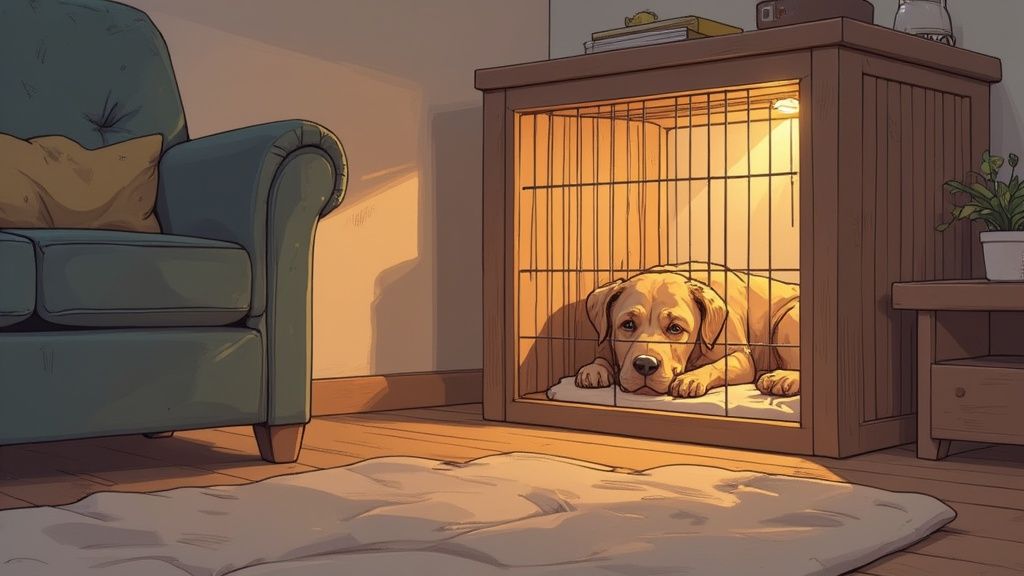
So, why bother with crate training an older dog? It's easy to assume they're set in their ways, but the truth is, a crate can be a game-changer. This isn't just about containment; it's about giving your dog a genuine upgrade in their quality of life, especially if they're settling into a new routine.
For a senior dog you've just adopted or a rescue who's been through the wringer, a crate can be a total lifeline. Their world might feel chaotic and unpredictable, but a crate offers a stable, quiet sanctuary they can call their own. It becomes their personal den—a guaranteed escape from the happy chaos of a busy home.
It's a Den, Not a Cage
Try to see it from your dog's point of view for a moment. The doorbell chimes, visitors arrive, the vacuum roars to life—it can all be a bit much. A crate gives them a specific place to retreat to where they know they're safe and won't be bothered. This isn't about punishment; it's about providing a sense of security.
I'll never forget a sweet, older beagle at my daycare who came to us with terrible separation anxiety. His family was at their wits' end. Once we gently introduced him to a crate, it became his go-to spot to relax. It completely changed his demeanor, giving him the confidence to handle being alone.
By reframing the crate as a safe den, you're not just managing behavior—you're providing a powerful tool that helps reduce your dog's daily stress and anxiety.
This is especially true for rescue dogs. Many older rescues haven't had consistent training and may act out destructively because of stress or fear. When introduced correctly, a crate becomes a reliable refuge where they can finally decompress and feel calm.
Practical Perks for a Peaceful Household
Beyond the emotional comfort for your dog, a crate offers some very practical benefits that make life easier for everyone. It's an indispensable tool for preventing and managing issues that can sometimes crop up with age.
Here are a few of the biggest wins:
Helps with House-Training Regression: It happens. Sometimes, older dogs can have accidents. A crate helps re-establish a solid potty routine by tapping into their natural instinct to keep their sleeping area clean.
Keeps Them Safe and Sound: When you can't be there to supervise, a crate keeps them from getting into potentially harmful things, like the kitchen trash or that chocolate bar you forgot on the coffee table.
Eases Separation Anxiety: A secure space can make a world of difference for a dog that gets nervous when you leave. For more on this, check out our guide on easing dog anxiety when left alone.
Ultimately, when a dog willingly goes into their crate to rest, it’s a clear sign they feel secure and at home. It’s no longer your tool—it’s their space. And that’s a beautiful thing to see.
How to Create the Perfect Senior Dog Den
Alright, let's get to the fun part: turning that crate into a five-star private suite for your senior dog. The goal here is to create a space so cozy and inviting they choose to go in on their own. This isn't just about putting a box in the corner; it's about designing their personal safe haven.
An older dog has a different set of needs than a puppy. Joint pain, arthritis, and general sensitivity to their environment are common concerns. That's why we have to put their physical comfort front and center from the very beginning.
Choosing the Right Crate Style
Not all crates are made equal, and this is especially true for our golden-aged companions. The right style can make all the difference in how they perceive their new space.
Wire Crates: These are fantastic for airflow and letting your dog see what's going on around them, which helps them feel less isolated. The downside? Some dogs feel a bit too exposed. If you go this route, a crate cover is a must-have to create that secure, den-like atmosphere.
Plastic Crates: Often used for travel, these provide a more enclosed, cave-like feel from the get-go. This can be a huge comfort for anxious dogs. Just be sure the entrance doesn't have a high lip that's difficult for stiff joints to step over.
Furniture-Style Crates: I love these because they blend right into your home's decor, often doubling as an end table. Psychologically, they look less like a "cage" and more like a piece of furniture or a special enclosed bed, which is a big win for everyone.
Selecting the right crate is a critical first step. It needs to be a perfect fit—not just for your dog, but for their specific needs as they age.
Choosing the Right Crate for Your Senior Dog
Here's a quick comparison to help you decide which crate type is the best match for your dog's personality and physical condition.
Crate Type | Best For... | Considerations for Seniors |
|---|---|---|
Wire Crate | Dogs who like to see their surroundings; homes in warmer climates. | May feel too exposed for anxious seniors; a cover is highly recommended. Ensure the bottom tray is covered with soft bedding. |
Plastic Crate | Anxious dogs who prefer a more enclosed, cave-like space. | Can have less ventilation. Check for a low-entry threshold to avoid stressing sore hips and joints. |
Furniture-Style Crate | Integrating seamlessly into home decor; reducing the "cage" look. | Can be heavier and less portable. Often a more significant financial investment, but worth it for long-term use. |
Ultimately, the best crate is one that feels safe to your dog and is easy for them to access.
No matter which style you choose, size is everything. Your dog needs enough room to comfortably stand up, turn around, and lie down completely stretched out. Be careful not to go too big, though. A space that's overly large might invite them to use one end as a bathroom, which completely undermines your training efforts.
Remember, this space is for resting, not long-term confinement. It's crucial to understand your older dog's bladder control limits to prevent accidents and distress. I cover this in detail in my guide on how long dogs can hold their pee.
Making It an Irresistible Retreat
Once you have the crate, it's time to make it the most comfortable spot in the house. This is where the magic really happens.
Start with the foundation: the bedding. For a senior dog, an orthopedic foam mattress is a game-changer. It provides incredible support for aging joints and can bring real relief from arthritis pain. I always recommend topping it with a soft, easily washable blanket.
Next, add a personal touch. An old t-shirt you've worn or a small blanket that carries your scent can be incredibly comforting. That familiar smell works wonders to reduce anxiety.
Finally, think about location. Place the crate in a quiet corner of a room where the family gathers, like the living room or den. This lets them feel included in the family "pack" without being in the middle of all the chaos. It’s the perfect balance of togetherness and peaceful seclusion.
Introducing the Crate with Patience and Positivity
Alright, this is where your patience really shines. You’ve set up the perfect den, and now it's time for the official introduction. Our entire goal here is to convince your dog that this crate is the best, most wonderful place in the house. We'll do that by breaking the process down into tiny, successful steps.
Think of it less as training and more as persuasion. If your older dog has never seen a crate or, even tougher, has a bad history with one, we need to completely rewrite that narrative for them. This is a marathon, not a sprint, and every small win is worth celebrating.
Making the Crate a Normal Part of Life
The first step is almost laughably simple: just plop the crate down and ignore it. Put it in the spot you picked out, prop the door wide open so it can’t swing shut, and just let it become another piece of furniture. If you push your dog to interact with it right away, you'll just make them suspicious. Instead, let them investigate on their own time.
When they eventually get curious and give it a sniff or even a glance, casually toss a super tasty treat nearby. Don't make a big deal out of it. You're just planting the seed that good things happen when this new box is around.
This infographic lays out the foundational setup we've just talked about, which is the perfect starting point before you even begin the introduction.
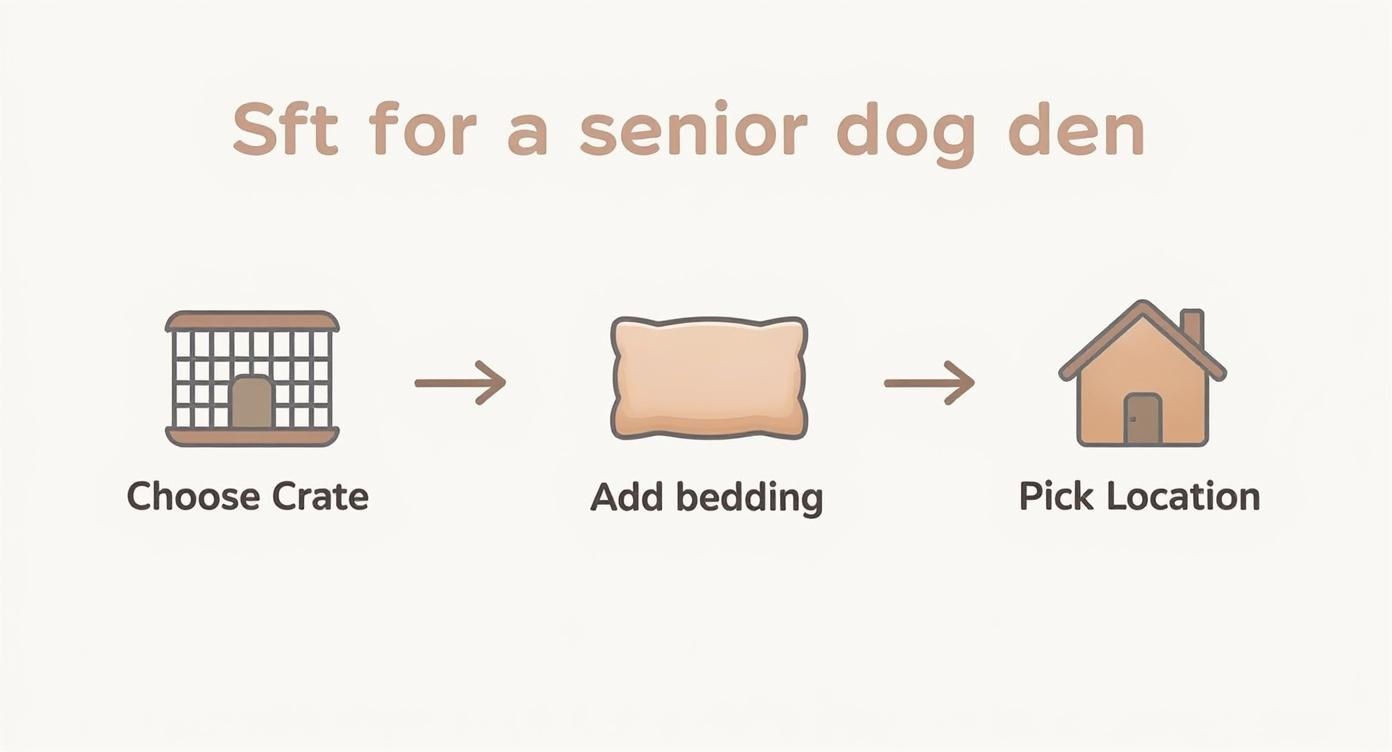
As the visual guide shows, getting the right crate, bedding, and location are the key first steps to making it an inviting space from the get-go.
Building Positive Associations Through Food
Once your dog seems completely unfazed by the crate's presence, it's time to bring out the big guns: food. Food is one of the most powerful tools we have for creating positive vibes. Start by feeding your dog their regular meals right next to the open crate.
After a few days of this, move the food bowl just inside the entrance. They should only have to stick their head in to eat. Over the next several meals or days, inch the bowl further and further back until they have to step all the way inside to get to their dinner. And I can't stress this enough: the door stays wide open the entire time.
Your objective is for your dog to voluntarily walk into the crate without a second thought. If they hesitate, you've moved too fast. No big deal. Just go back to the last step where they were comfortable and try again tomorrow.
The Gradual Door-Closing Game
This is the part where people get impatient and mess things up, so take a deep breath and go slow. Once your dog is happily trotting into the crate for meals, you can start to gently close the door—but just for a second.
I mean it literally. Close it, open it immediately, and praise them. The next time, close it for three seconds. Then five. The key is to always open the door before they even have a chance to feel anxious or start fussing. You want them to learn that the door closing is no big deal because it always, always opens right back up.
The timeline here is completely dependent on your dog. Some might get this in a week; others might take a month or more. This slow-and-steady practice is also fantastic for helping with separation anxiety—a condition affecting an estimated 20-40% of dogs—by giving them a safe, familiar space. For a deeper dive, you can learn more about the benefits of crate training from the AKC. Never, ever push past their comfort level. Your dog's body language will tell you everything you need to know.
Working Through Bumps in the Road
Let's be realistic: even with a perfect plan, you're probably going to hit a few snags when crate training an older dog. That's completely normal, so don't get discouraged! This is your troubleshooting guide for the most common hurdles I see owners face.
The most important thing you can do is stay calm and positive. Your dog reads your energy like a book, and a relaxed attitude is your best tool. Hitting a roadblock isn't a failure; it's just a sign that you need to slow down and figure out what your dog is trying to communicate.
What to Do About Whining and Barking
This is the big one, isn't it? The minute your dog starts making noise in the crate, it's easy to second-guess everything. The trick is to play detective and understand the reason for the noise before you react.
Is it an "I have to go potty" whine? This is usually more urgent, maybe a bit high-pitched. If it's been a few hours or you know they haven't been out recently, it's smart to assume they need a bathroom break. Take them out on a leash for a quick, boring potty trip—no fun, no games. As soon as they're done, it's right back to the crate.
Or is it an "I'm bored and want out" bark? This often sounds more demanding or rhythmic. This is where you have to be careful. If you open the door every time they complain, you'll teach them that barking is the magic button to get what they want. You have to wait for a pause. Even if it’s just for 2-3 seconds of silence, wait for that quiet moment before you open the door.
A dog with true confinement anxiety is a different story. They often show immediate signs of stress like heavy panting, drooling, or desperately trying to dig or chew their way out. This goes beyond simple fussing.
Navigating Past Trauma and Anxiety
If your dog is a rescue, their history might include negative experiences with being confined. For these dogs, you can't force it. The entire process needs to be incredibly slow, gentle, and centered on making them feel safe again.
Take the door clean off. For the first week or two, remove the crate door entirely. This removes the threat of being trapped and lets them explore on their own terms.
Bring out the good stuff. Use extra-special, high-value treats that they only get when they're near or inside the crate. We're talking small bits of real chicken, cheese, or whatever they absolutely love.
Don't latch the door yet. When you do reattach the door, leave it unlatched for a while. Let them get used to the door being there and moving without it ever closing them in.
Know when to call in a pro. If your dog shows genuine panic, it's time to get help. A certified positive reinforcement trainer or a veterinary behaviorist can make all the difference. It's also critical to recognize the more subtle clues they're giving you. You can learn more in our guide on the 8 tell-tale signs of dog stress every owner should know.
Considering Their Physical Comfort
For our senior dogs, comfort is everything. An older dog with stiff, arthritic joints might avoid the crate simply because stepping over a high lip is painful. They aren't being stubborn—they might just be hurting.
Think about simple modifications. A small ramp or a crate model with a very low threshold can be a game-changer. An orthopedic bed is also non-negotiable for supporting their joints. If you notice any stiffness or reluctance, a quick chat with your vet is always a good idea.
Answering Your Crate Training Questions
Over the years at my daycare, I've heard just about every question you can imagine when it comes to crate training an older dog. It's totally normal to have a few uncertainties, especially when you're working with a pup who already has their own history and established habits.
Let's walk through some of the most common questions I get from fellow dog lovers. Think of this as our personal chat, where I can share what I’ve seen work time and time again.
How Long Can My Older Dog Stay in a Crate?
This is a fantastic question, and the answer is so different for seniors compared to puppies. For an older, house-trained dog, the absolute maximum is generally 4-6 hours, but honestly, less is often more. Their comfort and health have to be the top priority.
You really have to tune into their individual needs. Does your dog have bladder control issues that come with age? Is arthritis making them stiff and uncomfortable after a while? If so, you'll want to aim for much shorter periods.
The whole point of the crate is for it to be a comfortable, safe den—not a place for long-term confinement. Always, always give them a thorough potty break right before they go in and immediately after they come out.
My Rescue Dog Is Terrified of the Crate. What Should I Do?
This situation calls for extra patience, empathy, and a total shift in your approach. Your dog likely has a negative past association with being confined, and our job is to gently help them rewrite that story. The number one rule is never force them inside.
First, you need to change their entire perception of the object itself. Start by placing the crate in a common area where your family hangs out, take the door completely off, and just ignore it for a few days. Then, start casually tossing very high-value treats (like tiny pieces of chicken or cheese) near it, then just inside the entrance, without any pressure at all.
This process is all about encouraging voluntary exploration and building positive feelings. It might take weeks, or even a couple of months, but I promise it’s worth the effort. If the fear seems severe and they show signs of true panic, I always recommend working with a certified positive reinforcement trainer who can provide specialized, one-on-one guidance.
Should I Crate My Older Dog at Night?
This really comes down to your dog and your family’s routine. Many older dogs find immense comfort sleeping in a crate in their owner's bedroom. It provides a sense of security and can prevent anxious nighttime wandering or accidents.
However, if your senior needs frequent potty breaks overnight or has mobility issues that make getting in and out of the crate difficult, it might not be the best solution. If they have always slept peacefully on a dog bed in your room, there might be no reason to change what’s already working.
If you do decide to crate them at night, just make sure it’s exceptionally comfortable and close enough that you can hear them if they get restless and need you.
At Pawcation, we believe every dog deserves to feel safe and loved, whether they're with you at home or staying with us. If you have more questions or need a caring place for your best friend to stay, we’re here to help. Find out more about our dog sitting and daycare services.
Comments